Admin_Adham
TOPLINE:
The Prostate Cancer Radiological Estimation of Change in Sequential Evaluation (PRECISE) scoring system accurately predicted the progression of prostate cancer, with scores of 4-5 linked to 4.53-fold increased odds of biopsy progression despite having a 15% risk of missing progression to Gleason grade (GG) group 2 or higher.
METHODOLOGY:
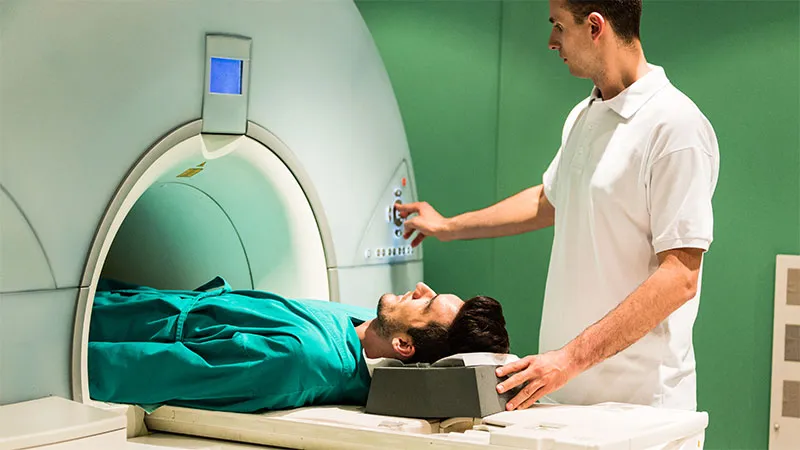
- Researchers conducted a retrospective multicentre study across 22 international centres from December 2005 to July 2022 and analysed 1667 patients on active surveillance (AS) for localised prostate cancer who underwent serial MRI scans.
- The inclusion criteria required patients to have GG group 1 or 2 at entry biopsy, at least two scans (baseline and follow-up), and at least two biopsies (baseline and follow-up after the second scan).
- Local expert genitourinary radiologists at each participating centre re-reported all scans using the PRECISE version 1 score, assessing the radiologic change over time while blinded to any subsequent clinical outcomes.
- The primary outcome was the association between the radiologic change on MRI and biopsy progression, defined as an increase in the GG group.
- The analysis included the calculation of sensitivity, specificity, positive predictive value (PPV), and negative predictive value (NPV) according to different biopsy thresholds and definitions of progression, with statistical models adjusted for age, prostate-specific antigen, prostate-specific antigen density, GG group on the latest biopsy, and baseline Prostate Imaging-Reporting and Data System score.
TAKEAWAY:
- Patients with PRECISE scores of 4-5 had 4.53-fold increased odds of biopsy progression compared with those with PRECISE scores of 1-3 (adjusted odds ratio, 4.53; 95% CI, 3.37-6.12; P < .001).
- Overall sensitivity, specificity, PPV, and NPV for the PRECISE cutoff score ≥ 4 were 57%, 79%, 46%, and 85%, respectively, for the first follow-up scan, with a 15% risk of missing progression to GG group 2 or higher when biopsies were restricted only to patients with radiologic progression.
- Among 1248 patients who underwent a second biopsy directly after the first follow-up MRI, 300 (24%) had progression to GG group 2 or higher and 77 (6%) had progression to GG group 3 or higher.
- Patients with PRECISE scores of 4-5 at the first follow-up MRI had 2- and 5-year progression-free survival rates of 49% (95% CI, 44%-54%) and 35% (95% CI, 29%-42%), respectively, and those with a PRECISE score of 3-non-visible had rates of 90% and 78%, respectively.
IN PRACTICE:
"We also noted that an AS protocol relying solely on MRI progression (PRECISE ≥ 4 cutoff to perform a follow-up biopsy) could avoid biopsy in 70% of patients, with a 15% risk of missing GG ≥ 2 progression at first follow-up biopsy," the authors wrote.
"Our findings have important clinical implications for AS. For patients with radiological regression (PRECISE 1-2) and stable non-visible MRI findings (PRECISE 3-NonV), biopsy progression is infrequent, with very low long-term progression rates. This suggests potential for de-escalating follow-up, including reducing biopsy frequency, for these subgroups, minimising patient burden safely," they added.
SOURCE:
This study was led by Francesco Giganti, University College London, London, England. It was published online on May 04, 2026, in European Radiology.
LIMITATIONS:
The study was limited by its retrospective design, the lack of central image review, and potential ascertainment bias related to urologists' clinical discretion regarding biopsy thresholds. Methodological constraints included the absence of a standardised protocol for evaluating radiologic progression and the reliance on subjective assessments by local radiologists to exclude low-quality scans. Furthermore, the baseline inclusion criteria and cohort characteristics differed across the participating international centres.
DISCLOSURES:
This study received funding from the Prostate Cancer Foundation and the CRIS Cancer Foundation through a Young Investigator Award to the lead author. Several authors disclosed receiving consulting fees, speaker fees, grant funding, travel support, study funding, or grants or owning equity of multiple pharmaceutical and medical technology companies. Additional disclosures are noted in the original article.
This article was created using several editorial tools, including AI, as part of the process. Human editors reviewed this content before publication.