Admin_Adham
TOPLINE:
In a prospective study, a high proportion of survivors of childhood and adolescent brain cancer developed cerebrovascular disease 15 years post-radiotherapy, predominantly cavernomas and microbleeds, with quality of life (QOL) remaining largely unchanged after the disclosure of abnormalities.
METHODOLOGY:
- Researchers conducted a multicentre prospective study including 163 survivors of childhood and adolescent brain tumours who received radiotherapy (median age at radiotherapy, 9.2 years) at 12 paediatric radiation oncology reference centres in France between January 1990 and December 2002.
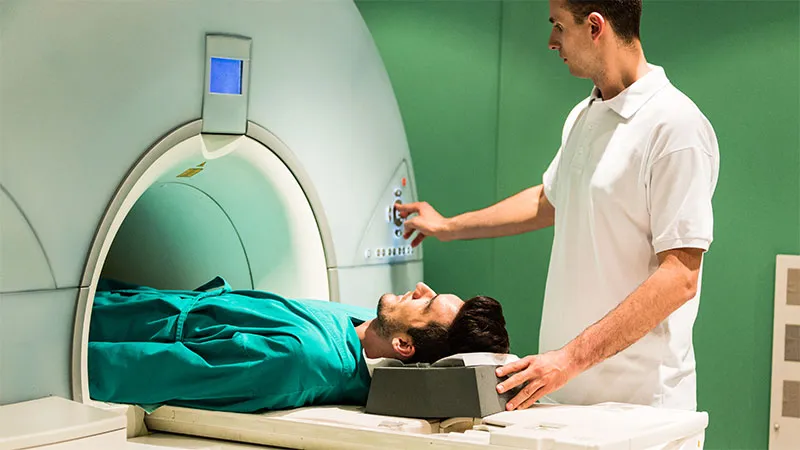
- Participants underwent clinical assessment at a median interval of 15 years by a radiation oncologist or paediatric oncologist along with multimodal MRI, including angio-MRI sequences (median age at inclusion, 24 years), to investigate microbleeds and cavernomas.
- Treatment consisted of photon-based two- or three-dimensional conformal radiotherapy, initiated at diagnosis in 141 patients and at relapse in 30 patients (22 of whom had previously received radiotherapy), and the mean dose to the high-risk planning target volume was 52 Gy.
- Dosimetric reconstruction was performed to evaluate radiation doses to vascular lesions, and QOL was assessed using the 36-item Short Form Survey before and after the disclosure of MRI results.
TAKEAWAY:
- A total of 210 cerebrovascular abnormalities were diagnosed in 131 patients (80.0%), with cavernomas (68.5%) and microbleeds (21.0%) representing most of all abnormalities detected.
- Median mean radiation doses were 40.25 Gy for cavernomas, 39.50 Gy for microbleeds, and 39.50 Gy for arterial stenoses, and median maximum dose values were 52.00, 45.00, and 50.00 Gy, respectively.
- The prevalence of cerebrovascular abnormalities varied significantly by tumour type, with medulloblastoma showing the highest rate at 92.4%, followed by ependymoma at 77.8%, astrocytic and glial tumours at 71.4%, germinoma at 70.8%, and craniopharyngioma at 50.0%.
- Health-related QOL aspects remained unchanged between baseline and post-MRI result disclosure, with only Role-Physical and overall health showing slight differences.
IN PRACTICE:
"Guidelines are needed for the delineation of organs at risk, follow-up and screening of cerebrovascular abnormalities using dedicated MRI sequences during the RT [radiotherapy] planning stage," the authors wrote, adding that "guidelines should address the potential screening for cerebrovascular abnormalities in long-term survivors."
SOURCE:
This study was led by Anne Laprie, MD, PhD, Department of Radiation Oncology, Institut Universitaire du Cancer de Toulouse-Oncopole Claudius Regaud, Toulouse, France. It was published online on May 09, 2026, in Radiotherapy and Oncology.
LIMITATIONS:
The researchers prioritised cases with long follow-up that often predated digital archiving. Consequently, some dose distributions existed only on paper dosimetry plans or treatment fields, limiting reconstruction precision and reducing generalisability to contemporary radiotherapy. The time elapsed between data acquisition and analysis, together with the use of 1.5T rather than modern 3T MRI scanners, likely underestimated the true prevalence of cerebrovascular abnormalities.
DISCLOSURES:
This study did not disclose any funding sources or research grants. The authors reported having no relevant conflicts of interest.
This article was created using several editorial tools, including AI, as part of the process. Human editors reviewed this content before publication.