

 Admin_Adham
Australia is investing billions of dollars less in healthcare for people living in rural areas than for those living in cities. Moreover, the spending gap is growing, thus contributing to worsening health outcomes.
A report by the National Rural Health Alliance published in August identified an $8.35-billion shortfall in health spending between rural and urban areas in 2023-2024, equating to around $1090 less per person per year. This gap has increased by around $1.8 billion since 2020-2021.
These figures combine public and private health funding by analyzing data from various sources, including hospitals, the Medicare Benefits Schedule, the Pharmaceutical Benefits Scheme, the National Disability Insurance Scheme, aged care, dentistry, and private health insurance.
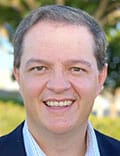
“The funding is not getting to the communities and patients who need it,” Michael Clements, MD, chair of the Rural council, the Royal Australian College of General Practitioners (RACGP), who is based in Townsville, a regional city in Queensland, told Medscape Medical News.
“If you’re in one of our smaller communities, you’re less likely to have a GP within a short drive,” he said. “You’re less likely to have a nursing team, a pharmacist, allied health than if you’re in an urban center.
“The further away you move from the cities, you just have to expect to pay more,” said Clements. To fix a broken sliding door at an island practice, for example, “I’ve got to pay a technician for a whole day…just to do a 5-minute job because it takes them that long to get out there,” he said.
Rural areas face the “triple healthcare disadvantage” of poorer social determinants of health, higher costs, and less access to healthcare, the National Rural Health Alliance report stated. As a result, people living in very remote areas are more than twice as likely to die from diabetes, chronic obstructive pulmonary disease, or suicide than those living in metropolitan areas.
Attracting and retaining GPs is a constant struggle for remote regions across the country, but there have been some successes, said Clements. A collaboration between local, state, and federal governments is helping reopen general practices that have been closed for years in the Queensland towns of Mission Beach and Cardwell, and Julia Creek secured a GP 2 years ago after offering a salary of $600,000 and a free house.
Where Are the Gaps?
According to the report, small rural towns had per-person spending gaps ranging from $937 to $3747 across New South Wales (NSW), Queensland, Victoria, South Australia, and Western Australia. Regional centers also had significant gaps in funding of over $1700 per person in NSW and Victoria.
As these figures encompass federal, state, and private health funding, the responsibility for addressing these gaps falls on both tiers of government. “There’s a lot of buck-passing going on,” said Clements. “A patient doesn’t care who the doctor is funded by. They just want healthcare, and that’s what they deserve.”
Primary care is the federal government’s responsibility, but it becomes a state government issue when public hospitals become overwhelmed because of lack of access to GPs, said Clements. “That’s happening in countless places in the Northern Territory, Western Australia, and many other states where we do have the state government stepping into nontraditional funding models to prop up the primary care system,” he said.
A spokesperson for Queensland Health told Medscape Medical News the state government was spending around $6385 per person on public healthcare services in remote areas: more than double what it spent in metropolitan areas.
The NSW government plans to spend $8.6 billion on regional health during 2025-26, which represents a 4.1% increase on the previous year’s budget, an NSW Health spokesperson told Medscape Medical News. An additional $3.5 billion will be invested over the next 4 years in regional and rural health works, including new projects in Dubbo, Forbes, Maitland, and Wollongong.
State health departments in South Australia, Western Australia, and Victoria did not respond to requests for comment.
GP Shortages in South Australia
In Mount Gambier, a regional city in South Australia, all three GP clinics are now closed to new patients, leading to frustration, abuse of reception staff, and long lines outside the emergency department. Around 27,000 people live in Mount Gambier, and demand for GP services has not kept pace with population growth.
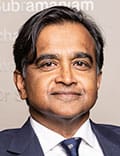
“That’s a microcosm of what we are seeing in rural and remote South Australia.” Peter Subramaniam, MD, president of the Australian Medical Association (AMA) South Australia, told Medscape Medical News. “When GPs close their books to new patients or when patients have to travel up to 50 kilometres to access urgent care, that’s bordering on a crisis situation.”
AMA South Australia would like to see the state government geographically map the GP workforce, determine where the vacancies are, and grow the number of regional registrars.
RACGP South Australia is calling on the state government to offer $40,000 relocation allowances to international GPs to boost the workforce.

South Australia has 106 GPs per 100,000 people compared with 116 for the Eastern states, “so we’re starting on a lower base,” Siân Goodson, MD, chair of RACGP South Australia, told Medscape Medical News.
Another program that is already underway at Adelaide University, Adelaide, plans to train medical students in northern SA. “That’s a fantastic initiative” because people who train in outer metro areas are more likely to stay in that area, said Goodson.
Clements declared owning several rural private medical practices. Subramaniam and Goodson reported having no relevant financial relationships.


