Admin_Adham
The World Health Organization recently highlighted schistosomiasis among a handful of parasitic diseases posing a major concern for the next decade. While you’re far more likely to encounter this condition on your board recertification than in your practice, it has maintained a consistent second place to malaria as the world’s most devastating parasitic disease. It also has a pretty interesting history.
‘Curse of the Pharaoh’
In the mid-1800s, the era of miasma theory still had another few years to go before germ theory would even challenge, let alone replace, it. And yet, by 1851, a concept of living pathogens was emerging when it came to organisms like helminths, meaning parasitic worms.
“The discovery that worm parasites cause disease probably predated some of the major events in the history of germ theory,” said Peter Hotez, MD, PhD, dean of the National School of Tropical Medicine at Baylor College of Medicine and endowed chair of tropical pediatrics at Texas Children’s Hospital, in Houston. “A good example is Dubini, who discovered hookworms in an Italian woman in 1843.”
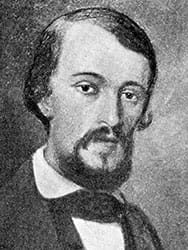
While Europe was spurning Ignaz Semmelweis for washing away microscopic entities he thought existed but could not see and did not think were alive, the reception was different for Theodor Maximilian Bilharz, a German physician working in Egypt, where helminths — which can reach a centimeter or more in size in adulthood — were at center stage.
“Keep in mind that these are animals, big enough to see, so it was easier to find them and conceptualize how they were harming human tissues,” said Daniel Griffin, MD, PhD, an infectious disease specialist at Columbia University in New York City and president of Parasites Without Borders.
Performing an autopsy in Cairo, Bilharz discovered some worms and further noted male and female forms. He named the organism Distomum haematobium and identified it as the cause of a local disease featuring hematuria. Along with finding the adult worms in the bladder, intestine, and hepatic portal vein system, Bilharz described terminal spikes on the eggs of the parasite and implicated these in the pathology of the disease.
The realization that different species of the worm existed led David Friedrich Weinland to define the genus Schistosoma and to rename the Bilharz worm Schistosoma haematobium. One of five Schistosoma species now known to cause human disease, S haematobium is the primary cause of urogenital schistosomiasis, the disease form with hematuria, an association that brings up another interesting piece of history.
“When Napoleon attempted to conquer Egypt, it was said — possibly it’s apocryphal — that, if he invaded, his troops would be stricken with the ‘curse of the Pharaoh,’ and the curse of the Pharaoh was that the men would start to menstruate,” Hotez said.
Early 20th Century Research Undid Millennia of Misconceptions
The breakthrough would come in 1913 with the discovery of snails being intermediate hosts for the parasitic infection. Working in Japan, Yoneji (Keinosuke) Miyairi and Masatsugu Suzuki identified the snail genus Oncomelania as the intermediate host for Schistosoma japonicum. Then, in 1915, while on duty for the British War Office in Egypt, Robert Thomson Leiper of Scotland identified Bulinus snails as intermediate hosts for S haematobium, the cause of urogenital schistosomiasis, and Biomphalaria snails as intermediate hosts for Schistosoma mansoni, which cause the intestinal form of the infection.
Elucidation of snails as intermediate hosts led Leiper to an understanding of the worms’ complex life cycle, including the phase during which the parasites reproduce asexually within the snails to produce thousands of free-swimming larvae, called cercariae, which then leave the snail to infect humans.
While the molecular and immunological understanding of schistosomiasis pathophysiology would take most of a century to unravel, Leiper’s elucidation of the Schistosoma life cycle included the discovery that they infect humans by penetrating the skin, usually in the legs as people wade in fresh water where the snails and Schistosoma live.
This basic understanding was in place by the Great War, when Leiper’s discoveries became the basis of recommendations for schistosomiasis prophylaxis by way of snail control, especially around British military garrisons and administrative centers; recommendations against contacting water from the Nile River; and use of protective clothing, such as pants, when entering river water. To be sure, these recommendations were focused on British soldiers and officials, rather than the native populations. The goal, after all, was to make tropical diseases less of an obstacle for colonization of Egypt. Local public health was an extra benefit, but the first therapeutic that killed the parasite, potassium antimony tartrate, came with good news and bad news when British physician John Brian Christopherson introduced it in 1918.
“Killing the worms, that it could do,” Griffin said. By inhibiting the parasite’s phosphofructokinase — a key regulating enzyme in glycolysis — the antimony starves and paralyzes the worms and prevents them from reproducing. But since the drug required a parenteral route, native patients had to travel to a clinic and weigh the benefits against the consequences of missing a day of work and also against potential undesired effects of the treatment, which include vomiting, diarrhea, abdominal pain, muscle weakness, and even cardiovascular damage. “Some of the early treatments, you wonder what was more toxic, the disease or the cure,” he said.
More Than 6000 Years of Plaguing Humans
Meanwhile, the understanding that entering Schistosoma-infested water was the main way to develop the disease allowed people to abandon old, ineffective measures such as the use of penile sheaths, which some Egyptologists and medical historians have identified in ancient art and medical texts as possible prophylactics against schistosomiasis.
Egyptian mummies dating back as far as 5200 years ago have been confirmed with ELISA testing to have harbored S haematobium. The number of mummy specimens harboring the parasite rises as we advance to 4000 to 3000 years ago. However, a study published in 2014, based not on mummies but skeletal remains, shows the parasite in a human even earlier than the oldest Egyptian site with schistosomiasis. Unearthed at the burial site at Tel Zeidan, in northern Syria along the Euphrates River, the non-Egyptian evidence is a Schistosoma egg with a terminal spine in the pelvic area of a speci men dated to roughly 4000 BCE.
Fast forward to the 1970s, when Abdel Halim Hafez was one of the most recognizable celebrities in Egypt. A friend of the late President Gamal Abdel Nasser, Hafez was a singer-songwriter, known in Arabic as the “King of Emotions and Feelings,” but as a teen he had contracted S mansoni, which damaged his liver, leading to cirrhosis and finally death from liver failure in 1977 at age 48.
“When he died, it was said that women and girls committed suicide, some by jumping from balconies at his funeral march,” Hotez said.
The Fluke That Saved Formosa
Possibly more interesting, however, is a connection between schistosomiasis and a major geopolitical event in the mid-20th century that has shaped the international milieu in which we live today.
“Chairman Mao Zedong turned the soldiers of the People’s Liberation Army [PLA], farmers, and even children, basically into public health officers by having them go out and crush snails by hand,” Griffin told Medscape. “That was in the early 1950s, when schistosomiasis was an enormous problem in China.”
In the run-up to what we might call the ‘Million Man Snail Crush March’, “Mao was going launch an amphibious assault against the Nationalists,” led by Chiang Kai-Shek, Hotez said. The PLA leader called on 37,000 of his army’s most capable soldiers, along with tens of thousands of others, for a sea crossing to Formosa (now Taiwan), originally planned for late-1949, as reported in Military Medicine in 2024.
The strike had to be fast, since the United States was planning to send warships into the Strait of Taiwan. But to prepare for the assault, the PLA underwent training that included swimming in the Yangtze River Delta near Shanghai. This region was endemic with schistosomiasis, including the species S japonicum. Within a few weeks, roughly 38% of the elite forces had become gravely ill with Katayama fever, named for the Katayama valley in Japan where it was first described.
“It’s a febrile illness with lymphadenopathy that hits people with their first-time exposure,” Hotez said. “Since many of the troops were from a region where schisto was not endemic, Mao’s forces were hit badly, so he aborted the amphibious assault.”
The illnesses delayed Mao’s planned invasion of Taiwan by several months, during which time the Korean War broke out, leading the United States began to start aiding Nationalist forces. As Harper’s Magazine put it in a 1959 article, the persistent parasite that has made its mark through human history is the “blood fluke that saved Formosa.”
The sources in this article reported no relevant financial conflicts of interest.
David Warmflash, MD, has been a contributor to Medscape Medical News on various topics since 2019.