

 Admin_Adham
CHICAGO — The Persian Gulf nation of Oman, located at the crossroads of Africa and Asia, presents a diverse ecosystem of patients with sickle cell disease (SCD), including a unique genotype specific to the country.
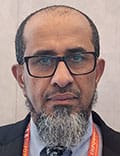
This diversity may prove instructive in managing SCD in a variety of countries, said Salam Alkindi, MD, hematologist-oncologist at Sultan Qaboos University, Muscat, Oman, presenting in a session at the 2025 Sickle Cell Disease Association of America national convention.
Worldwide, SCD is a major public health burden with significant morbidity and mortality, including in Oman and the rest of the Arabian Peninsula and the Middle East. Individuals with SCD are born with two copies of the sickle cell gene, causing their blood cells to be misshapen and “sickle-like,” thereby impeding blood flow. The disease is characterized by episodes of severe pain, often referred to as acute vaso-occlusive pain crises, and patients can have a potentially shortened lifespan.
Of the approximately 8 million cases of SCD worldwide, most are in sub-Saharan Africa, but about 10% are in the Middle East, Alkindi noted.
Oman possesses good data on SCD, Alkindi said. Previous studies by him and others have shown that Oman has a high prevalence of SCD (5.8%) and beta-thalassemia (2.2%), as well as a high rate of alpha-thalassemia (48% have one to two alpha genes).
Additionally, about 25% of the Omani population has glucose-6-phosphate dehydrogenase deficiency, Alkindi said.
Of particular note in Oman is “S-Oman,” a rare and severe variant of hemoglobin, specifically HbS-Oman, said Alkindi. “It is caused by two mutations in the beta-globin chain, resulting in a ‘super sickling’ tendency and a more severe clinical course, sometimes presenting with symptoms similar to severe SCD and often requiring early, aggressive treatment, including transfusions from childhood,” he said.
S-Oman results from two mutations in the beta-globin chain of hemoglobin: the classic mutation at position 6 and a second one at position 121, said Alkindi: “But these patients, unfortunately, although they are only carriers, have manifestations of SCD.”
In Oman, Alkindi said, hematologists are starting to see patients who have both HbS-Oman and “standard” HbSS together.
According to Alkindi, the hemoglobin mutations in Oman often correspond to the country’s different regions. For example, the most prevalent hemoglobinopathy in the northern coastal area that includes the capital of Muscat is beta-thalassemia. SCD is prevalent in a central swath of the country, while a band across the south-central part of Oman does not include much prevalence of either SCD or beta-thalassemia. However, a mutation known as hemoglobin Dhofar and specific to Oman is common in this region.
Alkindi sees a similar geographic spread among the five haplotypes found in the Middle East, named for where they are most prevalent. These include Arab-Indian/Asian, Benin, Bantu, Cameroon, and Senegal. “The Senegal and Arab-Indian are associated with mild disease, and Benin and Cameroon are moderate,” he said. “Bantu is severe and probably driven by hemoglobin F. These types are all seen in Oman.”
The Asian haplotype probably makes the disease a bit milder, particularly in children, Alkindi said. “However, avascular necrosis [AVN] is very common, and we don’t think that this is ameliorated by the Asian haplotype,” he said. “There are other also complications that are improved in the Asian haplotype, particularly stroke, priapism, and leg ulcers, which we rarely see in Oman.”
Consanguinity is another factor affecting SCD in the Middle East, according to Alkindi. “We know that on average about 30% of the people in the Arab world marry within the extended family. It’s less in some countries, like Lebanon with 25%,” he said. “But about 56% of the population in Oman marry within the extended family, while that increases to 60% in Saudi Arabia.”
Following his presentation, Alkindi sat down with Medscape Medical News. The following interview has been edited for clarity.
How important is it for hematologists in North America to understand the SCD genotypes found in the Middle East?
With very few exceptions, the sickle cell population in North America is all African in origin. But understanding the interplay of African and Asian phenotypes is helpful in understanding patients’ trajectories and prognoses. Your patients with SCD in North America could be of Syrian, Lebanese, or Indian extraction, meaning that they are more likely to have Asian haplotypes. More than ever, the whole world is one village. People migrate to visit, study, and work, so we as hematologists should have a complete understanding of SCD from all regions.
How does the genetic makeup of hemoglobinopathies in Oman compare with that of other nearby countries?
We find that Oman has only about 30% Asian haplotypes, and the rest are African. We think this is because, historically, Oman has had more connections with Africa than other Gulf countries do. Our neighboring countries, particularly Kuwait, Bahrain, Qatar, and the eastern part of Saudi Arabia, have more Asian haplotypes. But, going westward, the balance shifts from more Asian to more African. By the time you reach Morocco, Algeria, and Tunisia, the haplotypes are 100% African, which makes sense because they are actually in Africa.
How have you been able to acquire so much data on hemoglobinopathies in Oman?
Everybody born in our hospital gets a cord blood sample taken to test for hemoglobin disorders so that way we’ll know whether they are affected, carriers, or normal. The advantage of doing it at the time of birth is that you can detect alpha-thalassemia in infants, even though alpha-thalassemia carrier status is not possible to detect in adults except by molecular analysis. And nearly half of our population has alpha-thalassemia, so this is important information.
We are also learning that probably alpha-thalassemia is contributing to less cerebral manifestation, although it does increase the risk for painful crisis and osteonecrosis. Many of our patients may not come to the hospital until they have a very advanced AVN, in which they may already require hip replacement by the time we see them.
What is hydroxyurea uptake like in the Middle East?
We have no access issues in the wealthy countries in the Gulf region, but in lower-income countries, there may be access issues. We think only 20% of patients with SCD receive hydroxyurea in those lower-income countries. In Oman, we have no access issues, and about 60% of our patients with SCD take hydroxyurea. Those who choose not to may be wary because it is a chemotherapy drug, and they’re concerned about side effects or long-term safety. If you have a 2-year-old who starts it, they will need to take it continuously for 40 years or more, and, even though it is an old and well-tested drug, parents worry about that for their baby.
Alkindi reported having relationships with Novartis, GBT, Pfizer, Sanofi, Emmaus, AstraZeneca, Sobi, BMS, and Biologix.
Darcy Lewis writes about clinical medicine from Chicago.


