Admin_Adham
 Jump to Key Points
Vitreoretinal operations such as repairing detached retinas and closing macular holes can be performed safely in an office-based surgical suite without an anesthesiologist rather than in a hospital or ambulatory surgery center (ASC), provided the patient is relatively healthy, a new study of 173 eye operations found.
“It’s all about their ASA class,” said David Almeida, MD, MBA, PhD, of Erie Retina Research and the Centers for Advanced Surgical Exploration in Erie, Pennsylvania, referring to the American Society of Anesthesiologists (ASA) classification for clinical acuity.
ASA physical status classification describes a patient’s overall health and medical condition before surgery. ASA class I is a healthy patient and class II is a patient with mild systemic disease.
“So we have zero ASA III or IV,” said Almeida, who reported the new findings at the American Academy of Ophthalmology (AAO) 2026 Annual Meeting in New Orleans. “Two-thirds were ASA I and one-third were ASA class II, and that’s the key because you don’t have the anesthesiology support to deal with the complexity that may arise in the cardiorespiratory systems.”
- Office-based vitreoretinal surgery feasible in selected ASA I-II patients.
- 173 cases; no hospital transfers or anesthetic complications.
- Procedures included ERM peel, RD repair, macular hole repair, gene therapy surgery.
- No endophthalmitis; redetachment rate 6.3%, similar to ASC outcomes.
- Success depends on calm, cooperative, relatively healthy patients; minimal oral sedation + local block.
Almeida reported on the cases performed in his group’s office-based operating suite, which has been accredited by the Joint Commission. The procedures consisted of epiretinal membrane peel (33.5%), retinal detachment repair (27.7%), macular hole repair (20.2%), and gene therapy surgery (18.5%).
Few Complications, Low Redetachment Rate
None of the patients required transfers to a hospital or had anesthetic complications. No cases of endophthalmitis were reported, and the rate of retinal redetachment was 6.3% — in line with results from ASCs, he said.

In the absence of an anesthesiologist, the operating surgeon used minimal oral sedation along with a topical or peribulbar block, Almeida said.
The advantage of operating in an office suite rather than an ASC is flexibility of scheduling, while a hospital carries a higher facility fee than either ASC or an office setting, Almeida said. “You are able to control your OR [operating room] schedule exactly how you want it,” he said.
However, the office-based operating suite must be properly outfitted, he said. “So probably for $30,000 you can get something like this up and running — maybe $50,000,” he said. “Of course, you can spend half a million dollars, but the average retina specialist is going to have to pay for surgical packs, and [surgical] microscopes can be leased, so it can be very low cost.”
A Question of Complexity
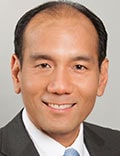
Jason Hsu, MD, co-director of retina research at Wills Eye Hospital in Philadelphia, took exception with the complexity of the retinal procedures done in the office. “Typically, we consider complex cases as diabetic traction retinal detachments, repair of proliferative vitreoretinopathy retinal detachments, and sometimes sutured intraocular lens cases,” he said. “All the types of cases in this study can generally be completed in under an hour.”
The key to successful office-based surgery in these cases is “fairly healthy” patients, he said. “In addition, patients need to be calm, cooperative, and willing to be generally aware during the procedure with only some oral sedation and local anesthesia. Therefore, not all patients will be candidates for in-office surgery, such as those with more severe systemic disease or who are very anxious.”
He also questioned who assessed the ASA class of the patients. “As an ophthalmologist, if we assess a patient as ASA class II but then that patient runs into medical issues during the surgical procedure in office, I wonder if we would be at higher risk of a malpractice lawsuit should an ‘expert’ anesthesiologist for the plaintiff state that the patient was in fact an ASA class III.”
He pointed out a limitation of this study was its small sample size. “It would take thousands of cases to see if there is any higher risk of complications in an office-based setting, such as endophthalmitis and adverse systemic events, that lead to hospital transfer or even death,” Hsu said.
However, Hsu agreed office-based procedures give vitreoretinal surgeons greater control over their schedules.
“We could easily do a same day macula-on retinal detachment add-on immediately after we finish seeing patients rather than having to go to a hospital and potentially be delayed by other surgical services that have more priority,” he said. Some patients could even potentially drive themselves home if they do not need oral sedation.
“I believe that office-based surgery is the future direction many of us may want to go in as we see declining OR access and increasing caseloads,” Hsu added.
Almeida reported having financial relationships with Alcon, Dutch Ophthalmic Research Center, and Zeiss. Hsu reported having no relevant financial conflicts of interest.
Richard Mark Kirkner is a medical journalist based in the Philadelphia area.