Admin_Adham
Intravenous (IV) infusions of the insulin-like growth factor-1 receptor (IGF-1R) veligrotug in people with thyroid eye disease were linked to significant improvement in patient-reported quality of life within 15 weeks of starting treatment, results of a phase 3 study have demonstrated.
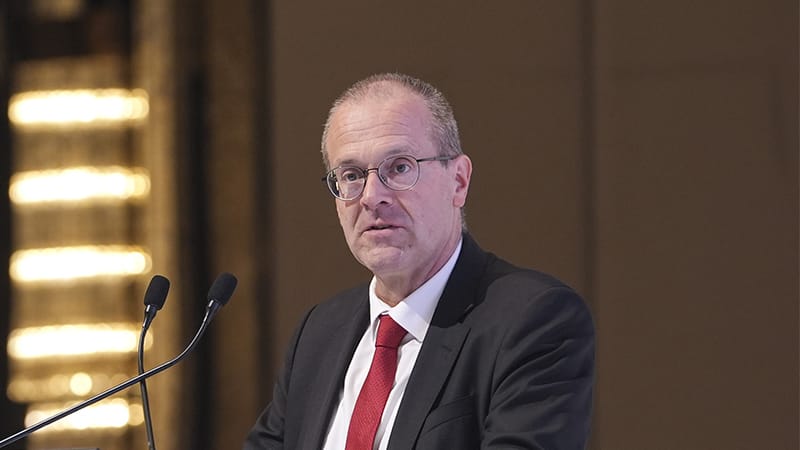
“These improvements translated to a rapid and clinically meaningful improvement in quality of life,” Michael Yen, MD, chair of Ophthalmology at the Cullen Eye Institute of Baylor College of Medicine, Houston, told Medscape Medical News. “The treatment was well tolerated with a placebo-adjusted rate of hearing impairment of 5%.”

The analysis, which Yen presented at the American Academy of Ophthalmology (AAO) 2025 Annual Meeting, adds quality-of-life data to a readout of the THRIVE study earlier this year, which found improvement in proptosis (eye bulging), double vision, and clinical activity.
Veligrotug is an IV formulation of an anti-IGF-1R antibody. The new data looked at 113 patients in THRIVE, 75 of whom received veligrotug. Patients were randomly assigned to five IV infusions every 3 weeks of 10 mg/kg veligrotug or placebo.
Quality-of-Life Measures
The latest analysis used the Graves Ophthalmopathy Quality of Life Questionnaire (GO-QOL) to evaluate participants’ quality of life. At 15 weeks, overall GO-QOL scores were 17.3 for the veligrotug group vs 2.9 for the placebo group. Scores for appearance and function showed a similar disparity: 18.1 vs 3.6 for appearance and 16.5 vs 2.3 for function (P < .001).
Earlier THRIVE results showed a change in proptosis, defined as a > 2 mm reduction, in 70% of the treatment group vs 5% of the placebo group; complete resolution of diplopia in 54% vs 12%; and a clinical activity score of 0 or 1 in 64% vs 18% of patients.
“It is important to assess quality of life in thyroid eye disease because the condition has a significant effect on aspects of life that clinical measurements do not capture, such as self-image, confidence, ability to perform daily activities, and willingness to interact socially,” Yen said. “Our analysis showed that treatment with veligrotug led to a rapid and clinically meaningful improvement in quality of life as measured by the GO-QOL.”
John Chen, MD, PhD, neuro-ophthalmologist at the Mayo Clinic, Rochester, Minnesota, said veligrotug requires five infusions every 3 weeks compared with eight every 3 weeks with teprotumumab, an IGF-1R approved by the FDA for thyroid eye disease in 2020.
Evaluating quality of life is a meaningful outcome for people with thyroid eye disease, Chen said. “If proptosis and other objective measurements improve, but the patients do not feel there is any benefit in their quality of life, we are not actually helping the patient,” he said. “It was wonderful to see that veligrotug led to significantly improved quality of life in the clinical trial.”
Veligrotug “seemed to be well tolerated but still carries a risk of hearing impairment, which was fortunately reversible in the trial,” Chen said. “While I was hoping to see that full antagonism of IGF-1R with veligrotug would be more effective than partial antagonism by teprotumumab, it was exciting to see positive results from the trial, which will hopefully lead to another FDA-approved medication for thyroid eye disease.”
The THRIVE-2 trial of veligrotug in chronic thyroid eye disease, presented separately as a poster at the meeting, showed a less robust response, Chen said, “but it was still promising to see a significant percentage of patients having a response to proptosis, double vision, and quality of life in the chronic stages of thyroid eye disease.”
The studies demonstrate that patients on veligrotug need to be monitored for hearing loss with audiometry, Chen added. “It is still not entirely clear what percentage of patients will relapse after the initial treatment and may require multiple courses of veligrotug.”
The THRIVE trial is sponsored by Viridian Therapeutics. Yen reported serving as a consultant for Viridian. Chen reported serving as a consultant for Horizon Therapeutics.
Richard Mark Kirkner is a medical journalist based in Philadelphia.