

 Admin_Adham
This story is part of Blood, Sweat, and Tears, a special Medscape package exploring the future of diagnostics and health monitoring via body fluids. Read about Blood and Sweat and find out how medicine is on the verge of a biomarker data renaissance.
Marlies Gijs, PhD, has thousands of tiny strips of tear-soaked paper secured in small plastic tubes and stored in powerful freezers at -112 °F.
She’s not some odd collector of human sorrow. She’s a biochemist at the University Eye Clinic Maastricht, Netherlands, who bases her life’s work on one eye-opening fact: A human tear contains more than 3000 proteins. What if you could tap that information to help diagnose and track disease?

“Tear fluid is so much more than just water and salt. It contains a lot of biomarkers,” said Gijs. It also carries lipids, electrolytes, vitamins, and sex hormones.
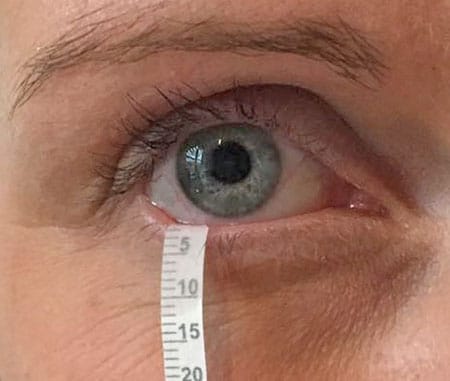
Scientists are exploring tear biomarkers for a range of conditions, from neurological disorders like Alzheimer ’ s and Parkinson ’ s to breast and colon cancers, as well as rheumatoid arthritis, allergies, and multiple sclerosis. And before you ask: No, you don’t need to cry to provide a sample. Scientists use little paper strips, placed inside the lower eyelid, that quickly soak up basal tear moisture. Researchers say such a simple, minimally invasive test could help make early detection more accessible.
Some tears are more useful than others. Emotional tears are different from reflex tears (the kind you get from cutting onions or having something in your eye) and from basal tears, which lubricate the eye’s surface and are always present. Scientists prefer basal tears because they are the most consistent in quality and composition. After all, some people cry a lot and others just a little, Gijs said. Basal tears provide a standard baseline — and avoid the ethical challenge of forcing patients to cry. (Scientists use the term “tear fluid” to distinguish the liquid produced by the lacrimal gland from the visible droplets that form when we cry.)
The most abundant proteins in tears are anti-inflammatory and antibacterial, which protect the eye from infection. Sometimes, though, others enter the mix — such as S100A8, which can indicate breast cancer, or tau protein, a marker of neurodegenerative disease.
Scientists don’t fully understand how these biomarkers get into tears, Gijs said. Some likely seep in through tiny blood vessels on the eye’s protective membrane (the same that can pop and turn the eye red). However, a recent study by Gijs and her colleagues showed that some molecules are more abundant in tears than in blood, suggesting other mechanisms at play.
Close to Tears: Proximity to the Brain
In 2020, Gijs and her colleagues discovered that tau protein appears in the tear fluid of patients with dementia, mild cognitive impairment, and subjective cognitive decline (when patients suspect something is wrong but nothing shows up on tests). A year later, the researchers found that those tau levels correlate with severity of the disease: People with dementia, for example, had more tau in their tears than those with subjective cognitive decline. A 2026 study by researchers in Finland showed that another protein (NP1L4) was eight times more abundant in the tears of people with mild cognitive impairment than in those of healthy volunteers. The need for such accessible biomarkers is urgent: The vast majority of people in early stages of cognitive impairment go undiagnosed.

Why markers of neurodegeneration can be found in tears remains a mystery. One explanation may lie in how close the eyes are to the brain. “It’s all next to each other, and of course in biology you don’t have concrete walls in between everything,” Gijs said. The lacrimal gland is “innervated by fibers which are coming from the cranial nerves, and they are, of course, very, very close to the brainstem,” said Paul Lingor, MD, a neurologist at Technical University of Munich, in Munich, Germany. The brainstem is affected early in neurodegenerative conditions , including Parkinson’s disease, he said.
Currently, diagnosing Parkinson’s often requires a lumbar puncture to check the cerebrospinal fluid (CSF) for clumps of alpha-synuclein, a key marker of the disease. The procedure can be painful and may come with complications, such as bleeding or headaches. “If we could replace cerebrospinal fluid sampling by tear fluid sampling, it would have huge benefits for the patient,” Gijs said.
A 2026 study conducted by Lingor and colleagues showed for the first time that the seeding activity of alpha-synuclein — its ability to make other alpha-synuclein proteins misfold and clump together — could be detected both in CSF and in the tears of Parkinson’s patients, but not in healthy volunteers. However, the tear test was not as sensitive as measurements done in CSF, meaning some patients tested negative despite having the disease. “We can detect it, but it’s still not optimal,” Lingor said.
Another challenge is that people with neurodegenerative disease tend to produce less tear fluid. In one of Lingor’s studies, tear-test strips from healthy volunteers collected a mean of nearly 24 mm in 10 minutes. But in Parkinson’s patients, they collected less than half that amount (10.8 mm). According to Lingor, in some cases it’s challenging to get enough tear fluid for analysis, and in certain patients it may be impossible. Yet such test limitations are not unique to tears. “For some people, you have considerable difficulties to perform a lumbar puncture because they have scoliosis,” he said.
Doctors themselves present hurdles. Neurologists “are not experienced at all with touching the eyes or thinking about the eyes,” Gijs said, which could be a barrier to using tears.
Cancer Screening and At-Home Tests
While Alzheimer’s or Parkinson’s tear tests are still a ways off, a tear-based home test for breast cancer — Auria (Namida Lab) — is already on the market. Users put a test strip inside the lower eyelid, wait 5 minutes, and put it in a sample tube. For now, the sample must be shipped to a lab, but the creators envision a future where results can be read at home, said Suzanne Klimberg , MD, PhD, a surgical oncologist at the University of Texas MD Anderson Cancer Center, who helped develop the test. Klimberg acknowledges that learning high-risk screening results at home may be disturbing, but convenience and accessibility matter. Sixty percent of women over 40 don’t keep up with yearly mammogram s. Home tests are not a replacement for a mammogram, but a positive result is an indication to schedule one and could give some women the extra push they need, Klimberg said. The test has 58% specificity and 92% sensitivity — meaning it’s highly accurate at catching cancer but carries a higher risk of false alarms.
The technology is based on research by Klimberg and her colleagues showing that tear samples from breast cancer patients contained elevated levels of two proteins (S100A8 and S100A9) which are linked to inflammation. Previous studies found that these two proteins were also more abundant in the blood of breast cancer patients and associated with a lower chance of survival.
Klimberg’s vision is to have similar tests for other cancers too. Her 2022 study on colon cancer found that 80 proteins differed markedly between patients with cancer or high-risk polyps and those who were healthy or had a low-risk profile. However, the result wasn’t as “clean cut” as it was in breast cancer.
More Diagnostic Data

Tears could become the liquid to test for multiple sclerosis (MS). Under a microscope, dried-out tears form patterns that look like ferns. But tears from MS patients tended to form smaller, finer, and smoother crystals. In contrast, tears from healthy people form rougher structures with longer, thicker branches. A distinct balance of organic and inorganic components causes them to “crystallize differently,” said Vladimí ra Tome čková, PhD, a biochemist at Pavol Jozef Safarik University in Košice, Slovakia. In their 2023 study, Tomečková and her colleagues found that the tears of MS patients varied considerably in their protein content compared to tears of people without the disease.
The list of conditions that could be diagnosed with tears keeps growing. Allergies are on that list, as is Lou Gehrig disease, which remains hard to pinpoint with current tests. Gijs is working on tear biomarkers for Huntington disease, though “it takes more time to collect a good number of samples to do analysis” for such rare conditions.
Despite the early science and challenges, Gijs is optimistic tear tests will be adopted in clinical practice someday. “That’s, of course, my dream,” she said. “I think much, much more biomarkers and tests will become available.”
Klimberg serves on the clinical advisory board for Namida Lab, the maker of the Auria home breast cancer test. She also owns stock in Namida Lab. Gijs , Lingor, and Tomečková report no relevant disclosures.


