

 Admin_Adham
The patient was a woman in her mid-40s with metastatic pancreatic cancer. “It was a terrible diagnosis for someone so young,” recalled her oncologist Arturo Loaiza-Bonilla, MD, chief of hematology and oncology at St. Luke’s University Health Network in Bethlehem, Pennsylvania.
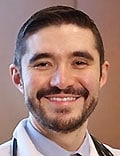
Loaiza-Bonilla started the patient on standard chemotherapy, but she developed an unusual side effect, which eventually required hospitalization.
After 13-plus years in practice, Loaiza-Bonilla trusted his intuition that something didn’t fit.
He ordered a liquid biopsy that revealed a pharmacogenomic variant likely causing her reaction; it also revealed that the patient had no detectable KRAS mutation, a hallmark of more than 90% of pancreatic cancers. A tissue biopsy soon confirmed her tumor was driven by a rare gene alteration, allowing Loaiza-Bonilla to switch her to a drug targeting that alteration. In two cycles, her CA 19-9 tumor marker plummeted, and imaging showed the tumor had essentially disappeared.
“Her cancer is one in a million,” said Loaiza-Bonilla. But “I just had this feeling that I can’t explain.”
Oncologists described this kind of gut feeling in different ways: “a sixth sense,” “an inner voice,” and “the art of medicine.” Some might call it intuition — an instant, often subconscious ability to understand or “just know,” derived from years of experience; others may call it gut instinct — the sensation that something is right or wrong before it’s possible to explain why. Whatever the label, this feeling ultimately shapes a physician’s judgment — the process of deciding what to do with that gut feeling, one that often blends intuition with analytical reasoning.
Developing that gut feeling — and knowing when to trust it — is not something doctors are born with. It is forged over years of treating patients, making difficult decisions when there’s no clear answer, and sometimes getting things wrong. However, as AI tools become increasingly embedded in cancer care, some physicians wonder: If algorithms can do the pattern matching faster and at greater scale, will the next generation of oncologists get the chance to develop intuition — and the judgment to know when to trust it?
On the Edge of Evidence
Because cancer rarely behaves the same way in every patient, and there is often more than one reasonable treatment path, oncologists routinely make high-stakes decisions in the face of uncertainty — decisions that can influence how long, or well, patients live.
“Absolute certainty is unachievable in clinical medicine,” said Benjamin Djulbegovic, MD, oncologist and professor at the Medical University of South Carolina in Charleston, who studies uncertainty and medical decision-making.
To deal with this uncertainty, many doctors, particularly those with less experience, report relying heavily on guidelines, additional testing, and literature reviews to make decisions. Increasingly, AI tools can also help physicians sift through a glut of information and recognize patterns more readily. But as physicians gain more experience, many learn to trust their clinical judgment amid uncertainty — basing decisions on a combination of analytical and intuitive or experiential thinking, Djulbegovic explained.
Aaron Goodman, MD, reflected on his own evolution from following “the guidelines to a T” to trusting his gut.
Goodman remembers a woman with leukemia who helped trigger his shift. All tests showed she was a good candidate for a bone marrow transplant. Even so, Goodman recalls “a feeling in the pit of my stomach” that she would do horribly.
“What the tests don’t capture is what I’d seen happen to other patients with similar conditions who also had good hearts and lungs,” said Goodman, a hematologist and oncologist specializing in bone marrow transplantation and high-risk leukemia at MountainView Hospital in Las Vegas.
Goodman shared his reservations with the patient, but she opted for surgery anyway — and died in the hospital. In the aftermath, he regretted not following his gut to refuse to perform a bone marrow transplant.
“I distinctly remember telling myself afterward that I’m done with not trusting my instincts,” Goodman recalled.
Loren Rourke, MD, breast cancer surgeon in Texas, describes how years of experience have taught her to trust herself when uncertainty arises. Rourke often uses tiny markers or localizers placed in the breast to guide her to a tumor — a surgeon’s Global Positioning System (GPS). But sometimes these devices fail.
Rather than halting the operation, Rourke calls upon “The Force,” a Star Wars reference she uses to describe the instinct she’s developed from more than 20 years of practice.
“I’ll often grab tissue that doesn’t look any different from other tissue, yet the node will be there 99% of the time,” said Rourke, who previously served as the chief surgical officer for the US Oncology Network.
The Limits of Instinct
Over 30 years in practice, Don Dizon, MD, has come to rely on his instinct in nearly every patient encounter. But a case during his residency taught him an equally important lesson: Never rely on instinct alone.
He was taking care of a patient admitted with shortness of breath. “My instinct told me it wasn’t serious, so I didn’t do much beyond the minimum,” recalled Dizon, chief of hematology and oncology at Tufts Medicine in Boston.
But it was important. “She had an aortic aneurysm that blew that night,” he said.
Trusting one’s gut is an important guide, but it needs to be informed — an internal conversation between my left and right brains, a weighing of risk and benefit, Dizon explained. “Over the years, I’ve made myself become very aware of this conversation because in some scenarios what you perceive as instinct can be implicit bias,” he said. “The data must always inform any feeling I’m having.”
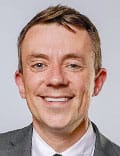
Mark Lewis, MD, director of gastrointestinal oncology at Intermountain Healthcare Cancer Center in Murray, Utah, finds that this kind of balancing act comes into play most when established care pathways don’t fit the patient. That happens about 20% of the time, he estimated, particularly in cases on the edge of evidence.
“Intuition gets more pronounced as you get deeper into treatment,” he said, “and especially when you’re dealing with novel therapies.”
Lewis learned that lesson firsthand when he was diagnosed with pancreatic cancer shortly after starting his fellowship.
“Over the years, I received three very different surgical opinions from expert surgeons at world-class institutions,” Lewis said. “What that taught me is there’s a lot of judgment here, and no physician is omniscient.”
Being candid about uncertainty also allows you to tap into a patient’s intuition. “Their embodied experience, their visceral sense of whether something is working or not, is incredibly strong and underrecognized,” Lewis said. “I’ve found that merging the two intuitions is really powerful and brings us closer together in the therapeutic relationship.”
AI and Trust
AI tools that support diagnosis and treatment decisions will make some clinical questions easier to answer, experts said. The larger question is what happens to clinical judgment when a tool can pattern-match across millions of cases faster than any physician can think. Will AI take over for clinical judgment or enhance it, making sense of an abundance of information while still leaving the oncologist to think critically?
Clinical judgment is built through experience and often through hardship: through the patient who died after a bone marrow transplant despite meeting criteria for surgery, through the aortic aneurysm missed on a busy overnight shift, and through 20 years of reaching for tissue in an operating room when the GPS fails. Some physicians worry that if AI absorbs some of that learning curve — smoothing the uncertainty, flagging the anomaly, and suggesting the diagnosis before the physician has wrestled with it — less experienced doctors may struggle to form the clinical judgment that comes from handling difficult cases.
Lewis worries that AI could “short-circuit” our critical thinking. “If it’s doing all the hard work for you, then you’re not building your intuition muscle,” he said. And “it’s important for physicians to keep doing that.”
Overreliance on AI may also undermine the human connection in oncology, said former US Oncology Network’s Rourke.
“The one thing all my patients remember is holding my hand when they went to sleep in surgery,” she said. “If we’re heading into a world where machines do everything, then medicine will become cold, calculating, and robotic.”
But AI is a long way from taking over distinctly human tasks, said Loaiza-Bonilla, also chief medical AI officer at Massive Bio, a Florida-based company that connects patients to clinical trials. A major challenge, he explained, is that experts have yet to define intuition in a meaningful way. If the people who depend on intuition every day can’t explain what it is and how it works, how do we know whether a machine can do the same?
Even as AI technology becomes more sophisticated, medicine remains filled with uncertainty. And where uncertainty exists, physicians must still decide what to do — drawing on evidence, experience, and sometimes a feeling they can’t fully explain.
“There’s some beauty in intuition that is mystical,” said Loaiza-Bonilla. And it’s those sweet spots — when knowledge and intuition merge to save a patient like the woman with pancreatic cancer — where “we take big pride,” he added. “It’s what keeps us going as doctors.”
Goodman is an advisor to OpenEvidence, which sells an AI-powered medical search engine and clinical support tools to healthcare professionals. Other relevant disclosures are noted within the piece.
This article is part of an ongoing, year-long Medscape series examining the decline of public trust in medicine. More content is available here.


