

 Admin_Adham
 Jump to Key Points
For headache neurologist Christopher Gottschalk, MD, severe pain is familiar territory, but cluster headache stands apart — not only for the agony it inflicts but for the gulf between patient suffering and what medicine has to offer.
Patients describe the feeling of a “hot poker” through the eye with pain so severe, they would rather be shot than endure another attack. These attacks escalate within minutes and often strike in the middle of the night, sometimes so frequently that patients are afraid to sleep.
“It is a horrifically disabling disorder,” said Gottschalk, a professor of neurology at Yale School of Medicine, where he serves as chief of the Division of General Neurology and director of the Fellowship Program at the Headache & Facial Pain Center in New Haven, Connecticut.
Despite its severity and distinct clinical presentation, cluster headache remains under researched, is frequently misdiagnosed, and can be difficult to treat. An accurate diagnosis can take years, and even then, treatment options are few.
- Cluster headache: severe unilateral orbital pain; dx often delayed 7–10 years.
- Misdiagnosis common: migraine, sinusitis, eye disorders; attacks often nocturnal ≈2 AM.
- ~40% report high suicidal ideation; highest risk during active cluster cycles.
- Episodic cluster: acute triptans/high-flow O2 + bridge/preventive tx; galcanezumab FDA-approved.
- Rare headache disorders/TTH/NDPH/MOH remain underfunded; NDPH and chronic TTH highly refractory.
Cluster headache is a blind spot in headache medicine, but it’s not the only one. While calcitonin gene-related peptide (CGRP)-targeted therapies have revolutionized migraine treatment, they aren’t always effective in other rarer headache types which remain comparatively overlooked.
Research on tension-type headache (TTH), new daily persistent headache (NDPH), medication overuse headache (MOH), rare trigeminal autonomic cephalalgias (TACs), and other rare disorders receive far less investment, contributing to gaps in diagnosis, treatment, and management, despite the significant burden of pain and disability they cause.
It’s a source of frustration for patients and clinicians who are left to wonder when their revolution will come.
‘Crumbs on the Table’
Current estimates suggest that cluster headache and NDPH each affect 0.1% of the population, compared to migraine which affects 1 in 7 people. The prevalence of TAC subtypes such as hemicrania continua (0.0022%), paroxysmal hemicrania (0.0014%), or short-lasting, unilateral neuralgiform with conjunctival injection and tearing (SUNCT; 0.0012%) are even rarer.
Migraine receives more research funding and clinical attention than many rarer headache disorders, in part because it is more prevalent and a leading cause of disability worldwide, said Molly Fensterwald, MD, assistant clinical professor of neurology at the University of California, Los Angeles Goldberg Migraine Program.

Its large patient population may create greater incentives for industry investment and recruitment for clinical trials while other rarer headache disorders often have fewer high-quality clinical trials, she noted.
This remains an important unmet need, as many of these conditions can be highly disabling even though they are less common, said Fensterwald. For example, a recent study showed that adults with cluster headaches spend 3.1 million person-days per year globally experiencing pain rated at a 9 out of 10 — more painful than gunshot wounds or migraine attacks.
Researchers at the Qualia Research Institute in California found that the burden of cluster headache is comparable to that of multiple sclerosis (MS), yet investment pales in comparison. The UK-based analysis showed that since 2006, MS received £137,445,421 ($181,665,736 US) in public research funds while cluster headache received no public funding.
In the US, funding for cluster and other rarer headache disorders is lacking, too.
In 2025, the National Institutes of Health (NIH) directed just 0.1% of its $48 billion research budget toward headache disorders. Most of that was allocated to migraine research.
When you consider that migraine is already significantly underfunded, it leaves those less common headache disorders and TACs with basically nonexistent investment, Gottschalk said.
“The most recent estimate was that in 25 years, the NIH has invested about $25 million in anything you could remotely call cluster headache research, which is literally crumbs on the table when it comes to research funding,” he said.
Decoding the 2 AM Headache
This lack of investment is particularly striking given the severity and distinctive presentation of cluster headache. Attacks produce rapidly escalating, unilateral orbital pain. The pain can also cause redness, tearing, or drooping of the eye on the affected side, via the same pathway that makes eyes water when eating a chili pepper.
Recent estimates suggest that patients with cluster headache wait 7-10 years for an accurate diagnosis. This can result in prolonged pain and a significant psychological burden, Fensterwald noted. Common misdiagnoses include migraine, sinusitis, or eye disorders.
But unlike patients with migraine, who typically want to lie down in a dark, quiet room, those with cluster headache often become restless and frantic with the pain. The attacks are shorter, typically lasting for about 45 minutes to an hour, but the severity of the pain has led to the colloquial label “suicide headache,” with roughly 40% of patients experiencing high levels of suicidal ideation.
Patients are at the highest risk for suicidality in the middle of attack cycles, said Mark Burish, MD, PhD, a neurologist and assistant professor at the McGovern Medical School and director of the Will Erwin Headache Research Center in Houston.

“From that perspective, I often will discuss with patients when your next headache cycle happens, we want to have a plan in place and as soon as it starts, you send me a message,” Burish said.
The disorder’s circadian pattern can compound the burden of this headache type. Across time zones, the most common time for cluster headaches to strike is 2 AM.
“Since the vast majority of cluster patients have an attack overnight…it makes going to sleep itself traumatic. They say, ‘I’d rather stay up and not have to wake up in severe pain.’ So that is both a fascinating feature and a very problematic one,” Gottschalk said.
Burish and other researchers are trying to decode cluster headache’s circadian rhythm in the hopes of identifying new treatment targets.
“The big picture idea is if we could figure out what is causing it to be at that time, could we trick the brain into thinking it’s not that time? Could we just block the headache from ever starting? That’s the dream,” he said.
Genetics is another active area of ongoing research. A 2021 study by Andrea Carmine Belin, PhD, and colleagues identified four chromosomal regions are significantly associated with cluster headache. This finding led to the establishment of the International Consortium for Cluster Headache Genetics, a global collaboration investigating the genetic basis of cluster headache and other rare headache disorders.

While that research continues, experts emphasize treating cluster headache early and aggressively. For episodic cluster headache, management often combines acute treatments, such as triptans or high-flow oxygen, with bridging and preventive therapies. Providing patients a clear management strategy and the tools to act quickly can provide a greater sense of control over an otherwise distressing condition, Fensterwald noted.
The CGRP inhibitor galcanezumab is FDA approved for episodic cluster headaches at a higher dose than that used for migraine. Although most patients have episodic cluster, up to 20% suffer from chronic cluster headaches which is notoriously refractory to treatment. This can be a significant source of frustration for patients, Fensterwald said.
For these patients, the typical approach is to try different off-label combinations of bridging and preventive treatments to achieve remission.
Swapping One Headache for Another
While the low prevalence might partially explain the under-investment in rarer headache disorders, TTH is the most common primary headache disorder, yet also receives little research funding. Approximately 3% of the population have chronic TTH, defined as headache occurring on 15 days or more per month.
Although it affects 2 billion people globally, TTH is not a research priority, in part because the pain is typically mild to moderate and does not cause the same degree of individual disability as migraine and cluster headache.
However, at the population level, the burden is substantial. In 2021, TTH accounted for 4.6 million years lived with disability. Experts said that even small improvements in TTH prevention or management could yield significant public health benefits.
“Treatment is one of the clearest areas where TTH is less advanced and unstudied,” said Sait Ashina, MD, assistant professor of neurology and anesthesia at Harvard Medical School and director of the Comprehensive Headache Center at Beth Israel Deaconess Medical Center in Boston.
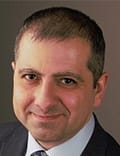
Ashina, one of the few researchers studying the condition, said it is often misdiagnosed as migraine, potentially resulting in ineffective treatment. Misdiagnosis also may occur because clinicians don’t recognize TTH as a distinct, standalone headache disorder, he noted.
Treatment options are not novel. The tricyclic antidepressant amitriptyline remains a first-line preventive therapy for chronic cases, while acute attacks are commonly treated with over-the-counter drugs such as acetaminophen and ibuprofen.
But use of these nonprescription treatments can lead to another headache type — medication overuse headache (MOH). In 2023, MOH accounted for more than 50% of years lived with disability attributed to TTH among men and women globally, underscoring the importance of education about medication overuse.
“We don’t know how much they’re taking so patients can easily get into a medication overuse situation which can be really difficult and sometimes catastrophic for patients because it’ll be a rebound daily headache and patients will have an issue with side effects,” he said.
Although research showed that anti-CGRPs are effective for MOH in migraine, their efficacy in MOH-TTH is unclear.
Experts agreed that the key to MOH prevention is a correct diagnosis. “More often than not, what appears to be a pattern of medication overuse is really just using a drug that doesn’t work,” Gottschalk said.
“MOH is not so much a disorder that needs better study. It’s more of a concept that needs to be reassessed, redefined, and clarified because it tends to skew the approach to treatment of patients,” he added.
A Curious, Constant Headache
With NDPH, researchers face a more fundamental problem. Its causes and pathophysiology are unknown. Researchers have proposed several possible triggers, including viral infection or head trauma, but no clear mechanism has emerged.
“This is a headache syndrome that we don’t really understand. What happens is that someone who doesn’t really have much of a headache history all of a sudden develops a headache that’s constant,” said Matthew Robbins, MD, a professor of neurology and division chief of Headache Medicine at Weill Cornell Medicine in New York City. “Because it’s so unusual, it’s not included in things like clinical trials that people with migraine or even cluster headaches get to have opportunities for.”
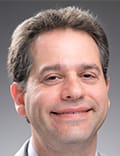
Robbins, who also is president of the American Headache Society, has identified NDPH, alongside cluster headache, as a priority for research funding.
NDPH is also highly refractory to treatment. In the absence of clinical trials, the current evidence base relies on clinical experience and case reports. Some patients have benefited from migraine medications, onabotulinumtoxinA or nerve blocks.
Current estimates suggest that NDPH affects 0.1% of the population but limited research means its true prevalence may be higher.
“If you ask any adult or pediatric neurologist or headache specialist, often it’s anywhere from 10% to 20% of the patients that they see in their clinics,” Robbins said.
Limited public and clinical awareness of the condition can be a source of patient frustration for patients, particularly when others don’t understand how incapacitating NDPH can be, he added.
Working With Borrowed Evidence
Extremely rare TACs, including hemicrania continua or SUNCT, have next to no dedicated trials. However, treatment approaches for these disorders may benefit from migraine and cluster headache research because of shared pathophysiology.
Although the International Classification of Headache Disorders provides clear diagnostic criteria, triggers and treatment effects vary widely among patients, said Belin, director of the Centre for Cluster Headache and principal investigator at the Department of Neuroscience at the Karolinska Institutet in Sweden whose research contributed to the creation of the International Consortium for Cluster Headache Genetics.
For these disorders that are incompletely understood, headache diaries are particularly important for both patients and their neurologists in order to get the best possible outcomes of available treatments, she noted.
For patients with rare headache disorder who don’t respond to CGRPs-targeted therapies, drugs that target pituitary adenylate cyclase-activating polypeptides, which act through a different mechanism, may offer another option.
Neuromodulation has also shown promise as a therapeutic. A noninvasive vagus nerve stimulation device has been cleared by the FDA for the treatment of cluster headache, paroxysmal hemicrania, and hemicrania continua. Research suggested that neuromodulation devices might benefit patients with other rare headache disorders.
Such devices may be particularly useful for patients who can’t or don’t want to take medications, including patients who are pregnant or breastfeeding or older adults, Robbins noted.
Genetic research is also expanding globally. In Sweden, Belin continues to investigate genetic links to cluster headache and is working to establish a cellular model for the disorder. Burish is conducting a 10-year study collecting genetic data on cluster, hemicrania continua, trigeminal neuralgia, SUNCT, and other headache disorders. He hopes the findings will yield insights that inform the development of new treatments.
Signs of Hope
At Yale, Gottschalk and colleagues are investigating psilocybin as a potential treatment for headache disorders. In an extension phase of a small randomized controlled trial, the group reported that low doses of psilocybin reduced the frequency of cluster headache attacks. One hypothesis is that the psychedelic acts on the serotonin 2A receptor to regulate hypothalamic dysfunction associated with cluster headache.
Harvard’s Ashina has also called for longitudinal research to identify TTH predictors, along with clinical phenotyping studies to better characterize its episodic and chronic types. Such research could guide more targeted therapies, he said.
However, research is only part of the answer. Greater clinical attention to the mental health toll of severe headache disorders could also improve care.
“We need a term for what it is that cluster patients live through because it’s not posttraumatic stress disorder. It is an ongoing and future stress disorder. These are people who live with fearing ‘when am I going to have the next attack of the worst imaginable pain?,’” Gottschalk noted.
Despite the persistent gaps in research and treatment, Robbins believes there is reason for optimism because of the growing number of clinicians specializing in headache medicine.
Although treatments for less common headache disorders are not always supported by robust clinical trial evidence, specialists can draw on their experience to tailor care to individual patients.
It’s important that people don’t lose hope, he said.
Burish reported serving as a consultant for Lundbeck, Pfizer, and Seaport (founded by PureTech Health), was a paid guest for a video podcast by the American Academy of Neurology and was an unpaid member of the medical advisory board of Clusterbusters. Gottschalk reported serving on the scientific advisory boards of AbbVie, Pfizer, and Lundbeck. Ashina disclosed consulting/advisory boards and/or honoraria for AbbVie, Amneal Pharmaceuticals, Axsome Therapeutics, Eli Lilly, Impel Neurophrama, Linphrama, Lundbeck, Teva, Theranica, Pfizer. Fensterwald, Belin, and Robbins declared having no relevant disclosures.



