

 Admin_Adham
At the European Congress on Obesity 2026 in Istanbul, Turkey, in May, a former concert pianist stood before an audience of physicians. He did not play for them.
Instead, he presented research on why learning about art history and art might help doctors — particularly those who care for patients with obesity — be more empathetic and less judgmental.
The pianist, Michael Yafi, is now a pediatric endocrinologist at UTHealth Houston, and his deep interest in the arts and medical humanities now informs his practice — and he wants to inform other physicians about it.
“Medical humanities is a relatively new field of medicine,” he said. “It looks at the more global relationship between medical diagnosis, health, and healing — medicine in general — and art, philosophy, music, poetry, literature, and anything related to humanistic studies. I love classical music and art and have been doing a lot of work on this topic.”
While Yafi is a pediatrician, his medical humanities research stretches beyond his clinical field. He now spends much of his time at the intersection of art history and medicine, a place that’s illuminated what he thinks is best in the physician-patient connection, and areas where all doctors could use some illumination of their own.
The Educational Virtues of ‘Corpulence’
Yafi’s presentation at the medical meeting included an overview of the human form in art across time and cultures. Although modern societies, especially in the Global North, tend to idealize thin bodies, he said historically many cultures connected being heavy to success and vitality.
In art, “corpulence was a sign of prosperity, wealth, high social status, and physical strength,” Yafi said, noting that it’s not uncommon to see famous sultans, kings, heroes, and other male leaders portrayed as overweight. He said that in Greek art and mythology, powerful men are large; for example, Pluto, the god of the underworld and wealth, is often pictured as obese.
Medicine has pathologized identity as disease.
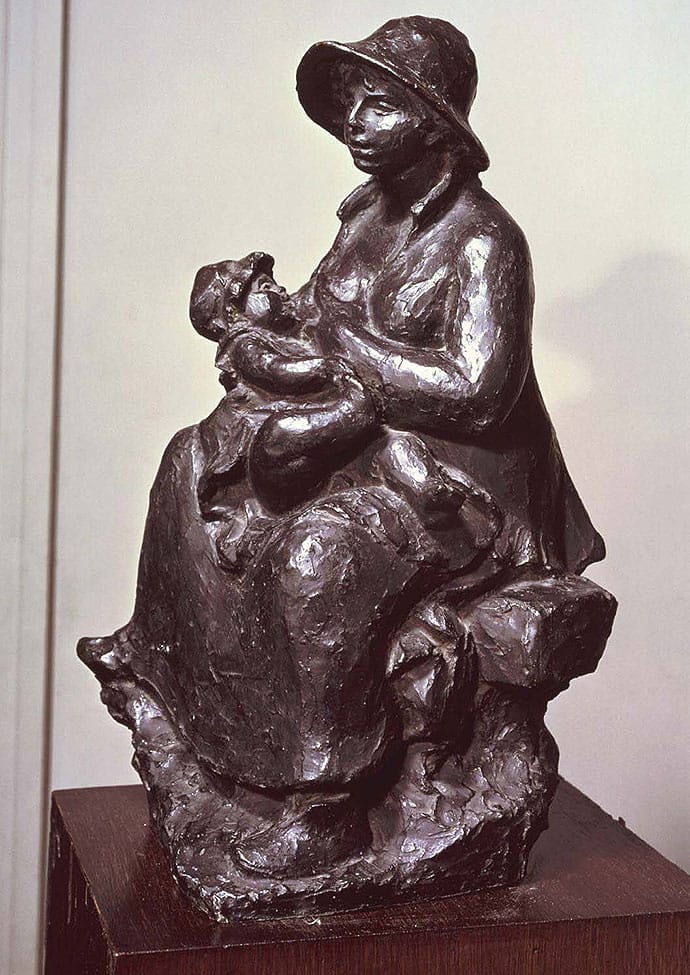
For centuries, artists have painted and sculpted larger-bodied women to tell visual stories of health, beauty, and fertility, Yafi said. The Venus of Willendorf, an 11.1-cm Paleolithic sculpture exhibited at the Naturhistorisches Museum in Vienna, Austria, is famously believed to represent a mother goddess.
“A number of artists have been inspired by the earliest goddess figures, whose forms were depicted with exaggerated breasts and bellies to emphasize their femininity and fertility,” said Suzannah Niepold, associate director of student and educator engagement at the Philadelphia Museum of Art.
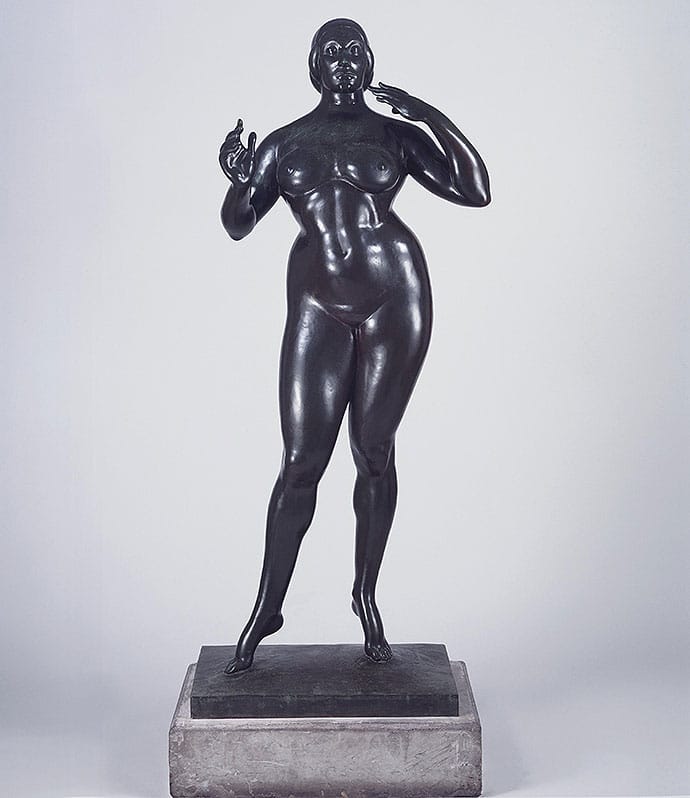
Some other examples include Niki de Saint Phalle, Gaston Lachaise, and a scene of Queen Esther, said Niepold. “In the scene of Queen Esther, a Jewish woman, braving death to advocate for her people to her Persian husband, a blue cloth draped low around her middle draws the viewer’s attention to her womb. In this example, her ability to provide an heir is key to her power,” she said.

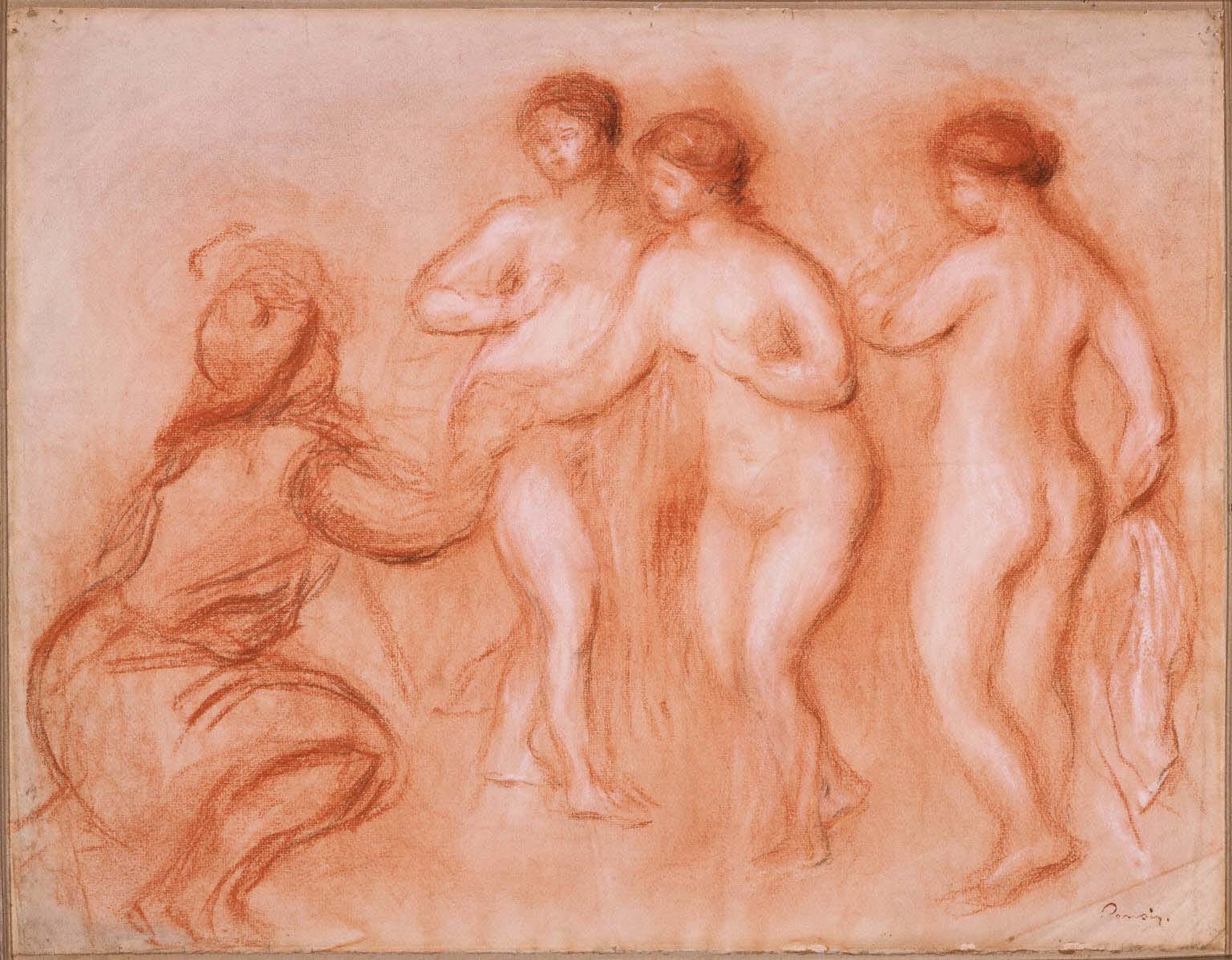
Martha Lucy, deputy director for research, interpretation, and education at the Barnes Foundation in Philadelphia, said, “One of the best examples of an artist who portrays plumpness positively is Pierre-Auguste Renoir.” Lucy said one of the Barnes’ many Renoirs, Bather Gazing at Herself in the Water, painted in 1910, comes to mind. “You’ll notice how her curves rhyme with the contours of the landscape. In a work like Bather Gazing, as in so many others from Renoir’s last decades, plumpness is meant to signal a healthy body — a body connected to the earth and to nature, as opposed to the more modern, ‘chic’ Parisian bodies distorted by corsets. Renoir hated this trend. Renoir certainly intended for this woman to be perceived as beautiful, too — not just healthy,” Lucy said.

Weight Stigma, Human Health, and Modern Medicine
The depiction of the human body in art vs how we view it today is one of the areas where Yafi sees crossover and learning opportunities with medical humanities. He said weight stigma is common — even in the medical profession, even among those who work directly with patients with obesity. While he believes that learning about art history and art can help chip away at weight stigma among physicians, it’s just one piece of the puzzle.

Weight stigma or weight bias is defined as socially devaluing individuals based on their body size, shape, or weight, said Larissa A. McGarrity, PhD, clinical psychologist in the Department of Physical Medicine and Rehabilitation at the University of Utah in Salt Lake City. “It is absolutely pervasive in our culture and in our society and is perpetuated at many levels,” including at the policy level, in the media, and by loved ones of an individual who struggles with weight. “Physicians and other healthcare providers are certainly not immune to that bias against patients in larger body sizes,” said McGarrity.
Yafi points out that for a long time, obesity was considered a self-inflicted condition. “Physicians couldn’t even bill for the diagnosis of obesity because it was not reimbursable. You had to bill for abnormal weight gain or for prediabetes. You had to use different medical billing to make the payer pay for the visit and for the labs,” he said.

“Decades of compelling research demonstrate the harms of weight stigma on mental and physical health,” said Rebecca L. Pearl, PhD, associate professor and director of research in the Department of Clinical and Health Psychology in the College of Public Health and Health Professions at the University of Florida in Gainesville.
The goal is to make the medical student see beyond the textbook, studies, numbers — to see the individual.
Studies show the experience of being bullied or criticized for being overweight, or discriminated against or treated unfairly due to weight, causes stress and can have detrimental effects on the body and mind, Pearl said. She said stress can lead to engaging in unhealthy behaviors, including increased eating (especially unhealthy foods) to cope, and avoidance of physical activity (especially if individuals feel shamed or self-conscious about their bodies).
People may also internalize the discrimination they experience related to weight, and this can undermine their confidence and ability to accomplish goals, including health goals, she said.
“For example, if someone internalizes stigmatizing weight-related messages that they are lazy and have no self-control, they may not believe that they can eat healthfully or engage in physical activity,” Pearl said.

“There are historical examples of how medicine has pathologized identity as a disease,” and that includes weight, said Lisa Erlanger, MD, clinical professor of family medicine at the University of Washington School of Medicine in Seattle.
Erlanger is concerned that weight stigma that happens in healthcare settings can lead to patients avoiding doctors’ offices. People may worry about being shamed or lectured about their weight by their healthcare provider, and this may lead to missed opportunities for preventive care and an exacerbation of existing health problems that go untreated. “That pathologization is part of how the population becomes more sick,” Erlanger said.
Studies show healthcare professionals provide lower quality of care when they hold negative, biased views of patients with a high weight, which has additional negative impacts on patient health, Erlanger said. A 2025 review of studies that looked at weight stigma found that believing weight was in a patient’s control fosters blame and stigma.
Weight stigma, like other types of stigma, is built into healthcare systems, which makes it hard to extinguish it, said Erlanger, who is also president of the Association for Weight and Size Inclusive Medicine. She points to doctors’ offices that don’t provide chairs, gowns, or blood pressure cuffs for all sizes of people.
Yafi said weight stigma in healthcare affects even the youngest of patients. He’s a pediatric endocrinologist and sees many patients with obesity and their parents, and it’s always a sensitive topic. “I always try to be careful — talking about extra weight and weight gain rather than labeling the patient as obese,” he said, noting that many in his medical specialty are working to remove stigmatizing language from research papers as well.
Overcoming Weight Stigma in Healthcare Through Art
Can art truly help shift long-held biases about body size among physicians and other healthcare providers? Yafi believes learning about art history and exposure to the arts can help play an important role in building empathy. He said more and more medical school and early career programs are cropping up to address attitudes about body size through the arts.
“In many medical schools, the arts have become part of the curriculum. I think the goal of such integration is to make the medical student see beyond the textbook, studies, numbers — to see the individual,” Yafi said.
For example, Duke University School of Medicine’s Trent Center for Bioethics, Humanities & History of Medicine in Durham, North Carolina, offers an anatomic drawing program that runs at the same time first-year medical students are taking gross anatomy class “to help students experience anatomy in a more holistic way,” according to the Duke’s program description.
The Philadelphia Museum of Art leads several programs for medical students and professionals with the goal of increasing medical empathy. Sometimes the process of exploring a work of art as a group is a valuable experience simply because participants find themselves listening to other people in the group whose opinions and perspectives on the artwork are radically different from their own — but no less correct. Niepold said it gives medical students the chance to see that “each individual brings their own lived experience, their own lenses for understanding the world. As we listen, we remember that our own way of perceiving the world is limited and that it is important to try to see from other points of view.”
A study involving medical students and physicians who participated in an art observation program at Rijksmuseum in Amsterdam, Netherlands, suggested arts-based observation training increased participants’ empathy.
The Barnes Foundation’s Lucy said the idea of using art to influence attitudes about weight makes sense. “If you’re looking at an old master like Rubens or Titian, seeing those plumper figures makes you realize that what is considered beautiful changes over time. Maybe that leads to empathy. Or maybe it’s just that the act of looking at a human body compels the viewer to sort of project themselves into the body depicted. Maybe the imaged human form brings awareness to the viewer/physician that the depicted subject is completely in the hands of the artist — and therefore vulnerable,” Lucy said.

Pearl agrees. “It’s possible that exposure to more positive messages about weight, and to images that depict individuals with larger bodies in relation to beauty, may serve to challenge some of these deeply ingrained stigmatizing beliefs,” she said.
Yafi notes that weight stigma is just one area of focus in medical humanities. He hopes to expand the understanding of the field — and also hopes that through art physicians will come to “look at the patient in a holistic aspect” and gain a deeper understanding of all the challenges that come with their health.
The experts cited in this article reported no relevant disclosures.


