

 Admin_Adham
 Jump to Key Points
Over a career spanning five decades, Debbie Allen has distinguished herself as an artistic icon. Her work as an actress, dancer, choreographer, director, and producer has earned her an honorary Oscar, six Emmy Awards, two Tony Awards, a Golden Globe, the Kennedy Center Honors, and four honorary doctorate degrees, in addition to many other accolades. Outside of her many creative accomplishments, one of the other driving forces of Allen’s life is HIV/AIDS advocacy — which comes from a very personal place.
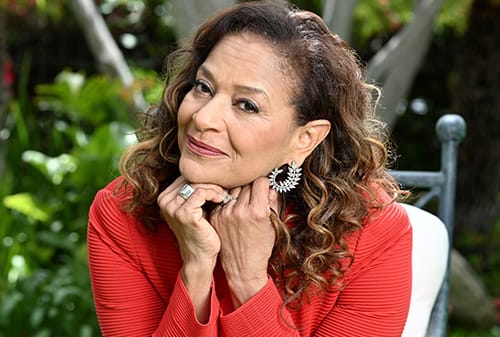
Allen was working on Broadway in the early 1980s when the theater community she loved began to be decimated by what was, at that time, a mysterious illness. “The New York Times called it a ‘gay cancer,’ which it turned out not to be,” she recalled. Tragically, Allen watched countless friends, fellow dancers, directors, and choreographers die from the disease, which was later identified as AIDS. She vividly remembers the helplessness she experienced. “These incredible losses left so many of us feeling like we were not able to do anything,” she said. “What could we do? How could we help? We didn’t know what HIV/AIDS was. It was a crisis of fear and panic.”
As Allen worked through her enormous grief, she made an important decision: She would use her work to raise awareness about HIV and try to save lives. “What good is celebrity if you aren’t giving something back to your community?” she said. Allen vowed to bring the topic of HIV/AIDS to the forefront in entertainment media because, in many TV and film projects, the topic was still considered taboo at that time.
She broke ground in this way in 1991, while working on the TV series A Different World. Allen directed If I Should Die Before I Wake, an episode in which a college student in a public speaking class, played by Tisha Campbell, revealed to her professor, played by Whoopi Goldberg, and her fellow students that she was HIV-positive. The student’s brave choice to speak out helped to remove stigma and ignorance about HIV. If I Should Die Before I Wake became one of the highest-rated episodes of that TV season and made a strong cultural impact.
- HIV/AIDS advocacy rooted in early Broadway-era losses; stigma/fear impeded response.
- 1991 A Different World episode used HIV disclosure to reduce stigma + ignorance.
- >50% of people living with HIV are now ≥50 years old.
- HIV remains ongoing epidemic; suppression alone insufficient for whole-person care.
- Holistic support: mental, physical, spiritual care + housing/food resources.
Her Continued Commitment
As the years passed and discussion about HIV/AIDS became normalized, Allen was encouraged. Yet her commitment to advocacy remained, as she put it, “unbreakable.”
“Science has moved forward and people are living with HIV,” she said. “It’s a different time. Today, more than 50% of people living with HIV are 50 years old and older. That is such a blessing and wasn’t even possible when I first saw the disease 45 years ago — back then, it was a straight-up death sentence. Still, there’s no war that has been won here. HIV/AIDS is an ongoing epidemic, and people with HIV need hope.”
Allen believes that a whole health approach to living with HIV, in addition to treatment/suppression, can help those living with HIV feel better, both physically and emotionally. She’s working on a new awareness campaign, Your Hive of Whole Health, that encourages patients who are HIV-positive to build “hives” of personal care support so that all of their needs can be addressed.
“I like the idea of a hive, because if you know about bees, they take care of each other,” Allen said. “A hive of people can help you live a healthier life, because your mental, physical, and spiritual aspects are all connected.”
Allen also believes it’s crucial that patients receive positive reinforcement when they reach out to others. “We need to be more empathetic, loving, caring and helpful,” she said. “People need food, they need housing. You can find advocacy groups and people that will help, as well as support from your family, friends, and doctor.”
The Doctor’s Perspective
Caroline E. Mullis, MD, infectious disease specialist and attending physician at The Oval Center at Montefiore and assistant professor of medicine or infectious diseases at Montefiore Einstein in Bronx, New York, believes, as Allen does, that compassionate support is an essential need for every patient with HIV. “My role as a provider extends beyond medical treatments and appointments to supporting my patients in accomplishing whatever goals they have for themselves,” she said. “That could be going back to school, becoming a parent, or maybe getting a promotion. Some of our patients come to us with deep commitments to their mind, body, and spirit already. Others need support with their mental and spiritual health before they can prioritize medical treatment.”
Mullis also stresses to her patients how important it is for them to be kind to themselves because this can provide their best health outcomes. “In my experience, self-care measures look different for every patient living with HIV,” she said. “I often ask my patients to think about an activity that they enjoy doing, and to spend some time engaging in that activity over the coming week. I find that many of my patients appreciate this as a reminder that their own joy is important, and worth prioritizing. For those who may struggle to think of a self-care activity, I suggest trying things like going on a walk in the park, catching up with a friend, or making art.”
Hope as a Component of Care
Allen believes that physicians connecting with their patients as people can be hugely beneficial in helping them live well with HIV. “Personally, I grew up with doctors making house calls, who would come to your home and take the time to learn not just about your medical issues, but about your world,” she said. “I have a doctor today who asks about my family, my work, and what my life is like. My doctor is not just treating my physical being, but is taking care of my well-being. HIV patients need their doctors to be open to doing this, too.”
Ultimately, Allen says that she’s seen the power of hope change the lives of those living with HIV, and with the right consistent care, she knows that these patients can thrive.
“I saw a young woman who is HIV-positive give birth to a child who is not HIV-positive — to me, that’s a miracle,” she sums up. “People with HIV can live full, vibrant, healthy lives. HIV/AIDS is an ongoing battle — but everyone can be on the front lines together. Let’s go!”
Allen reported being a spokesperson for Your Hive of Whole Health. Mullis reported having no relevant financial relationships.



