Admin_Adham
It’s been a challenging time for the novel factor XIa inhibitor class of anticoagulants as clinical trials failed for milvexian in acute coronary syndrome and asundexian in atrial fibrillation (AF). But the third time might be the cardiovascular charm, with the announcement of positive top-line results of the OCEANIC-STROKE trial of asundexian.
More details are embargoed until the phase 3 trial of secondary stroke prevention after a noncardioembolic stroke is presented at the upcoming International Stroke Congress.
“What I can tell you is this study met both the efficacy and safety outcomes, so that has a potential to really change how we approach stroke prevention,” said principal investigator Mike Sharma, MD, of the Population Health Research Institute.
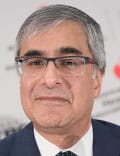
“I think this changes things for secondary stroke prevention, offering a whole new direction and long-term therapy,” agreed Clay Johnston, MD, PhD, MPH, co-founder and chief medical officer at Harbor Health in Austin, Texas, and co-chair of the Executive Committee for the ongoing LIBREXIA-STROKE trial of milvexian.
Dosing Questions
Both asundexian and milvexian are investigational, oral, small molecule factor XIa inhibitors. Most currently prescribed direct oral anticoagulants block factor Xa and while highly efficacious, they still carry a significant risk for bleeding. Hence the continued pursuit of a potentially safer anticoagulant.
The positive and negative OCEANIC trials used the same dose of asundexian: 50 mg daily.
“What I think is ironic is that that dose failed in OCEANIC-AF but looks like it’s a hit in OCEANIC-STROKE,” Jeff Weitz, MD, professor of medicine and biochemistry and biomedical sciences at McMaster University and executive director of the Thrombosis and Atherosclerosis Research Institute in Hamilton, Ontario, Canada, told Medscape Medical News.

A suboptimal dose of asundexian could be partially responsible for the failure of the OCEANIC-AF study, Robert A. Harrington, MD, Stephen and Suzanne Weiss Dean at Weill Cornell Medicine and Provost for Medical Affairs, Cornell University, New York City, told Medscape Medical News. “That is certainly a hypothesis that is worth considering as the asundexian AF study was halted due to harm — worse outcomes compared with apixaban — while the milvexian study in AF continues.”
Librexia-AF is testing 100 mg milvexian twice a day. Administering milvexian twice daily could lower any disparity in peak to trough concentration differences, Weitz said.

The risk for hemorrhage was lower with asundexian compared with apixaban in OCEANIC-AF. Sharma, who is also director of the Stroke Program at McMaster University and Hamilton Health Sciences in Canada said that if asundexian had demonstrated similar efficacy to apixaban, “that would have been a very attractive option for physicians and patients.”
Extrapolating the dose from AF or deep vein thrombosis studies to other conditions may not be the optimal strategy. Sharma said, “One of the biggest learnings for us was stroke is different: noncardioembolic stroke is different from AF which is different from DVT [deep vein thrombosis].”
“Certainly, it is possible that factor XI/XIa inhibition works in some conditions but not others,” said Harrington, who is involved in studies with milvexian.
Another major trial stopped early was the phase 3 LIBREXIA-ACS, after an interim analysis determined that it was unlikely to meet its primary efficacy endpoint. In that trial, milvexian was dosed at 25 mg twice daily.
No new safety concerns emerged which is why LIBREXIA-STROKE and LIBREXIA-AF are continuing. Results are expected in late 2026, Johnston said.
Apixaban Is the One to Beat
The disparate findings raise the question of whether the comparator — placebo in the stroke trial and apixaban in AF — made a difference in the OCEANIC studies.
Apixaban is very efficacious in AF, noted Harrington. “So the challenge in developing a new anticoagulant is that the new agent has to be at least as good as a very good stroke prevention anticoagulant.”
Apixaban is the number one medication for AF worldwide, Sharma said. It also could be available as a less expensive generic soon. Two generic forms were FDA approved in 2019, but availability has been delayed due to patent litigation.
Apixaban is a “relatively inexpensive, very effective and safe anticoagulant, so pushing that off the perch is not going to be trivial,” Weitz said. “It’s much tougher to go head-to-head with apixaban, and I think in OCEANIC-AF we saw that.”
Pricing Reality Check
Even if a factor XI/Xia inhibitor emerges with greater efficacy and/or safety, there is still clinical acceptance, cost, and insurance reimbursement to consider.
If an agent is more effective and safer, Weitz said, “I think that would be one that would get reimbursement, but if it’s just noninferior for efficacy and safer, then how much safer does it have to be before the payers say: I’m going to pay 10 times more for this drug than for apixaban?”
Based on the anticipated primary results from OCEANIC-STROKE, asundexian will be “ground-breaking,” Johnston predicted. “It will either be groundbreaking slowly because of a high price or it’ll be groundbreaking very quickly in the secondary store prevention world.”
Future Possibilities
The failure of OCEANIC-AF and LIBREXIA-ACS had coagulation experts very concerned about the factor XI/XIa inhibitor class. “But then boom, OCEANIC-STROKE comes out and it’s positive,” Johnston said. “So it does change your whole thinking about what the future might look like.”
Other factor XIa inhibitors in development include the injectable monoclonal antibodies, abelacimab, and REGN7508. The problem with the antibodies Weitz said “it’s like a light switch. It’s either on or off. And to be on you have to have enough antibody in the circulation to really saturate all the factor 11”. To achieve that, they’re given monthly. “If you have a small molecule that could be given once or twice a day, it might be preferable to an injectable,” he said.
Additionally, there are antisense oligonucleotides and small interfering RNAs that lower factor XI levels.
Abelacimab is being investigated in the LILAC trial of high risk patients with AF deemed unsuitable for oral anticoagulation. “If abelacimab does not reduce the risk of stroke compared with placebo, then they’re kind of out of the game,” Weitz said. “So far the independent data monitoring committee hasn’t closed down that study.”
Johnston predicted factor XI/Xia inhibitors could eventually prove useful beyond secondary stroke prevention noting that for those with a contraindication for direct oral anticoagulants, “If that risk of hemorrhage goes away, there is a large group of people who could benefit.”
Regarding any additional clinical indications for these inhibitors, Johnston added, “We will only begin to understand in the next year to year and a half.”
Meanwhile, the primary results of the OCEANIC-STROKE trial will be presented at 11:15-11:27 AM central time on February 5, 2026, at the ISC in New Orleans. The methods paper is published online in the European Stroke Journal.
The OCEANIC trials were funded by Bayer HealthCare. The LIBREXIA studies were funded by Bristol Myers Squibb Company. Sharma disclosed consulting for Bayer, Regeneron, and Anthos, research funding for the current study from Bayer paid to his institution, and research funding from BMS and Janssen. Weitz disclosed that he has served as an advisor or consultant for Bayer HealthCare, Bristol-Myers Squibb, Janssen Pharmaceuticals and Novartis Pharmaceuticals Corporation. As the Executive Committee Chair for the milvexian research, Harrington’s professional effort is covered in a research contract between Janssen and Stanford and a subcontract from Stanford to Weill Cornell. Johnston reported receiving compensation as co-chair of the Executive Committee for the LIBREXIA-STROKE trial.
Damian McNamara is a freelance contributor to Medscape Medical News. He worked full-time for Medscape and WebMD from 2018 to 2024. McNamara has a BA in chemistry and an MA in science, health, and environmental reporting/journalism. He works out of a home office in Miami, with a 100-lb chocolate lab known to snore under his desk during work hours.