

 Admin_Adham
Is the EU on the precipice of a new golden age for psychedelic-based therapy?
Germany and the Czech Republic have recently moved to legally recognize the potential of therapeutic psychedelics, and Estonia may soon join them as discussions on their medical use are underway. Other EU nations could follow in their footsteps.
The programs have a common goal: to provide a safe and effective therapy for otherwise refractory, often life-threatening conditions.
Clinicians practicing in these countries might need to prepare for the onslaught of patient demand.
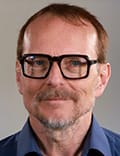
“I believe, in Germany alone, there are probably several tens of thousands of patients who fulfill the criteria for treatment-resistant depression,” said the country’s psychedelic program founder and leader, Gerhard Gründer, MD, professor of psychiatry and head of the Department of Molecular Neuroimaging at the Central Institute of Mental Health (CIMH) in Mannheim, Germany.
The program requires considerable resources and is very personnel-intensive. “I think that we can probably treat 50 patients per year in the first year at each site,” he said.
Flexibility Is Key
Germany is the first EU country to establish a compassionate psilocybin use program — a regulated expanded-access pathway that lets patients with serious conditions receive the drug in a medical setting even though it isn’t an approved medicine.
Two facilities, CIMH and OVID Clinic Berlin, have been approved by the Federal Institute for Drugs and Medical Devices to provide inpatient therapy for treatment-resistant depression. A unique feature is the ability of practitioners at these facilities to determine patient eligibility without having to wait for case-by-case government approval, unlike other European countries.
Gründer emphasized that the program’s built-in flexibility is important. Practitioners have the ability to offer step-up dosing following an initial 25 mg psilocybin dose based on patient need, readminister the drug following relapse, and conduct therapy in group sessions.
“Our program also allows for the inclusion of more treatment centers,” he said. “First, we have to establish a routine in terms of credentialing other centers. I know that there are some university centers already participating in the clinical trials. Once we confirm that the therapists there know what they are doing, those sites could be included in the compassionate use program.”
“After a year, we will probably have five or 10 different sites, which would increase the number of patients that we can treat,” said Gründer.
A Page From Medical Cannabis
The Czechs have adopted a slightly different approach. Taking a page from the legalization of medical cannabis, they have created a legal medical psilocybin category that distinguishes therapeutic from Schedule I, illegal psilocybin.

Tomáš Páleniček, MD, PhD, head of the Psychedelic Research and Translational EEG Center at the National Institute of Mental Health in Klecany, Czech Republic, told Medscape Europe News that Czech law limits prescribing to licensed psychiatrists or clinicians who also hold a secondary license in psychotherapy. These professionals will receive training from experts already experienced in administering ketamine within the same therapeutic framework.
They will be able to prescribe psilocybin for conditions such as treatment-resistant depression, existential distress in oncology care, and severe psychiatric disorders with suicide risk when standard therapies have failed but evidence supports potential benefit. Additional indications include eating disorders, refractory obsessive-compulsive disorder, and posttraumatic stress disorder.
The Czech Psychiatric Association is also developing clinical guidelines that will describe how psilocybin should be used. In contrast to Germany’s program, sessions will be individualized, although group sessions might be a future consideration once more physicians are trained.
A key challenge that could delay the launch of the Czech program lies in the drug formulation. Hospital pharmacies are tasked with preparing psilocybin for patients, and regulations require that it be medical grade and produced under Good Manufacturing Practice standards.
EU-Adjacent Swiss Example
Switzerland’s first restricted psychedelic program ran from 1988 to 1993, permitting five psychiatrists to use lysergic acid diethylamide (LSD) and 3,4 methylenedioxymethamphetamine (MDMA) for various psychiatric disorders. Building on that early experience, the country has operated a structured, limited medical use program for more than a decade. Clinicians must obtain treatment authorization from the Federal Office of Public Health to use psilocybin, MDMA, or LSD in treatment.
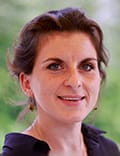
“It’s not the wild, wild west as some people might think,” said Helena Aicher, PhD, psychologist specializing in psychedelic research and psychedelic-assisted therapy (PAT), postdoctoral scientist at the Universities of Zurich and Basel, and member of the Swiss Medical Association for Psychedelic Therapy, where she trains PAT therapists.
In 2024, Switzerland’s Federal Office of Public Health granted 723 treatment authorizations — 348 for psilocybin, 245 for MDMA, and 130 for LSD. However, the field remains small: only about 100 authorized physicians provide PAT across 80 private practices and 15 institutions, including four university hospitals.
According to Aicher, physicians can delegate aspects of PAT to other trained professionals, such as psychotherapists or psychiatric nurses — an approach that helps ease the strain on limited resources.
Aicher noted that many patients seeking PAT are already engaged in ongoing, individualized psychotherapy. Some, however, are not and request PAT directly or are referred by other clinicians. Depending on each patient’s background and therapeutic needs, psychedelic treatment and subsequent follow-up sessions may take place individually or in a group setting.
“It depends on the therapist and how they work, and also the infrastructure. It’s a clinical vs a protocolized, top-down approach,” said Aicher.
A Patient’s Journey
The Swiss model has benefited patients like 49-year-old Frank Ser, a German native who now divides his time between Germany and Switzerland. Diagnosed with exhaustion depression, a severe burnout-related depressive state, Ser was referred to Aicher by one of the five Swiss psychiatrists authorized to use psychedelics during the country’s first pilot program in the late 1980s.

Between 2022 and 2024, Ser underwent PAT, initially in a group setting. “I was used to solving everything on my own,” he told Medscape Europe News. “It was relieving to hear from other people, learn what they were struggling with, and see if they were similar to me. It gave me a good framework.”
Like many PAT patients, Ser began treatment with MDMA, which, like psilocybin, has a shorter duration of action than LSD. “I had three or four treatments with MDMA, but after a while I realized that I wanted to have something with a longer duration because it would allow me to contemplate more. So I asked for and switched to LSD,” he said. Ser eventually ended therapy when he felt it had served its purpose.
Today he works full-time, enjoys a better home life with his wife and two children, and has no regrets. “It gives you perspectives, ideas, directions, realizations that you wouldn’t otherwise get…if you approach it with an open mind and are willing to look into the darker corners, your darkest parts.”
Both Ser and Aicher stressed that psychedelics are not a cure-all. “Psychotherapy is a linear process. For most, it’s a long process,” said Aicher. “These patients are treatment-resistant for a reason and also live in a social context; they have a life history.”
“Any therapy can be a bit risky, and psychedelics are no exception. You have to find a new equilibrium or homeostasis. The substance sessions are a start ,but the real work starts afterwards,” she said.
Moving Forward
As Germany and the Czech Republic move to establish their own psychedelic treatment frameworks, experts say early lessons from Switzerland highlight key considerations.
More data is still needed to understand who responds to these therapies, Aicher said. Also, structure, standardization, and protocols can help, especially when therapists don’t have much experience starting out.
At the same time, she stressed that clinical experience, patient context, and open professional exchange remain essential. “In medicine, you learn from experience and practice and lean into clinical expertise,” she said. “It’s still early and messy and also risky… Having these standards of intuition, supervision, and network is invaluable.”
How other European countries apply these lessons will determine how quickly — and safely — psychedelic therapies find a place in routine clinical practice.
Gründer reported being the co-founder and CEO of OVID Health Systems, Berlin. Páleniček reported having shares in Psyon s.r.o. and Společnost pro podporu neurovědního výzkumu s.r.o. and is the founder of PSYRES — The Czech Psychedelic Research Foundation. Aicher reported receiving consulting fees from Mind Medicine for one advisory meeting. Sers reported having no relevant financial relationships.
Liz Scherer is an independent health journalist who writes about cannabinoid therapeutics and psychedelics in the US, Canada, and Europe.


