

 Admin_Adham
Is it ever too late to go to medical school?
Not many students find out. An Association of American Medical Colleges study of medical school enrollment for the 2024-2025 academic year found that matriculants ranged in age from 17 to 55 years old. But only 2.8% were older than 30 years. This is a marked difference from the general graduate student population, where the average student age is 33 years and the number of older, “nontraditional” students has risen in recent years.
Is med school just more demanding on a student’s time than other fields? Possibly. The higher energy levels and absence of familial responsibilities in young adulthood might seem like advantages for those pursuing medicine. But some older-than-average students — often well into middle age — find that they are better equipped to handle the demands of medical school later in life. They see their greater emotional, familial, and financial stability, not to mention the wisdom of their years, as assets that have guided them through the challenges of medical training.
Medscape Medical News spoke to three “mature” medical students about their journeys toward meaningful second (or third, or fifth) careers as physicians.
‘Buckle up!’
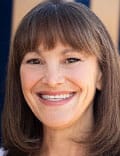
During the COVID-19 pandemic, Jen Reinmuth-Birch could be found in the back of a converted school bus, her husband at the wheel, as her twin sons studied for the scholastic assessment tests and she studied for the medical college admission test (MCAT). The family initially converted the bus to use for vacations. But once the pandemic hit, they seized the opportunity to travel the country while they were all working or attending school remotely.
“I had to piece it together as I went along, without any roadmap,” Reinmuth-Birch said of her winding road to medical school, which she embarked on when she was 50 years old. “I was flying blind.”
Reinmuth-Birch wrote about her experience living in the bus for her application essay to Pacific Northwest University of Health Sciences. Now a 55-year-old fourth-year medical student at the university, she still runs into staff members who remember that essay. The things that made her “nontraditional” helped make her a memorable and magnetic applicant.
Reinmuth-Birch grew up in the 1980s when girls were often discouraged from pursuing medicine. Her high school chemistry teacher told the female students to sit in the back of the classroom because “they weren’t going to understand the course material anyway.” A college advisor told Reinmuth-Birch to pick an easier major and marry a doctor rather than pursue the medical route herself.
So she majored in liberal arts and became a stay-at-home mom in her mid-twenties. Her first husband didn’t support her lingering interest in medical school, and eventually, she talked herself out of her dreams.
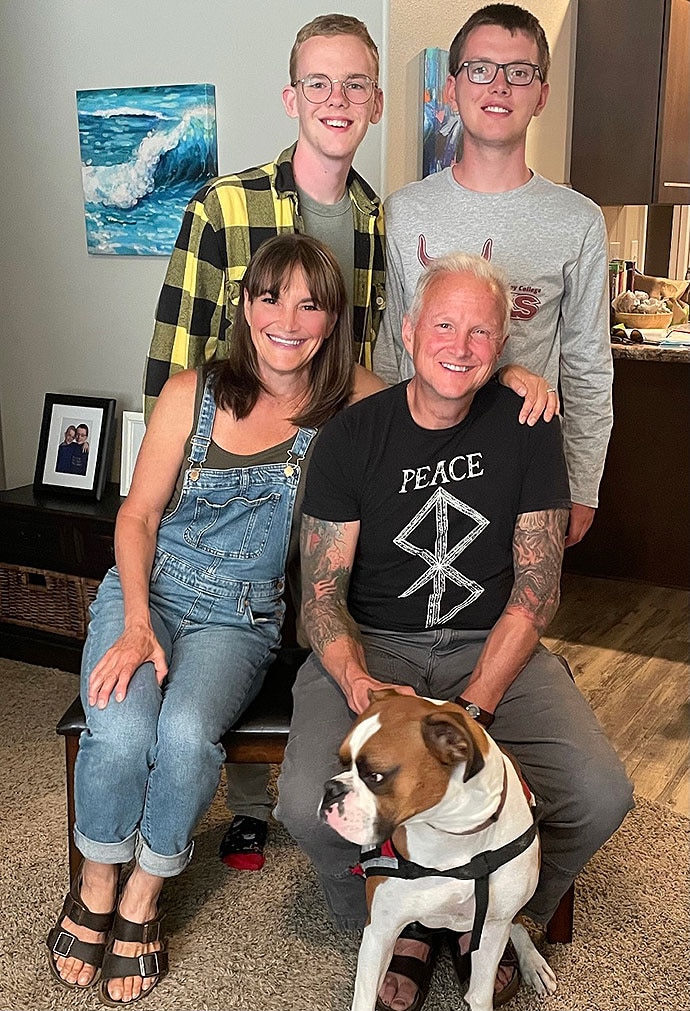
Five years after the birth of the twins, Reinmuth-Birch became a single mother. She raised her sons while working as a barista and receptionist. As they grew, she attended night school and later worked as an autism researcher. But when everyone began asking what the twins were going to do post-high school, Reinmuth-Birch’s second husband asked her, “What are yougoing to do?”
Before long, Reinmuth-Birch was typing “How do you apply to medical school?” into Google and studying for the MCAT with help from YouTube videos. Her hard work and ingenuity paid off.
“Schools were absolutely thrilled by someone who wanted to attend medical school later in life,” she said. “If you’re coming straight from a university, you’ve got great book smarts. But you need real-world experience to develop people smarts. My people smarts were a great asset in medical school.”
Still, Reinmuth-Birch had first-day-of-school jitters, joking to her husband, “‘You remember all those ‘80s TV shows where the new kid walks into the cafeteria with the tray, and no one will let them sit at their table?’” she said. “But I was never ‘the 50-year-old medical student.’ I was always just Jen. I’ve made some lifelong friends that are half my age.”
With these friendships, Reinmuth-Birch sometimes finds herself in a mentorship role. She recalls a time one of her 24-year-old peers had failed an exam and was sobbing that it was “the worst thing that had ever happened” in her life.
“I was like, ‘Oh, honey, buckle up!’” Reinmuth-Birch laughs. “In the grand scheme of things, it’s just not that big a deal. Once you’ve been through a divorce, a couple of mortgages, the loss of someone you love dearly, all of those things give you a lot of perspective about what’s really worth stressing out about.”
From the Body Shop to the Cadaver Lab
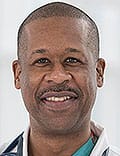
Two decades ago, Carl Allamby, MD, was analyzing symptoms, using diagnostic equipment to solve complex cases, and performing checkups. This was all while working on cars as a master technician in Cleveland, where he owned and operated a successful garage for 20-plus years.
“The grit and perseverance that it takes to be successful in business prepared me for my medical studies,” Allamby said. “Having that constant curiosity to know more and drive to do better is paramount in a medical education.”
Allamby graduated from Northeast Ohio Medical University in 2019, at the age of 47. Now 53, he works as an emergency medicine physician at the Cleveland Clinic, Cleveland.
Growing up in a working-class neighborhood in Cleveland, Allamby dreamed of becoming a doctor. But when he graduated from high school with a low grade point average (GPA), he believed that his possibilities were limited to working as a garbage man, bus driver, or factory worker like his neighbors. Being around so many hard-working people rubbed off on him more than he realized, though, and he went on to set up his first garage two blocks from where he grew up.
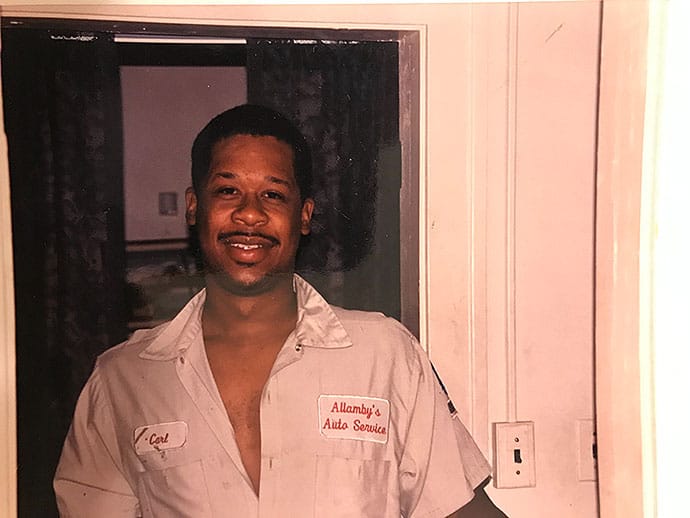
Allamby’s business success built up his confidence and, at age 34, he decided to pursue a business degree at Ursuline College. It was there that he was “begrudgingly forced” to take an introductory biology class taught by a resident physician, only to rediscover his childhood dream.
After finishing his degree, Allamby set his sights on med school. He earned a 4.0 GPA and enthusiastic encouragement from professors, while taking pre-med courses at Cleveland State University, Cleveland.
Allamby had been able to juggle running his business with his college and pre-med courses, but med school was another story. So just before starting, he held an auction for the contents of his body shop, selling almost everything he had accumulated over 25 years.
“It was liberating,” Allamby said. “I knew great things lay ahead for me. My employees supported my efforts until the last hours when we all said goodnight and goodbye for the final time.”
Although Allamby’s wife would continue her work as a physical therapist, the couple wondered whether they could manage without his income. Ultimately, by keeping a rigid budget and living frugally, they made it work.
Allamby’s home life also offered stability as he navigated the challenges of medical school. “Younger people face uncertainty about what they’re going to do for the rest of their life, or who they’re going to love, or where they’re going to live,” Allamby said. “I already had all of that figured out.”
He credits his family with making his medical school dreams possible, decades after they began. “I have an incredibly supportive wife and children,” he said. “When you have that kind of support, almost anything is attainable.”
A Calm State of Mind
In 2000, Oliver Schirokauer was a 37-year-old math professor at Oberlin College. That year, three of his family members were diagnosed with cancer in quick succession. While the doctors explained what was happening in each case, Schirokauer and his family found they didn’t have enough support when it came to making decisions. They turned to other family members and friends who had medical experience for guidance and advice.
“We were struggling, but we were fortunate that we had people we could turn to,” Schirokauer said. “But what about patients who didn’t have access to those kinds of resources? I felt that there was a gap in care, and I wanted to see if I could have some impact on filling that gap for other people.”
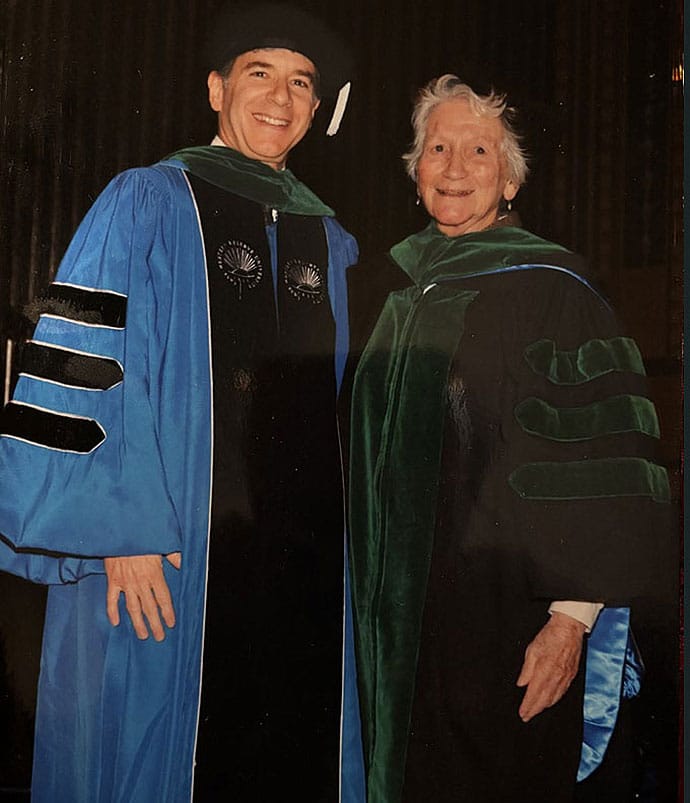
This sense of purpose is what led him to pursue a medical career at age 47. Now 62, Schirokauer has spent most of his life in higher education, several decades teaching at Oberlin and then medical school at Case Western Reserve University (CWRU), Cleveland, where he later became an assistant professor of bioethics.
While CWRU welcomed older students and had a smattering of med students in their thirties and forties, Schirokauer was still the oldest in his class. “I think the younger students in my pre-med classes sort of enjoyed having this person around who was a little bit different than the rest,” he said, “and I enjoyed them.”
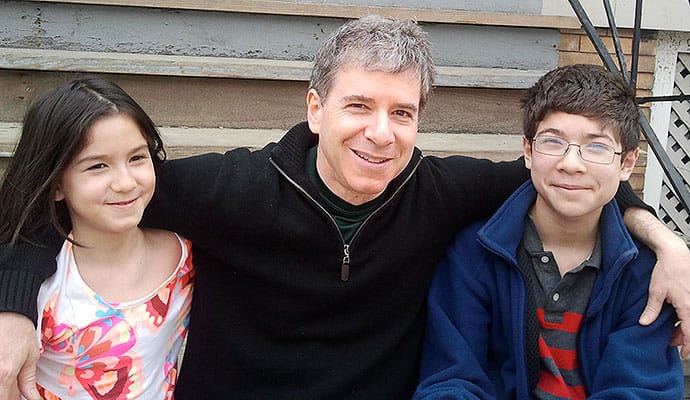
Schirokauer was more concerned about balancing his daunting medical school workload with raising his young children, then aged 5 years and 9 years. “Navigating the other commitments in my life could have been difficult,” he said, “but it was actually an advantage, because it forced me to put boundaries around my medical school work.” Meanwhile, Schirokauer saw some of his classmates get “swallowed up” and overwhelmed.
Schirokauer’s approach to medical school also differed from his younger peers who were often driven by a fierce ambition to prove themselves. They wanted to work in academic medicine, juggle clinical and research work, or generally make a name for themselves in the field. But Schirokauer had a simple goal: helping to close the gap between medical jargon and patient decision-making.
“Overall, they were more ambitious than I was,” he said of his classmates. “I’d already had an extensive professional life. I wanted to do well and learn as much as I could, but being older and having other priorities, I was not as focused on the performance aspect.”
In fact, Schirokauer is not sure he could have handled medical school 20 years earlier, without the perspective that his later years brought.
“If I had gone to medical school in my twenties, it would have been a much more difficult endeavor from a mental health perspective,” he said. “I would have wanted to perform at the highest level, and I would have been in that whole performance anxiety state of mind. Being older, I was able to navigate it more calmly than I would have as a younger student.”
As for the “gap” he noticed 25 years ago, Schirokauer has worked to bridge it by founding and directing the Medical Facilitation program, which operates at MetroHealth System, Cleveland, and provides several forms of support for overwhelmed patients.
Schirokauer, Allamby, and Reinmuth-Birch all feel that a wealth of life experience has helped them to navigate challenges and ultimately, to thrive in training and beyond. For them, it wasn’t too late to go to med school. In fact, it was just the right time.
