

 Admin_Adham
 Jump to Key Points

One thing healthcare professionals share across disciplines is the job and all that comes with it. The “medical life” is serious and high-stakes but also a carnival — rollercoasters and merry-go-rounds and guessing games. This Medical Life collects the stories and captures the moments that resonate.
The plan was three countries in 10 days — Uganda, Kenya, and Tanzania. I was with an international group of 60 volunteers, three ob-gyns, several family medicine and internal medicine docs, pediatricians, a physical therapist, phlebotomists, and pharmacists. There were people from Australia, New Zealand, the UK, and all over the US. But no one from Africa who was local.
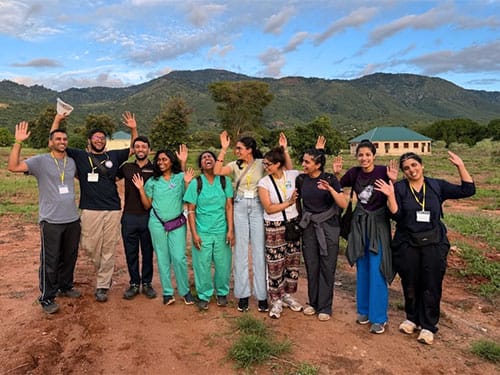
It was a dream opportunity, something that had been building in me since I was a child.
When I was 6 years old, my mom was diagnosed with ovarian cancer. My parents were immigrants from India, moving first to Canada and then to the US. When they found the mass, my mom was pregnant with my sister. She was able to have a vaginal delivery, then surgery, and responded well to treatment for 6 years. And then one day, I noticed her eyes were yellow. She passed a year later. She was 36.
- Mission trips often lacked local clinicians; sustainability questioned.
- Screening quality issues: variable acetic acid source altered cervical cancer results.
- Antibiotic use in mass clinics may ↑ risk of antimicrobial resistance.
- Procedures raised consent, follow-up, and complication-management concerns.
- Local infrastructure/partnerships may outperform short-term fly-in care.
My desire to help women, to fight, advocate, and not give up, it all stems from this experience.
I grew up in a spiritual group of Sathya Sai Baba, who taught, “Love all, serve all, help ever, hurt never.” So, from a very young age, community service was a big part of my life. As a teenager in the US, I remember watching an episode of the Oprah Winfrey Show with Dr Catherine Hamlin, an ob/gyn who founded a fistula hospital in Ethiopia. A light bulb went on. I knew that was what I wanted to do.
After I qualified as an ob/gyn, I gave a national talk for my spiritual group about how our values — love, peace, truth, right conduct, and nonviolence — can be our superpowers. Afterward, someone approached me. They were planning a medical mission trip to Africa. Would I like to be part of it? Heck yeah!
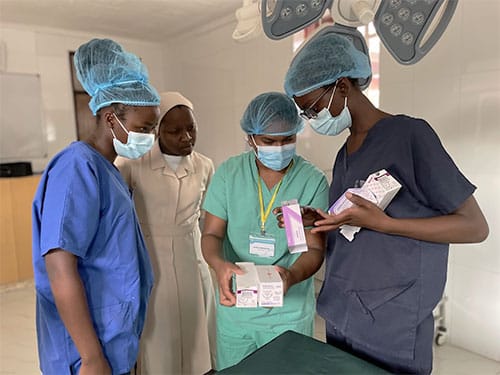
Our first location in Uganda was at a Sathya Sai Baba center. It was a big hall that had been divided up. We had rooms for ob/gyn exams. We had dopplers, ultrasound, an autoclave, and a ton of meds. We agreed to do cervical cancer screenings, and the first day, we used a bottle of acetic acid for visual inspections. Everyone was negative. The next day, we opened a new bottle, and half the patients were positive. So, sourcing these components wasn’t working well. I started to wonder, Are we actually “doing no harm” if we’re giving out incorrect information?
For people who were positive, all we could do was refer them to the local public hospital. The patient would then have to get there and manage any follow-up by themselves. We could pat ourselves on the back for screening people. But once again, I started to worry, How much good were we actually doing? I found myself crying.
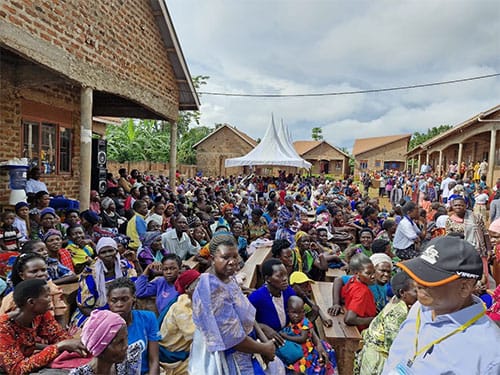
Our next stop was at a school in a rural area of Uganda. Outside, thousands of people were waiting in line. Just people — as far as the eye could see. We were using classrooms that were more like mud huts to do exams. We gave a lot of people antibiotics, probably creating a super-resistant bug in the process.
Everywhere, local people wanted to volunteer. The kids became our translators. They didn’t have shoes, but they stood there translating and helping. It was a beautiful thing. In fact, many volunteers stayed with us as we traveled, sleeping in their cars throughout the whole trip.
After that, we went to Kenya, where all the doctors in the entire country were on strike. We set up in a private hospital that was deserted. Some days, we worked into the night, and there were no lights. So, we worked with headlamps, doing exams and procedures in the darkness.
Many patients there wanted huge lipomas removed. We had a few surgeons with us, and they agreed. But I kept wondering, Are we consenting to these people properly? Are we telling them all the risks? We didn’t have a suture that would dissolve. So, the patients would need to come back and get the sutures cut out. By that time, we would be gone. The doctors were on strike. And even if they were not, would they charge a fee? Who would manage any complications? The patients wanted these procedures, but did that mean it was right to do them?
Then we went to a big Sathya Sai Baba center in Kenya. I’ll be honest — it made me angry. They had a beautiful clinic with state-of-the-art equipment. It didn’t make sense. “We flew from all over the world to serve these people in huts, using headlamps,” I said, “and you guys have all this stuff here on your premises?”
“Oh,” they said, “we charge people for that.”
I was starting to understand the disconnect between what medical mission trips look like at the international level and the local level. From across the world, we think, Let’s go. Let’s help. But at the local level, nothing is free. For a lot less money, they could have bused people to that site, given them service, and then bused them back. But that wasn’t the reality.
I knew that everyone on that trip had the right intentions. These were idealistic people who wanted to do good. That kind of service often isn’t possible in wealthy countries. In the US, I can only see so many patients in a day. I have to deal with charting, insurance costs, and malpractice. I can’t see someone who is homeless on the street and say, “Hey, come in. Let me take care of you.” So, I understand why people want to go abroad and practice medicine for the sake of practicing medicine.
But then we get to these underserved communities, and we don’t understand what the real issues are, what daily life is like. We might be seeing hundreds or thousands of people. But we’re there for a moment in their lives. What happens after that?
I have come to believe that we need a new approach to these mission trips. Perhaps we should be asking the people we are trying to serve, “What do you need? How can we build on what you have? How can we elevate the standard of care that you have on a day-to-day basis?” Instead of showing up for a day or two, we could provide the resources or the infrastructure or the knowledge so that care can continue. It would mean changing our perspective.
A physician friend of mine has been going to Guatemala every year for 25 years. He has selflessly given so much of his time and skills. But one of our other colleagues asked him, “You’ve been doing such good service for all this time, so why do you still need to go?” She’s right. We feel good about ourselves when we go on these trips. We came and helped people. But if we created a system that could sustain itself, we wouldn’t need to come back.
The next year, the same group I had joined went on a mission trip to Madagascar. A lot of people wanted to go, because it was Madagascar. “How cool is that?” But I couldn’t do it. They were going to start over in a whole new place instead of going back to the same one and making progress. I wasn’t going to feel good about that.
Another group I learned about goes to Guyana every year, but they have a different system. They go to a hospital where women who need myomectomies or hysterectomies have already been identified. An ob/gyn and an anesthesiologist fly in and do the surgeries for a week, and the hospital manages the post-op stuff. I would love to do that. And then maybe bring in a local ob/gyn and teach them and provide some instruments.
I was reading Trevor Noah’s book recently about growing up in South Africa, and he has a quote that sums it up: “People love to say, ‘Give man a fish, and he’ll eat for a day. Teach a man to fish, and he’ll eat for a lifetime.’ What they don’t say is, ‘And it would be nice if you gave him a fishing rod.’”
The expert cited in this article had no relevant disclosures.
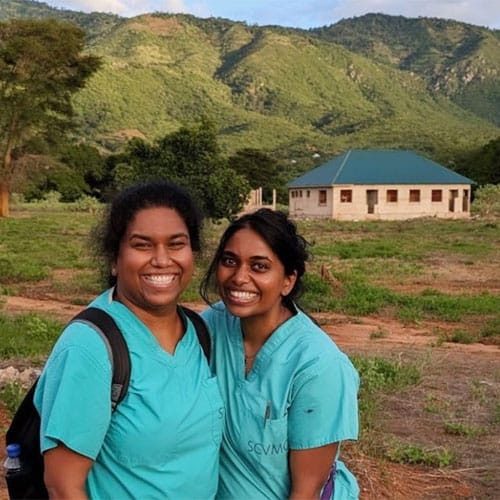
Priya Paneerselvam, DO, is an ob/gyn with Santa Clara Valley Medical Center in San Jose, California.
Are you a doctor with a compelling story about your life in medicine? Medscape Medical News would love to consider you for This Medical Life. Please email your contact information and a short summary to access@webmd.net.



