Admin_Adham
It’s the first day of med school at Mount Sinai School of Medicine, New York City, in 1991. The dean welcomes the class and says, “We have a wide range of ages in our class; the oldest is 35, and the youngest is 14.”
Everyone looks around for the little kid.
“At the time, I was 6 ft tall, so people didn’t suspect it was me,” said Balamurali Ambati, MD, PhD. “Even a month later, students would come up to me and ask, ‘Have you met the 14-year-old yet?’”
Ambati chose to keep quiet and blend in. He didn’t share his age until he had made friends with fellow med students. And by then, he says, his age didn’t matter.
Ambati is the youngest person in the world to become a doctor. He’s held the title since 1995, when he graduated and scored above the 99th percentile on the National Medical Boards 2 days before his 18th birthday.
“Doogie Howser” references may be outdated now that Neil Patrick Harris, the actor who played him, is 52 years (or perhaps not — keep reading). But even though super-young physicians are still a rarity, Ambati is not alone. Medscape Medical News spoke with three child prodigies who became med students before most people have finished high school. Though their paths and experiences are different, these real-life “Doogies” have an uncommon understanding of EQ as well as IQ, resilience as well as achievement, and meeting patients where they are without judgment.
Balamurali Ambati
Age, 48 Years; Ophthalmologist; MD by 17 Years
Ambati completed elementary, middle, and high school by the age of 11 years and received his bachelor’s degree in biology from New York University, New York City, at the age of 13 years. After med school, he did an internal medicine residency at Beth Israel, New York City; an ophthalmology residency at Harvard University, Boston; and a cornea fellowship at Duke University, Durham, North Carolina.
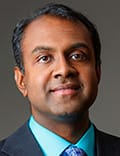
Ambati’s parents — his father an engineering professor and mother a Tamil linguist and mathematician — immigrated to the US from Vellore, India, with his older brother when he was 3 years old.
“My parents were very supportive and opened doors to help me advance and navigate the school system, as often administrators were not supportive, even though teachers were,” Ambati recalled.
Outside of school, Ambati’s days were filled with independent study with his parents and brother, taking challenging exams and local college courses, spending weekends at the library, and hanging out with his friends.
The main debate point with a situation like Ambati’s is: Shouldn’t a kid just be a kid?
“I have no regrets in terms of missing out on anything. I didn’t do drugs and didn’t go to prom. But I had friends, played games, went to movies. I had a good childhood,” Ambati said.
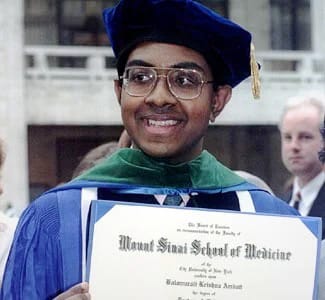
Now, he’s 48 years old, married with two kids, an ophthalmologist at Pacific ClearVision Institute, and a research professor in the Department of Bioengineering at the University of Oregon, both in Eugene, Oregon.
Balancing his family, his practice, his surgery centers, the university lab, volunteering around the world, and a start-up company, iVeena — eye drops for pediatric myopia — Ambati is still high achieving and hardworking, though he admits, “I’ve slowed down a bit since having kids.”
“Finishing at a young age gave me time,” Ambati said. “I graduated medical school 30 years ago. Some people will be thinking about retiring, and I still feel good. I still want to keep practicing for another 25-30 years.”
Sho Yano
Age, 34 Years; Pediatric Neurology; MD and PhD by 21 Years
In Chicago, over a decade after Ambati, Yano became a doctor at the age of 21 years. Yano completed elementary, middle, and high school even younger at 9 years old and jumped into college at Loyola University Chicago in Chicago from ages 9 to 12 years.

“It was kind of big deal in the news and with other students at the time, but the novelty wore off,” Yano said. “It still does pique patients’ and colleagues’ interest if they come across an old article.”
Yano didn’t have the benefit of looking older or being tall and experienced discrimination from fellow students, administration, and faculty.
“I did get a lot of unfortunate comments during college,” Yano said. “You kind of get used to the fact that some people just aren't okay with you being there. Some of the school administrators would say, ‘Well, isn't your mom doing your homework for you?’ And students who didn't know me who would say things like, ‘Get out and go back to grade school.’”
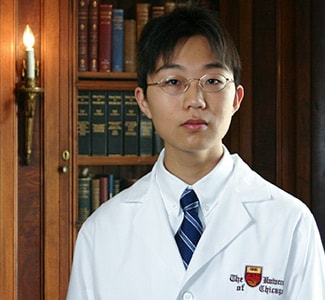
Loyola’s Sociology Department refused to have Yano in their classes, calling him a “distraction.” Instead of fighting the seemingly obvious infringement of the Age Discrimination Act of 1975, he pivoted and found a new passion.
“I’ve never taken a sociology class,” Yano said. “I took classics instead, and now I have this long-lasting love of Greek classics.”
Despite these negative attitudes, Yano made some long-lasting friendships among his premed classmates. “Some people were both willing to accept having a ‘different’ classmate and to get to know me as more than a label,” he recalled.
Yano started medical school at the University of Chicago Pritzker School of Medicine, Chicago, at the age of 12 years and completed the MD/PhD in bacterial genetics 9 years later at the age of 21 years.
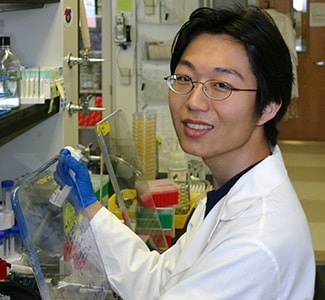
Now, as an assistant professor at the University of Chicago in the Department of Pediatrics, Yano spends 80% of his time researching seizure and movement disorder genetics, specifically alternating hemiplegia of childhood — an ultrarare neurologic disorder that usually starts in childhood. The other 20% he devotes to inpatient pediatric neurology at Comer Children’s Hospital, Chicago.
There are many factors that go into building trust with his patients and their parents, including what they think the doctor should look like, Yano said.
“Because of my young age, people have been doubtful,” he said. “‘Can this young-looking Asian guy understand what I want to get across?’ I look back at situations where I would have liked to have been shown empathy and situations where maybe I need to show more empathy to my patients because they’re having issues processing my age.”
Of course, many other biases can influence patients’ perception. “Obviously, my experience isn’t on the level of some of my colleagues who are gay or Black or women who are being discriminated against now as providers because of their difference from whatever the stereotype of the reliable doctor is,” Yano said.
Still, he feels his experiences have become a “gift” for understanding patients’ personal experiences of prejudice or mistrust of healthcare. “Seeing people not just for what their difference is, but for who they are.”
Ryan Nguyen
Age, 20 Years; General Surgery; MD by 21 Years, Pending
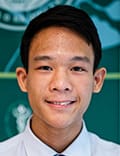
Nguyen could sometimes look out his med school classroom window to see the modern-day Doogie Howser reboot filming. The Disney+ show, Doogie Kameāloha depicted a 16-year-old female med student in Hawaii.
“It’s a very funny coincidence,” Nguyen says, who started med school at the same age.
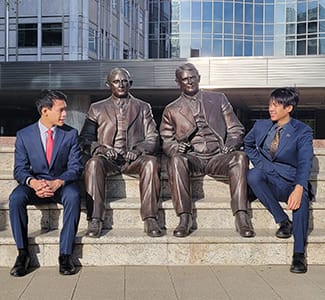
Nguyen, who will be graduating in 2026 at the age of 21 years, grew up in Hawaii and plans to stay. He completed elementary, middle, and high school by the age of 12 years, spent 2 years at Kapiolani Community College and then transferred to the University of Hawai’i at Manoa, both in Honolulu, graduating with a bachelor’s in biology at the age of 16 years. He attributes his accelerated path to being very good at self-motivation.
“Early in college I was visibly younger than others, but in recent years, I’ve been told my age wasn’t so obvious just based on appearance,” Nguyen said.
Unlike Yano, Nguyen had a less challenging time socially in college and made his best friends in Vietnamese class.
“The pandemic started shortly after, and we kept in touch online and chatted quite a bit during that time,” Nguyen said. “Having them around allowed me to mature and grow during a period where lots of people were isolated at home and socially limited.”
For Nguyen, challenging assumptions and expanding his world view are aspects of his emotional intelligence that stand out. “Maturity feels to me like something that comes as you spend time with different people and different environments,” Nguyen said. “There’s always more to learn.”
In med school at the University of Hawai’i at Manoa, Nguyen is now focused on general surgery. “I think med school has been the best years of my life,” he said. “I would hate to have spent a couple more years doing other things, and just not have met the mentors and friends I’ve met,” people who, he feels, truly want to see him succeed.
What These Super-Young Doctors Learned Faster Than Their Peers
Ambati, Yano, and Nguyen all stress the importance of seeing people for who they are, taking the time to be open, and listening to patients. Accelerating through academics has forced them to learn resilience, along with social and emotional skills, years younger than everyone else.
That high EQ might give them even more of an edge than IQ. Research suggests that physicians with higher emotional intelligence have increased empathy for their patients, improved teamwork, and management of stress and burnout, according to a 2023 Elsevier review, and a 2024 article in Cureus Journal of Medical Science.
“I think being a good listener is the most important thing to being a good doctor,” Ambati said. “Trying to understand what the patient’s fears are, what their goals are, letting them share their story with you.”
Meeting people where they are can also be geographic, Ambati said, explaining that the rural communities around Eugene, Oregon, can sometimes feel like the last outposts of medical civilization.
In Hawaii, Nguyen sees patients from a wide range of places, like Fiji and Micronesia, who may not speak English. Translation and listening to nonverbal cues become very important. “It makes finding a way to understand and listen to the patient’s needs monumental,” Nguyen said.
When building the doctor-patient relationship, Yano believes it’s important to not be defensive. “If patients have clarifying questions, I want to meet them with openness and patience and show them I’m listening and am thinking through their issue with them.”
Listening without a guard up and being open to hard talks are skills that Ambati, Yano, and Nguyen say are crucial to building relationships across differences — age or otherwise.
“I think all the difficult conversations, those are important for physicians,” Yano said. “I think we can learn about others, and ourselves, from each one.”