Admin_Adham
In a Mass General Brigham research lab, a team of scientists found such strong links between thymus health and longevity — and immunotherapy effectiveness — that they literally said, “This cannot be right.”
“The first time we saw the results, we were like, ‘We need to validate this,’” said senior author Hugo Aerts, PhD, professor at Harvard University and director of Mass General Brigham AI in Medicine Program. “A lot of people didn’t expect that this small organ has such an impact, including us.”

The thymus is so below-the-radar that its name is rarely used when referring to the cells it trains; they are called simply T cells, Aerts said. Long thought to be primarily active up until puberty and then become mainly fat, this unassuming organ in the chest is now at the center of a dogma-shattering moment in science and medicine. Aerts’s team and others now believe that the thymus remains active into adulthood and likely plays an important role in cancer outcomes and overall health.
These latest findings — published in a pair of Nature papers, one focused on longevity and the other on immunotherapy — build on a 2023 New England Journal of Medicine (NEJM) paper that showed people who underwent thymectomy faced an increased all-cause mortality risk and cancer risk compared to matched control individuals.
“This is the main insight [of our study],” Aerts said. “I hope now people will say, ‘We should do more research on the thymus.’”
What the Research Shows
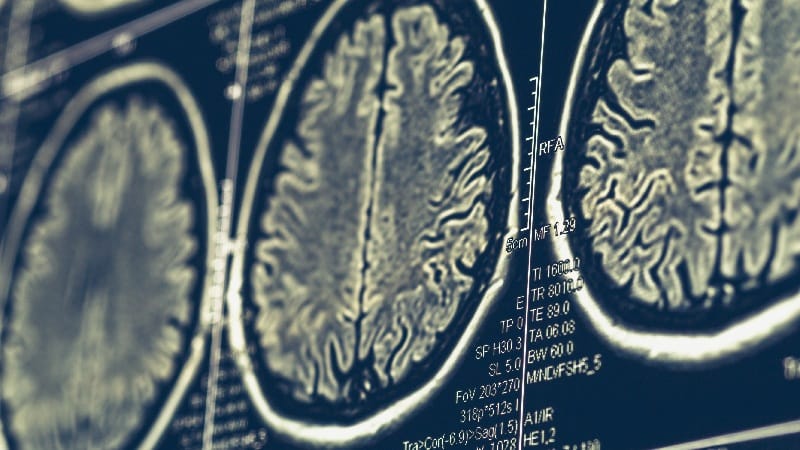
Leveraging AI and machine learning, the team derived a thymus health score from routine CT scans. The score assigns thymus function as bottom 25%, middle 50%, or top 25% functionality. The longevity study showed that people in the top tier had a 50% lower risk for death, 63% lower risk for cardiovascular death, and 36% lower risk of developing lung cancer, across a 12-year follow-up period, than people with bottom tier scores.
The immunotherapy study included 3476 patients with various cancer types, including a subset of 1218 with non-small cell lung cancer treated with checkpoint inhibitors. In patients who started with immunotherapy, the data showed a strong, steady pattern: A high thymus health score was a strong predictor of survival. The pattern was most obvious in these patients because they hadn’t had chemotherapy, which may mask the benefit by suppressing the immune system, the researchers said. Even though the data were insufficient to prove the link, the trend was so clear it suggested that thymus health is directly tied to how well the body fights cancer.
The team took additional steps to confirm their findings, including inflammatory biomarker analyses that linked CT-indicated thymus health to inflammation. Their thymus health score was derived from radiographs from 5674 people and then validated with data from more than 27,000 people across the Framingham Heart Study and the National Lung Screening Trial.
It “is a true signal” of how thymus health is linked to healthspan, longevity, and immunotherapy effectiveness, Aerts said.
Understanding the ‘Host Factor’ in Immunotherapy
Historically, cancer research has looked at the tumor itself (its mutations, genetics, and growth). Examining the “host factor” — how a person’s unique physiology influences cancer and response to treatment — is difficult, said Wen Wee Ma, MBBS, gastrointestinal oncologist at Cleveland Clinic in Cleveland.

“Part of the reason why we haven’t really come up with a measurement of the host factor is because it is very complex, and we don’t fully understand which are the relevant variables,” said Ma, who called the new results “pretty amazing.” (He wasn’t involved in the studies.)
He was particularly intrigued by a mechanistic component that focused on the “proteomics of cytokines — which are inflammatory markers — and those markers are not easy to measure,” Ma said. “They decay with time. I’ve done research trying to look at those kinds of markers. It is not easy.”
“Maybe AI and big data are a way to begin to understand host factor” in oncology, Ma said.
Can We Reverse the Decline?
Aerts said a future exploration will examine whether thymus health decline can be interrupted or even reversed. Research suggests that the thymus rapidly shrinks during pregnancy, likely to protect the fetus from the mother’s immune system, and then increases again after birth. The new longevity paper linked thymus health with factors such as obesity, underweight, smoking, and chronic inflammation.

Several research groups are already looking into how to reinvigorate thymus function, said Juan Carlos Zúñiga-Pflücker, PhD, a thymus researcher at the University of Toronto and at Sunnybrook Research Institute, both in Toronto, Ontario, Canada. In March, his team published a paper in Cellular & Molecular Immunology examining how the mouse thymus trains the immune system to recognize the body’s own cells (tolerance). This process triggers inflammation, which is kept in check by RNA-binding proteins, Zúñiga-Pflücker said. But if inflammation grows too much, it can cause the thymus to shrink prematurely, suggesting the need for a delicate balance, he explained.
He cautioned that the new Nature studies “could only correlate thymus size to health outcomes, and we do not really know what about this increase is key for the functional improvements.”
Nevertheless, he called the new findings “exciting” and “clear evidence for the importance of the thymus in keeping us healthy and for predicting how well someone will respond to immunotherapies.”
“This, together with [the] recent paper in NEJM, helps to support this unappreciated role for the thymus even late in life,” Zúñiga-Pflücker said.
Zúñiga-Pflücker disclosed being the chief scientific officer and co-founder of ProTgen, Inc., a biotech company working to translate his progenitor T-cell research for immuno-regenerative therapies.