Admin_Adham
Eventually, every doctor becomes a patient. For many physicians, experiencing serious illness and treatment is humbling, eye-opening, and, in the end, transformative. Dr. Patient is a Medscape series telling these stories.
Anne Peled, MD: Within 2 years of starting my private practice, I felt a lump. I really thought it was just going to be a cyst or something benign. I had no breast cancer history in my family. I’m healthy, I race triathlons, I eat really well. The day after my biopsy, the pathologist called to tell me: It was invasive breast cancer.
It was such a shock. When I heard the news, I was getting ready to scrub in to do a double mastectomy and reconstruction for someone else with breast cancer.
I got through my surgery that day and then quickly got all the imaging I needed and figured out I didn’t need chemotherapy. I feel really lucky with the resources that I had because I’m in that field, but what I didn’t expect: When you’re in the field of your diagnosis, it’s really overwhelming because you know too much.
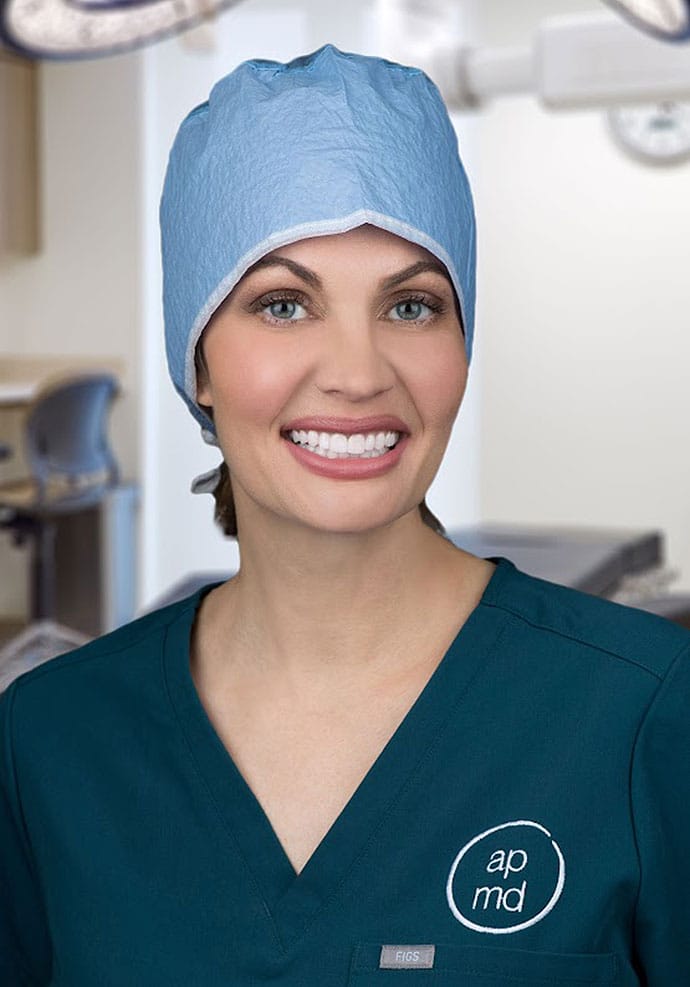
Many women like me who get diagnosed at 37 have double mastectomies. But I just couldn’t go through that. I had so many worries about not healing well and complications and also about the loss of sensation. One of my closest friends had a mastectomy, and she said she put on a sports bra and didn’t know it was on.
So preserving sensation was a big factor for me in deciding to have a lumpectomy. But I also wanted to have a “good” lumpectomy with the ability to have some reconstruction. So I ended up having both of those pieces done with a team I had trained with.
Let me tell you, as a patient I was struck by how hard it is to make a decision and work through all the different components of treatment. I knew as much as any human being could know about going through breast cancer and breast reconstruction surgery, and it was still really hard to figure out what to do.
Ziv M. Peled, MD (Anne’s husband): As Anne said, the diagnosis is incredibly disruptive. You look at this person you love and you think, What happens next? What will happen to her practice? Then again, Anne is so remarkable at turning lemons into lemonade that it quickly became, How can we turn this into something that can help other people? So we started talking about the numbness that women experience after mastectomy and that I’d seen during reconstructive surgery for patients with cancer myself.
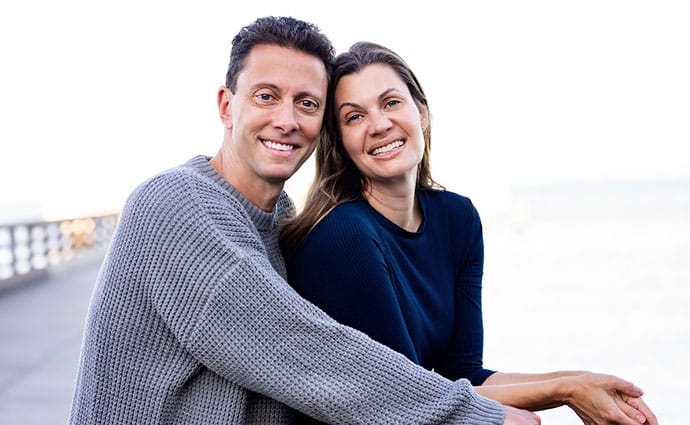
Anne: That’s how we ended up coming up with this technique we call sensation-preserving mastectomies. Typically, when you do a mastectomy, there are nerves running right into the breast tissue that have to get cut in order to safely take out all the breast tissue. Cutting those nerves not only causes numbness but also causes chronic pain.
So the way we thought about it was [this]: We have strategies for repairing nerves in other parts of the body using nerve grafts, which are actually cadaver nerves that are taken out and decellularized and work as conduits for your own nerve to grow through over time. We see that work really well with longer lengths of nerves in other parts of the body, such as the extremities.
We were trying to figure out: How could you both preserve all the sensation you possibly could — and for the nerves that would have to get cut, could you reconstruct them using these nerve grafts? We were literally coming up with this idea over dinner.
I had my lumpectomy in January 2018, and we did our first case using this new technique at the end of February that year. We then published a paper in July 2019 showing that of 16 patients we treated, 87% kept their sensation. It’s not perfect. People don’t get back to 100%, but most people get back most of their sensation with this technique. So it’s been really exciting. We’ve done at least 1000 procedures since then.
Ziv: Sensation isn’t just a luxury. It’s not just about intimacy and sexuality. You could be cooking with oil and have hot oil splatter on your chest. You could have a third-degree burn, not feel it, then look down and see a whole implant exposed, which is probably a couple of operations to fix. You could be in the sun and not feel that you need more sunscreen and develop burns that way. You could fall out of your top at the gym, which is very embarrassing. There are a lot of small things [sensation provides] that we probably don’t realize are really important to us.
Anne: After my lumpectomy, I spent seven and a half years feeling great. I was living my life every way I wanted to.
Then, in May 2025, I went in for my mammogram. They called me back because there were calcifications they were worried about. And crazily enough, it wasn’t even my prior cancer coming back. It was a different cancer on the same side.
Again, I was heading into a similar surgery. I was so unprepared [for the news]. The number of women who get diagnosed with breast cancer under 40 is so low and that happened to me despite doing all the things “right.” The chance I was going to have a recurrence or a new cancer should have been less than 7%. Being on the wrong side of numbers over and over again makes you think, How is this even possible?
I knew instantly I would need a mastectomy. At that point, there’s really no other option. I wanted someone to do the surgery just the way that Ziv and I do. I had a lumpectomy first, which fortunately showed stage 0 cancer without any invasive part that would have needed chemotherapy. Once it was out, I could breathe a little bit and put together my team.
At the end of August, I went to Los Angeles to a team Ziv and I helped train. When my plastic surgeon first offered to have Ziv do my nerve reconstruction, my initial thought was that it would be too much to ask of him and that I should just let him get to be on the patient/family side of things for my surgery. But in talking with a patient and her husband who had gone through the same surgery with us and whom I’ve become close to, they suggested I at least ask Ziv what he wanted to do, especially knowing there would be no one in the world more experienced in the surgery than he was. He said yes without hesitation, and I am so grateful he did.
Ziv: [Operating on my wife was] definitely a little surreal. But I learned a long time ago in my training, once you get on the table, you’re focused, you’re locked in, and this is about doing the technical part of the operation correctly and to the best of your ability. So thankfully, I was still able to do that, even for Anne. Plus, she’s what we call a nerve superstar. She had a lot of really good anatomy for me to work with. So I’m very excited for a really good result with a little bit more time.
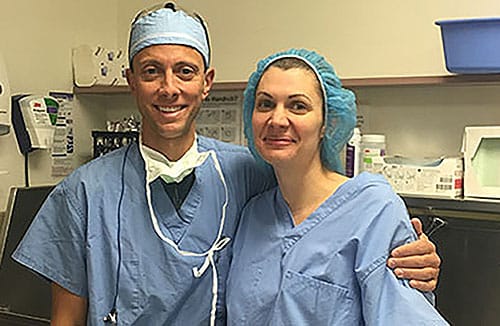
Anne: Being a patient is really, really hard. One of the worst moments was after my first diagnosis, when I drove to get my radiation oncology. I parked in a patient parking space, and I’d been parking in doctors’ parking spaces since I was 21. I walked into that appointment bawling. Those are the moments that are really tricky. Waiting is really tricky.
We tell everyone that healing is a process — I say that to patients over and over again — but it really is. It’s so much work. I have to do sensation rehab protocols. [My chest feels] tight. I have implants that I have to get used to. I’ve been a little surprised by how much patience it takes to really accept all the changes. There’s a lot of just letting time do its thing. That’s harder than I expected.
I’ve been very, very open about my journey, so the patients who had a mastectomy 4 or 6 months ahead of mine would say, “I did this thing today. This is going to be you.”
One of my patients got me a gift certificate to get my hair blown out after surgery because they know you can’t reach your hands overhead. They sent me their favorite bras. They sent me reading lists. It’s been really beautiful. Probably the best thing about going through cancer — twice — is curating this community of people that are in my corner.
Anne is a San Francisco-based board-certified onco-plastic surgeon and co-director of the Breast Care Center of Excellence at Sutter Health California Pacific Medical Center. She has extensive research experience focused on improving outcomes after breast cancer surgery and breast reconstruction.
Ziv is a San Francisco-based board-certified plastic surgeon focusing on operations designed to reduce pain/restore sensation in patients suffering from neuropathy, nerve disorders, and nerve trauma.
Are you a doctor with a dramatic story about life as a patient? Medscape would love to consider your story for Dr. Patient. Please email your contact information and a short summary to access@webmd.net.