Admin_Adham
Omotola K. Ajibade, MD, spends his days as a forensic psychiatrist in what he calls “one of the highest acuity jails in the state of Georgia.” He sees a constant stream of patients with some combination of trauma, psychosis, mood disorders, behavioral conditions, and substance abuse, rarely simple depression and anxiety. “You’re meeting people in the worst moment of their lives, sometimes in the worst period of their lives, because that moment has lasted a very long time,” he said.
You might think this constant exposure to intense suffering would rub off, making Ajibade himself feel hopeless or distraught. But outside the correctional facility walls, you’ll find him shooting a wedding or a newborn portrait in his side gig as a photographer. “At a wedding, everyone’s happy. You need to be reminded that there are days people actually want to remember,” he said.
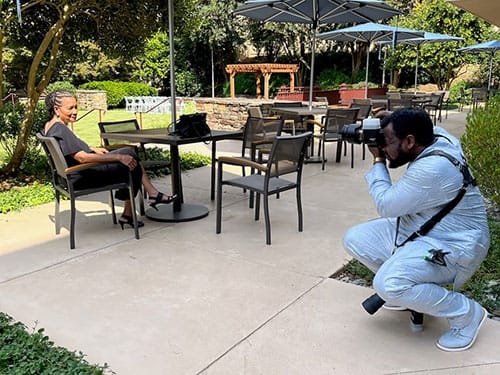
Ajibade is just one physician working in a field riddled with difficult and troubling experiences who has found a way to offset the challenges through his hobby. Any creative activity, detached from the stressors of the medical world, can lower risks for psychological issues such as posttraumatic stress disorder (PTSD). But spending time specifically focused on hopeful or positive moments can have a profound impact. Doctors who have found ways to counterbalance the emotional challenges of medicine say it’s about seeking light in the darkness and remembering that there is always beauty and joy to be found.
Need a Dose of Positivity?
Any physician might benefit from a hope-filled, lighter side gig or hobby. But for some, the stakes are higher, according to Gail M. Saltz, MD, associate professor of psychiatry at the NewYork-Presbyterian Hospital/Weill Cornell Medical Center. Occupational hazards in medicine are very real, Saltz said. “Being intimately involved with trauma as a close witness and a participant is one small step away from being the victim of the actual trauma.”
The highest rates of PTSD are found in “emergency room (ER) medicine, with PTSD rates five times those of the general population. Next are psychiatrists who experience the most violence from patients of any specialty,” Saltz said. General surgeons also experience high rates of burnout, along with ICU doctors who deal with constant suffering and death. And ob/gyns are also at risk, Saltz added, as they witness “disturbing mother and baby deaths and face pressure of very high litigation threats.”
The risk for PTSD may be as much as 30%-40% genetic, however, so practicing in an emotionally intense specialty doesn’t necessarily lead to it. And conversely, those in less “dark” fields aren’t immune. But finding effective ways to cope is crucial. With repeated trauma, things can intensify. And in this field, another potential trauma is always coming, Saltz notes.
‘There’s Always Light Somewhere’
Ajibade got his first camera at age 5, when he just wanted a “cool toy.” But through the years he realized the power of what he was holding and how it could offset the difficulties he sees at work.
“I don’t think I truly understood what it meant to see someone’s ‘hurt inner child’ until I started working in corrections,” Ajibade said. “During one of my rounds about 2 years ago, I met a kid who couldn’t have been more than 25. During the evaluation, he stated, ‘I spent half my life in foster care and the other half in juvenile detention.’ That statement has haunted me ever since.”
But Ajibade still believes that “there’s always light somewhere. It just might not be in the direction you’re looking.” It’s a philosophy he teaches patients in their darkest days in prison and recalls in his photography, where he looks for the perfect point of view for a photo.
The results can be powerful. Ajibade once took his camera to a friend’s wedding in India with the goal of photographing the couple’s friends and family members. He got the only shot of the bride with her grandfather. When the grandfather passed away just months later, it became a priceless memory he’d captured for her. “Those moments matter,” he said.
Ajibade remembers a couple who reached out to him to photograph their wedding during the fear and stress of the COVID lockdown. While some couples were finding the forced proximity irritating, the bride told him, “If anything, it made me love him more.” “Those two were just a little ray of hope during a particularly dark time for the world,” he said.
A World Where the Good Guys Always Win
Some creative hobbies can counteract how doctors view their work or themselves at work. Lance VanGundy, MD, an emergency physician at UnityPoint Health in Marshalltown, Iowa, is a fantasy writer. He describes a recent book of his as “a hero’s journey, and people overcoming the odds that the universe puts in front of them, and then the relationships that they build along the way.... We’re better when we’re together than when we’re divided,” he said.
The ER comes with “constantly shifting attention,” VanGundy explained. Critical patients needing orders, transfers to coordinate, prescriptions sent to the wrong pharmacy, and so on. The attention switching is worsened by the computer system and demands on cognition, he added.
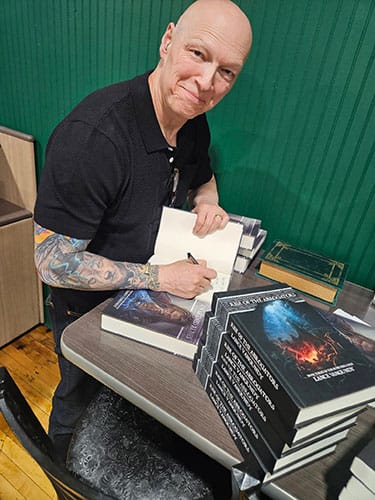
But in VanGundy’s fantasy writing, it’s simply good guys vs bad guys. “The antagonist has reentered the world, and protagonists are moving their story arcs forward. It’s all going to collide in this colossal good vs evil battle…where the viability of the world is at stake. Will the hero overcome the insurmountable odds?”
Of course he will. The battles VanGundy fights in his fantasy worlds will always end in victory, which is a welcome escape from the ongoing reality of the ER. And writing also serves as a place to unplug, slow down, and focus on a single task.
Not so ironically, VanGundy said he isn’t great at writing antagonists. In fact, he struggles to make them “evil enough.”
Releasing Control
Julie A. Augenstein, MD, a pediatric ER physician and emergency medical services medical director at Phoenix Children’s Hospital in Phoenix, carries her shifts home with her. Each night, she is still thinking about the heaviest conversations and diagnoses of the day. The toughest cases for her are ones that were preventable.
“The cases that stick with me the most are often those that are potentially preventable injuries,” Augenstein said. “An infant that dies in a car accident that was not in an age-appropriate car seat, a toddler that drowns in their backyard pool without a pool gate, or a child that dies from a gunshot in their own home. Those cases stay with you for your entire career,” she said.
Augenstein walks the line between feeling capable in these moments, wondering what more she could have done, and grappling with the little control we really have in the face of tragedy.
But outside her job, Augenstein has found an antidote. Her family has started a farm, Henry’s Eggs, on 20 acres in Phoenix. She has a favorite tree where she walks with her 5-year-old son. There is a river on the property where she once saw a farm dog Matilda swimming during a heavy rain. She watched the dog jump out of the river and give birth to six puppies without the need for medical attention of any kind.
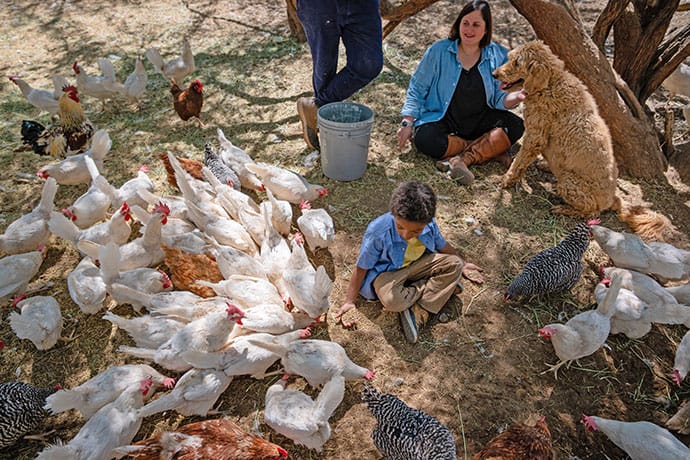
“In the ER, we try to control all the chaos and outcomes,” Augenstein said. “Witnessing the healthy birth of animals happen in nature without medical intervention is sometimes a needed reminder that there is beauty all around us, and sometimes, the good outcomes happen with or without us.” Being in nature is a “slow life” that gives her another perspective.
“ I’m not sure how to articulate how a farm helps balance those heavy moments, but if you’ve never stepped out of your car into fresh air and greeted by children or animals running around an open pasture, I highly recommend it,” she added.
Not All Hobbies Are Created Equal
“Hobbies engage positive emotions or processes such as joy, curiosity, creativity, beauty, passion, and connection. These can provide a potent counterbalance to parts of life that are heavy, difficult, and overwhelming,” said Shin Ock, a clinic psychologist in the DC Metro area, who specializes in therapy for physicians said. But not all activities have this effect. Previously, Augenstein pursued an intense hobby of competitive tennis. But she realized it wasn’t fulfilling the need for relaxation she sought in life outside the ER. “Find something that gives a sense of calmness,” she advised.
Ock recommends movement for the health benefits or creative hobbies for those who need to break out of rigid or rote patterns at work. “ Goal-directed activities can help people maintain or build a sense of accomplishment or completion if their work feels more ambiguous or ongoing,” Ock said. She also suggests novelty to come out of feeling emotionally “stuck” and seeking nature for its “awe-inspiring” and regulating abilities.
Augenstein will keep walking to her tree at the farm after an upsetting ER incident. VanGundy will keep heading back into his fictional worlds. And Ajibade will keep seeking beauty behind the camera lens. “No one picks up the camera for days they want to forget,” he said. “Even if you never look at the image again, some part of you thought the moment was worth remembering. If you’re lucky, one day, you’ll find out why.”
All experts declared having no competing interests.