

 Admin_Adham
 Jump to Key Points
Medicine is a life of learning. Take My Advice is a Medscape series where physicians share their best lessons, the wins and losses, and how to use everything you know to become a better caregiver every day.
While I was training, a highly respected, beloved surgeon — the kind of guy who would never ask for advice or help — was at the end of his career. The hospital was requiring him to have another surgeon in the room with him to make sure he didn’t make mistakes.
My own path as an ENT specialist and surgeon was unfolding and I realized I didn’t want to be one of those people. I didn’t want others to ask, “why is he still here?” or to say about me years later, “he hung on too long.” I left when I still felt capable.
Early on in our careers, everyone worries about imposter syndrome. Young doctors finish training and feel that everyone expects them to be smarter and better than they might feel they are. As I approached retirement, I experienced imposter syndrome — again.
- Late-career imposter syndrome can recur despite extensive surgical experience.
- Ongoing skill mismatch with newer technologies may limit practice scope.
- Late adoption of endoscopic Zenker diverticulum techniques reduced access to evolving care.
- Retirement can be intentional transition into writing, teaching, mentoring, and family time.
- Self-assessment of capability helps avoid overstay in procedural practice.
People expect the gray-haired doctor to have seen everything, and I had a lot of experience. But I noticed my younger partners were much better with new technologies. I didn’t realize everything you learn in residency will be completely archaic by the middle of your career. I was afraid I would feel behind.
Early in my career, I resolved not to just jump on any new technology. I wasn’t convinced they would always provide better outcomes and be worth the time and often-higher costs. There was a time when lasers were a big thing. But then lasers turned out to be expensive and not as revolutionary as originally expected.
So when upper airway endoscopy evolved and became more popular midway through my career, I was skeptical. There was a new technique for treating Zenker diverticulum, a problem causing significant swallowing disorders primarily in the older patients. Surgeons started treating it with endoscopy and stapling, completing the procedure in half the time and without external incisions.
I wasn’t convinced this new technique was more effective than the one I had learned and was concerned about the small but real complication rate.
But the new procedure worked well. That whole part of my practice disappeared over time. Younger doctors skilled in this technique took those patients, who ended up recovering more quickly and without external scarring. It turned out to be a game changer.
I realized I had lost parts of my practice that I had enjoyed because I wasn’t up on a new technology — and I was never going to get them back.
Even though I remained busy, I regret being a late adopter. Had I been more open to new technology and new experiences, I would have maintained that part of my practice and helped my patients. Instead, it became clear to me that it was time to step aside and let my younger partners take the work to the next level. And they have.
Of course, I worried about retirement. I hoped to stay active, remain useful, and grow in my sense of purpose. I wanted to plan what I would be doing — not just in the months after retirement but in the coming years and, hopefully, decades.
Someone told me years ago, “retire not from something but into something.” Over the last half of my career, I rediscovered my love of writing, first creating a blog focused on my clinical experiences, then pursuing training in narrative medicine. It was through my writing that I discerned that it was time to step away from my practice.
Writing also led to some of my most rewarding experiences in retirement, opportunities to teach and mentor students, residents and physicians about the value of reflection and literature. Without expecting it, I became a local expert in the topic which culminated in the publication of a book of stories and essays.
I wanted to retire into a life where I could make a difference in the world, remain engaged and spend time with family. I’m still a work-in-progress and, at 71, that is probably a good place to be. I knew when it was time to leave and I did it with intention.
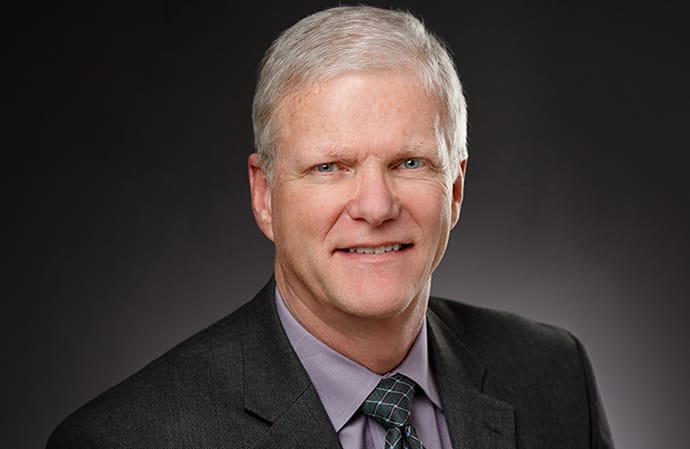
Bruce H. Campbell, MD, FACS, is a former ENT specialist and surgeon. He is the author of A Fullness of Uncertain Significance as well as an editor for Intima: A Journal of Narrative Medicine. His writing has appeared in JAMA, the Journal of Clinical Oncology, and Pulse. Campbell also teaches and lectures on narrative medicine.
Are you a doctor with wisdom to share about life in medicine? Do you have good advice you want to offer your fellow physicians and a story only you can tell? Medscape Medical News would love to consider you for Take My Advice. Please email your contact information and a short summary to access@webmd.net.
The expert cited in this article had no relevant disclosures.



