

 Admin_Adham
Menopause is having its moment. As Boomers have moved into the elder years, proactive Generation X women (1.3 million of whom enter menopause annually in the US) are consistently on social media platforms demanding answers about their symptoms and how to manage them.
Research has shown that overwhelming numbers — roughly 80% — engage in self-management or are unaware that treatment is available. Doctors and other health practitioners are likewise often ill-prepared or lack the proper time to discuss menopause with their patients.
The substantial imbalance between the demand for education and conversations and the supply of clinicians skilled in managing menopause is only expected to worsen. Not only are ob/gyn shortages projected to reach the tens of thousands within the next two decades, but ob/gyn residents are increasingly pursuing subspecialties. There has never been a better time for nurse practitioners (NPs) who are especially passionate about women’s health to step up to the plate and expand their services to include menopause management.
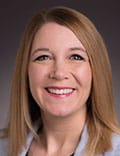
“The foundation of nursing is whole person care; from the very first day in nursing school, you are taught to consider someone in mind, body, and spirit,” which the menopause experience embodies,” said Heather Wade, DNP, FNP-BC, RN, program option coordinator at Accelerated Masters of Science in Nursing and associate professor at the Trudy Busch Valentine School of Nursing at St. Louis University in St. Louis, Missouri. “So, when you think about an NP, who has a foundation of caring for that whole person while also integrating the diagnostic piece, it fills so many care gaps,” Wade told Medscape Medical News.
Speaking Into the Void
Numerous studies have shown that women experiencing perimenopause and menopause often feel unheard by their physicians and practitioners. Anecdotally, women have reported that their symptoms are dismissed or misdiagnosed or that their doctors have not taken the time to have a thorough conversation with them.
Jessica Smith, a 49-year-old woman who lives in Montgomery County, Maryland, said she had started experiencing symptoms a few years ago that she believed to be menopause. Not only did the doctor she was seeing at the time fail to run any tests, but the conversation, said Smith, was cursory.
“She asked me general questions and then placed me on a year-round birth control pill, which meant I wasn’t getting my period by design. She just assumed I was in perimenopause. I wouldn’t have known if I had entered menopause because I wasn’t having a period anyway,” said Smith.

Eventually, Smith found her way to an NP who runs a private primary care practice and focuses on hormone issues and treatment. “She took me off of the pill for 6 weeks so I could get clean labs,” said Smith. “I learned I was in full-blown menopause, so she started treating me accordingly with hormones. It has really made a huge difference,” Smith said.
Kathleen Frame, APRN, a Menopause Society-certified menopause practitioner with Middlesex Health Crescent OB/GYN, practicing in Westbrook and Middletown, Connecticut, explained that many of her patients express disappointment when attempting to discuss their symptoms with previous providers.
“They’re so grateful; they’re appreciative that someone is listening to them and hearing them and taking them seriously,” said Frame.
Stephanie S. Faubion, MD, MBA, professor and chair of the Department of Medicine at Mayo Clinic in Jacksonville, Florida; Penny and Bill George Director in the Division of Internal Medicine at the Mayo Clinic’s Center for Women’s Health; and medical director of The Menopause Society in Pepper Pike, Ohio, concurred.
“There are many competing interests for the limited time people have with their primary care clinicians in the office, and menopause isn’t often at the top of the list,” said Faubion. “Most of the care people are receiving is still reactive, for example, if they’re coming in with a bad sinus infection or elevated blood pressure.”
Menopause Certification
The history of the menopausal transition has been wrought with landmines. At certain times, hormone replacement therapy (HRT) has been prescribed widely. In the early 2000s, findings from the Women’s Health Initiative sowed fears about HRT and the links to cardiovascular disease and certain cancers, leading to significant declines in prescribing. Though the data have since been reevaluated and HRT prescriptions have increased, menopause is by and large overlooked by clinicians as a reproductive milestone rather than an opportunity to assess disease risk and health outcomes in midlife and beyond.
This is where obtaining a menopause certification becomes beneficial.
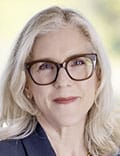
“The Menopause Society [TMS] offers a certification exam (MSCP-Menopause Society Certified Practitioner), and we have all kinds of materials that can be used to help educate patients and others,” said Faubion. Faubion also noted that though the numbers of practitioners taking the exam has increased substantially, the TMS’ “ultimate goal is to extend education to clinicians in areas where resources are limited and there isn’t menopause care available.”
TMS is in the midst of revamping, expanding, and creating additional educational resources and offerings that provide information tailored to the learner and peer-to-peer resources that will enable practitioners to share knowledge, cases/clinical vignettes, and clinical experiences. This peer-to-peer interaction is not only desired but sorely needed, according to Frame and others Medscape Medical News spoke to.
Thinking Outside the Box
Frame said that as NPs ponder the opportunities in menopause care, it’s important to examine if they are truly interested in the topic.
“Are you really invested in this, or are you doing it because it’s an opportunity to bring in business,” she said. “Once I started practicing and word got out, my schedule was filled with perimenopause stuff (which is what I love). You’ve got to be really dedicated to providing follow-up, navigating symptoms, and referring on to another specialist if needed,” said Frame.
In addition to the opportunities to provide menopause care in the nation’s most rural cities and towns, there is also a huge gap in education that focuses on Black and Brown women, who not only tend to start menopause earlier than their white peers, but whose transition lasts longer and whose symptoms are often more severe.
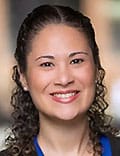
Yamnia Cortés, PhD, MPH, RN, is a nurse scientist, associate professor, and director of Cortés MenoLab, which promotes the health of women in midlife and beyond through science, community mobilization, education, and policy, at the University of Iowa College of Nursing in Iowa City, Iowa. She pointed to the need to consider the interplay of menopause and social determinants of health.
Similar to other health conditions and outcomes, different social and cultural factors (eg, where we live, our environment, where we work and play, and how menopause is discussed within different cultures) shape how some women experience menopause, meaning that available information needs to be culturally relevant and presented in ways these women can relate to.
When it comes to cultural relevancy, Cortés also noted the need for more research on nonhormonal methods. “There are many things that people have been using a very long time for which there is not much evidence, such as lifestyle factors or nutrition,” she said. “There are also certain things that some women feel more comfortable using culturally that might not have the science behind them but say work well.”
“There’s more demand for menopause management because women are driving it in this country,” said Faubion. “There’s a huge gap in knowledge because menopause wasn’t taught in medical schools or residency programs of any type,” she said, adding that NPs, physician assistants, and pharmacists have also received little to no training.
For NPs, especially, there is no better time to jump into the pool, engage in education and peer-to-peer dialogue, and fill the gaps.
Wade, Frame, Faubion, and Cortés reported having no relevant financial relationships.
Liz Scherer is a health/medical journalist with extensive experience in women’s health and menopause. She has received multiple awards for her menopause writing.


