Admin_Adham
Historically, the clinical focus during heatwaves has centered on physical risks, such as heatstroke, acute kidney failure, and cardiovascular collapse. But a growing body of evidence suggests that the rising mercury can have serious effects on people’s mental health — and not just in terms of the distress and grief people might feel witnessing the planet get hotter. Heat has immediate effects on our emotions, coping abilities, and behaviors.

For many people who are already just coping, extreme heat adds another layer of strain, said Laurence Wainwright, PhD, lecturer at the Smith School of Enterprise and the Environment and researcher in the Department of Psychiatry at the University of Oxford, England. “There is a really complex interplay between variables, including heat, humidity, underlying health, medication, and socioeconomic factors, where all these dynamics are intersecting with one another,” he told Medscape News Europe.
During heatwaves, emergency department visits and hospitalizations among people with mental health issues increase, said Maria Inês M. Marques, MD, DVM, family physician and professor at the University of Lisbon, Portugal. A large 19-year observational study conducted in Portugal revealed a 23% increase in hospitalizations for mental and behavioral disorders.
Research in Italy found that while mortality in the general population increased by approximately 1.9% for every 1 °C above a threshold of 24 °C, mortality among mental health service users increased by 5.5%.
“Higher risks are observed among individuals with pre-existing mental illness, intellectual disabilities, and autism spectrum conditions,” Marques told Medscape News Europe. “These groups may have reduced awareness of thermal stress, difficulty adapting behavior, and greater exposure to medications that impair heat dissipation. Social determinants, such as isolation, poverty, and limited access to cooling, further increase vulnerability.”
Why Hotter Temperatures Can Worsen Mental Illnesses
The mechanisms linking rising temperatures to psychiatric destabilization are multifactorial, she added. “Heat stress can disrupt sleep, worsen dehydration, and impair thermoregulation, all of which may destabilize psychiatric conditions.”

As ambient heat rises, the human body must divert significant physiologic energy to thermoregulation. The cardiovascular and autonomic systems work harder to maintain a stable core temperature. That has knock‑on effects on the brain. In heat, cognitive function drops, said Wainwright.
Controlled experiments have demonstrated that people’s performance in tasks involving attention, processing speed, and memory declines by approximately 14% in hot environments compared with air-conditioned spaces. For patients already living with schizophrenia, bipolar disorder, or attention-deficit/hyperactivity disorder (ADHD) — conditions already associated with cognitive and executive‑function difficulties — this decrement in mental efficiency can be especially compromising, eroding the cognitive reserve required to employ coping strategies or follow complex treatment regimens, Wainwright said.
Sleep is one of the most important pathways linking heat and mental health. In many European regions, housing is designed to retain warmth rather than shed it. During hot spells and heatwaves, when nighttime temperatures remain high and homes lack cooling infrastructure, people may struggle to get meaningful rest. “People are tossing and turning, having broken, poor‑quality sleep, and waking up depleted,” Wainwright said. In the general population, this shows up as more mistakes at work, higher accident rates, irritability, and loss of productivity. In people with mental illness, disturbed sleep is far more dangerous, he said.
For those with depression, insomnia or fragmented sleep worsen irritability, anergia, poor concentration, and hopelessness and can precipitate and prolong depressive episodes. In bipolar disorder, sleep loss is a classic trigger of mania or hypomania; even modest reductions in sleep across a few nights in a vulnerable patient can trigger mood switching or rapid cycling. Anxiety disorders tend to intensify when people are sleep‑deprived, as physiologic arousal rises and people become more sensitive to bodily sensations. In psychotic disorders, circadian disruption undermines reality testing and can precipitate or worsen psychotic symptoms.
High temperatures also drive fluid loss that, if not matched by intake, leads to cognitive dulling and irritability. In older adults or those with comorbidities, dehydration can mimic or exaggerate symptoms of anxiety and confusion. For patients with severe mental illness, who may have less consistent self-care routines or impaired thirst perception due to their condition, dehydration becomes a destabilizing force that tips them from a compensated to a decompensated state.
Medication-heat interactions are another concern. While current literature suggests that heat may not directly reduce the intrinsic pharmacological efficacy of psychiatric drugs, it significantly exacerbates their side effects, Marques explained.
Antipsychotics like quetiapine or olanzapine can impair the hypothalamus’s ability to regulate core temperature and blunt the body’s sweating response. Many of these medications also alter the perception of thirst, so patients may not feel the drive to hydrate even as they overheat. Many antipsychotics also promote weight gain and metabolic syndromes, both of which reduce heat tolerance and slow heat dissipation. The result is that a patient on antipsychotics is more likely to overheat, more prone to dehydration, and more susceptible to heat exhaustion or heat stroke, with attendant confusion, agitation, and somatic distress that can easily be misread as pure psychiatric deterioration.
“The things we need to do for our mental health are often the same things we need to do for the climate.”
Emma Lawrence, PhD, mental health lead at the Institute of Global Health Innovation, Imperial College London.
Mood stabilizers such as lithium require particular vigilance during heatwaves because lithium excretion is tightly linked to renal function, and dehydration reduces clearance and can quickly lead to rising serum levels and toxicity. This may present as tremors, ataxia, gastrointestinal symptoms, confusion, and — in severe cases — neurotoxicity, which can be difficult to disentangle from primary psychiatric symptoms, Wainwright explained.
Older antidepressants like tricyclics can increase vulnerability to hypotension and arrhythmias under heat stress, while newer selective serotonin reuptake inhibitors may cause problematic sweating patterns that interfere with comfort and sleep. Stimulants used for ADHD, and in some cases off‑label for mood or treatment‑resistant conditions, add to the cardiovascular load by increasing heart rate and metabolic rate, which can resemble panic or anxiety.
“The trouble is that some of these people are taking three, four, sometimes even five medications. And these interactions are complex. They’re hard to map. It’s hard to know what’s causing what,” said Wainwright.
Early-season heat in late spring often poses a higher risk because populations are not yet acclimatized. “At this time of year, people are often less physiologically and behaviorally prepared for extreme heat, preventive behaviors may not yet be routine, and cooling strategies in homes, schools, and institutions may be less consistently implemented,” Marques said. For children and adolescents, school attendance during late spring may increase exposure to inadequately cooled environments, potentially aggravating the risk for both physical and mental health destabilization, she said.
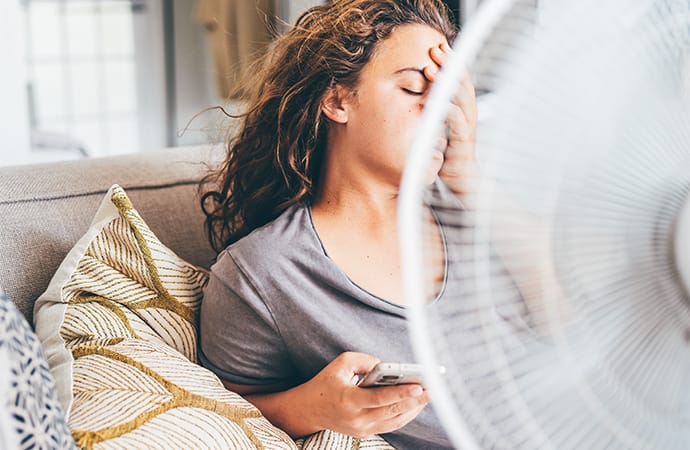
Heat Increases Suicide and Crime Rates
The association between extreme temperatures and psychiatric episodes includes a measurable rise in suicidality and behavioral volatility. Epidemiological records demonstrate a correlation between heat and suicides, with research indicating that for every 1 °C increase in ambient temperature above 25 °C, suicide rates in the general population rise by up to 2%. While this trend is observable across broad demographics, people with mental illness are “massively overrepresented in rates of suicide and rates of self‑harm,” said Wainwright. “These patients already face a higher baseline risk for self-harm, and extreme heat acts as a potent environmental stressor that erodes their remaining psychological resilience.” In patients with schizophrenia, mortality rates have been observed to triple during extreme heat events.
This increased risk is frequently exacerbated by the social and environmental circumstances common among those with severe mental health conditions. Patients in this demographic are statistically more likely to reside in lower-quality housing that lacks adequate insulation, ventilation, or air conditioning. They often have fewer financial resources to implement adaptation strategies, such as purchasing cooling equipment. Social isolation, a significant risk factor for suicide and heat-related death, often intensifies during heatwaves as people reduce outdoor activity.
Furthermore, the very systems designed to support these patients can become strained during extreme weather, Wainwright explained. As emergency departments and ambulance services face surges in heat-related admissions, routine psychiatric care may be disrupted. “For a person whose stability depends on regular contact with clinicians, structured routines, and accessible support, a heatwave can remove multiple layers of protection at once,” he said.
There is currently no globally recognized climate risk screening tool for people with mental health conditions…
The behavioral impact of heat also manifests as a rise in interpersonal aggression. Data shows that crime rates frequently map with precision against spikes in temperature during heatwaves. “The data is clear that on very hot days, during periods of extreme heat, we do see an increase in violent crime,” Wainwright said. “But we don’t know exactly why that is.”
One possible hypothesis suggests the neurotransmitter serotonin may be implicated in the loss of impulse control during thermal stress, he explained. But he cautioned about overlinking these behavioral patterns to specific psychiatric diagnoses. “[A link] is possible, but there are a plethora of complex variables at play.” He said conflating violent crime with psychiatric conditions like schizophrenia can reinforce harmful stigmas and distract from the fact that the most significant danger during a heatwave is not the threat a patient poses to others but the extreme risk to the patient’s own life.
Climate-Conscious Psychiatry
Emma Lawrence, PhD, mental health lead at the Institute of Global Health Innovation, Imperial College London, argued that climate preparedness can no longer be limited to infrastructure alone, and healthcare systems must formally recognize psychiatric patients as a vulnerable group in heatwave alerts, like existing protocols for the older adults or those with chronic respiratory disease.

There is currently no globally recognized climate risk screening tool for people with mental health conditions, but psychiatrists are developing educational resources to help identify climate- and heat-related risks in these vulnerable patients and to guide psychoeducation for them and their carers.
A significant hurdle is the lack of formal clinical training regarding heat-related psychiatric risks, she said. “There is a major gap there at the moment.” Many general practitioners and specialists do not routinely discuss heat-medication interactions because these dynamics are rarely included in medical education.
However, Wainwright suggested that effective prevention does not require a massive educational campaign. Instead, a brief warning at the point of prescribing — focused on hydration, the potential for intensified side effects, and the importance of not overestimating one’s coping capacity — can meaningfully reduce emergency presentations. “A casual mention here or there can go a long way,” he said.
Structural changes within urban planning are also becoming a clinical necessity, Lawrence said. This includes greening urban areas to mitigate the heat island effect and ensuring psychiatric units are adequately cooled to prevent patient destabilization. The interventions required for climate resilience often provide direct benefits to psychiatric health and vice versa, she said.
“When we create greener neighborhoods, safer active transport, cleaner air and stronger communities of care, we’re not just protecting the planet — we’re directly improving people’s mental health and well-being. The things we need to do for our mental health are often the same things we need to do for the climate,” said Lawrence. “Strengthening social bonds, greening our cities, reducing air and noise pollution, eating more plant-based foods — these are good for our minds and good for the planet at the same time. Medical professionals are trusted in society, and they have a real role to advocate for the fact that human health is the highest cost of the climate crisis.”
Wainwright, Marques, and Lawrence reported no relevant financial relationships.
Manuela Callari is a freelance science journalist specializing in human and planetary health. Her work has been published in The Medical Republic, Rare Disease Advisor, New Scientist, The Guardian, MIT Technology Review, and others.