

 Admin_Adham
 Jump to Key Points
 The Stanford biological aging researcher Tony Wyss-Coray, PhD, is the guy who rejuvenated the brains of mice through blood transfusions back in 2014.

Since then, his lab developed a human plasma proteomic aging model for 11 organ systems. Nature Medicine recently published a follow-up paper on the model that links disease risk and mortality to aging at an organ-specific cellular level.
Until now, aging clockmakers haven’t been able to set their sights on translational medicine, even with binoculars and AI. Sure, you can get a commercial DNA methylation test that tells you what a patient’s epigenetic clock reads vs their chronological age and link disease risk, too. But it can’t tell you the underlying biology for that calculation. Other recent work has moved beyond cross-sectional limits to examine pace of aging.
“What Tony [Wyss-Coray] did was say, ‘OK, we can create a clock that tracks age with proteins instead of methylation,’” said Luigi Ferrucci, MD, PhD, scientific director of the National Institute on Aging (he wasn’t involved in the study). “And the beauty of that is that we know what proteins do.”
- Plasma proteomics can estimate aging across 11 organs; brain + immune system most predictive.
- Extremely aged brain: +182% 15-yr mortality risk; youthful brain: 40% ↓ mortality.
- Youthful brain linked to Alzheimer risk protection ≈ 2 APOE2 copies, independent of APOE genotype.
- Cell-specific aging in >60,000 people: skeletal myocyte strongest mortality link; neurons second.
- ≥20 extremely aged cell types: 15-yr survival 34% vs 90% with normal aging.
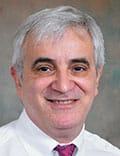
The result, Ferrucci said, is an inflection point for the field of aging, by offering biologically meaningful data across organs, tissues, and now even the more granular resolution of cells.
“It also makes translation more realistic because it gives us possible targets for prevention and monitoring rather than a single vague concept of aging,” Ferrucci said.
Wyss-Coray told Medscape Medical News his new target wish list: exercise, GLP-1s, and metformin. That’s his big three. He wants to strike deals with researchers launching clinical trials for those interventions and track the pace of cell aging or even — you guessed it — rejuvenate them.
Initially trained as an immunologist, Wyss-Coray said he was surprised that once again his latest project has led back to the organ that’s now a recurring theme in his research: the brain.
The Most Important Organs for Aging
Wyss-Coray got into aging research because 15 years ago, he wanted to see if he could find measurable immune responses for a blood-based Alzheimer’s disease test.
“We were way too early because the measurements we had were not stable enough,” he said.
That work, however, revealed proteins that respond to neurodegeneration, and those proteins change in composition with age. Eventually, he wondered if it’d be possible to assign proteins to a specific organ, such as only using proteins that are made in that organ, and then link them to aging. Wyss-Coray likens the concept to liver protein panels.
Last year, his team showed how to use plasma proteomics to link healthspan and longevity to the aging of 11 organ systems: adipose tissue, artery, brain, heart, immune tissue, intestine, kidney, liver, lung, muscle, and pancreas.
The immune system and the brain emerged as key targets for longevity.
People with extremely aged brains had a sporadic Alzheimer’s disease risk similar to that of carrying a copy of APOE4 — one of the most potent genetic risk factors. But having a youthful brain, as estimated by the plasma proteomics model, was linked to a protective effect against Alzheimer’s disease equivalent to carrying two copies of APOE2, independent of a person’s actual APOE genotype. (It was linked, instead, to youthful immune cells called macrophages involved in tissue repair and combating pathogens.)
A simple, unsurprising pattern emerged: The more highly aged organs a person had, the greater their mortality risk. So the team looked deeper, searching for more revealing underlying patterns.
The latest research installment examined cell type-specific aging, using machine learning to estimate the age of 40 cell types across more than 60,000 people — from three separate datasets — and spanning 7000 plasma proteins. Approximately one fourth of people had a single cell type with accelerated aging, and up to 3% of people had accelerated aging in 10 or more cell types.
Skeletal myocyte aging showed the strongest link to overall mortality, and neurons placed second.
Cell type aging was linked to risks for chronic obstructive pulmonary disease, lung cancer, type 2 diabetes, lymphoma, heart failure, and stroke. The 15-year survival rate was 34% among people who had 20 or more extremely aged cell types compared with 90% among people with otherwise normal aging.
“The surprising observation was how powerful these predictions are,” Wyss-Coray said.
The Brain: Longevity Barometer or Aggregator?
In the organ-level analysis, the brain’s age was the top predictor of overall mortality. People with extremely aged brains (> 1.5 SD from average or about 7% of people studied) had a 182% increased risk for death over 15 years compared to people with normal aging.
It was the top single predictor of overall mortality. People with extremely youthful brains had a 40% reduction in their risk of dying over the same duration compared to those with average-aged brains.
Wyss-Coray’s work is particularly good at identifying resiliency, a fellow biological aging researcher said.

“The entire community is trying to answer the question, ‘What are the resilient factors of aging that promote health and a longer lifespan?’” said Junhao Wen, PhD, assistant professor and director of imaging genetics research at Columbia University in New York City. “Understanding resilience in the current multiorgan, cross-organ framework is very novel, in my opinion. Tony’s papers have been at the frontier of this direction, and I would like to see more output from the entire field.”
But is the brain truly emerging as a key overall longevity indicator?
Aging clock science has been caught making assumptions before, such as when it was shown that cross-sectional-based clocks were largely a reflection of baseline demographics, not trajectory, Wen noted.
“That’s why longitudinal modeling is definitely needed,” he said.
But a growing body of evidence supports brain and immune system hypotheses. Wen’s lab and Wyss-Coray’s lab have independently concluded that the brain and the immune system are the most predictable markers for mortality.
“It makes sense because the brain is the central hub of the whole body — of the organ systems,” Wen said. “It could be reflecting some underlying true biology, but also this might just be an accumulation of risk factors from the cross-organ interaction. Maybe all the other organs are communicating with the brain, and the brain might manifest the most risk factors for disease and mortality.”
What’s Next
Wyss-Coray wants to focus on outliers as his work moves forward — the extreme agers and youthful agers.
“It may not be necessary for most of us to worry if your brain is a little bit older or if your neurons are a little bit older,” he said. “But for those 10% who have extremely old brains, maybe we can start to do an intervention, or we can start to work with them and monitor more carefully what’s going on.”
He’d like for emerging Alzheimer’s disease treatments to be examined for their impact in the extreme ager group identified by his model.
Wen said that even though his own lab also identified the brain and immune system as longevity drivers, the basis for cell type-specific links needs further foundation work.
“Whether this is truly cell type specific, that’s still debatable because — from the protein level to the cell type level — there is still a gap regarding the organ specificity,” Wen said. “So in my personal opinion, I think we should definitely go to the cellular level, but I would also like to see more direct biomarker data quantified directly to cell types.”
Wyss-Coray and Wen agree that longitudinal data and clinical trial data are needed for aging clocks to progress to translational medicine. Data diversity is a serious concern, too, Wen noted, because a lot of clock science has hinged on UK Biobank datasets.
Wyss-Coray also thinks it might just be time to throw out the term “clock” altogether.
“I don’t like the term clock because a clock measures time, and that’s not what we’re interested in,” he said. “We’re interested in the physiological difference between where you should be at — given your age — and where your tissue is now.”
Wyss-Coray reported being a scientific officer and co-founder of Teal Omics and Vero Bioscience, which are both working to commercialize aspects of his research. Ferrucci and Wen reported no conflicts. Disclosure information for study authors is available in the original study publications.



