

 Admin_Adham
 Jump to Key Points
Medicine is a life of learning. Take My Advice is a Medscape series where physicians share their best lessons, the wins and losses, and how to use everything you know to become a better caregiver every day.
Michelangelo once said, “to touch is to give life.” He had a point. As a family physician, I’ve learned that touch is a powerful and essential component of the doctor-patient relationship and should never be underestimated. I have carried that idea into exam rooms, hospital rooms, and house calls for nearly 50 years.
I first learned this lesson before starting medical school when I shadowed a local family physician. He saw 50-60 patients each day and his visits were brief. Still, he always examined his patients, looking in their throat or listening to their heart and lungs. This doctor was very popular, and I felt that his approach was largely the reason. His patients left feeling more confident and that their concerns had been attended to.
During my residency in the early 1980s, I learned there was a medical basis for this. I was sitting in a lecture, and a colleague presented data showing how a clinician’s touch could lower a patient’s heart rate, breathing rate, and blood pressure. This made a lot of sense to me.
- Touch can lower HR, RR, and BP; may be diagnostic + therapeutic.
- Physical exam can reveal missed pathology despite prior evaluation.
- Skipping exam due to time/technology risks diagnostic error.
- Consent, slow approach, and sensitivity improve trust + cooperation.
- Gentle exam techniques matter in children and anxious patients.
During one of my first months in practice, a young woman with low back pain came to see me. She had seen another doctor that morning. I thought to myself, So why are you here to see me? Maybe she was drug-seeking or had some other agenda. But she seemed sincere and very much in pain.
I asked her what the other doctor had said, and she told me they’d concluded she’d probably strained her back. They gave her muscle relaxers and suggested she take a day off work and apply some heat. I asked if this doctor had examined her back. No, they hadn’t touched her. I asked if I could examine her back, and when I did, the problem was immediately clear. She had a baseball-sized abscess on her low back. The patient was relieved to have a diagnosis and ended up getting the abscess surgically treated.
I was reminded of something I’d once heard a wise doctor say: “If something hurts, you should always look at it and touch it.” He was right. I learned that even if I was confident in my diagnosis, I shouldn’t skip this step. Not only does touch help with diagnoses, it also shows patients respect by acknowledging their problem and helps to build your relationship with them.
Unfortunately, touch is at risk of being replaced by technology and pushed out due to pressure to move faster and produce more. In a patient visit, you’re in a hurry, focused on productivity, and have all this technology at your fingertips. Your employer might encourage you to use that technology because it’s profitable, and the physical exam often becomes minimized.
COVID intensified this trend. When offices reopened, some doctors who’d gotten in the habit of virtual visits felt they could skip physical exams. Lab results were enough. Most of the time, they’d get it right and the outcome would be the same.
But sometimes not. Just after the pandemic, a gentleman came to see me for his annual physical. While reviewing his lab work, we discussed how his prostate-specific antigen results had doubled from the year before, though they were still in the normal range.
I was listening to his heart when he said, “By the way, I went to see a urologist 2 weeks ago because I had a sexual issue.” But the urologist had not examined him physically.
“Surely, he did,” I said.
“Look, Tom,” he said, “I would remember if he did.”
We laughed, and I asked if I could take a look. When I did, I felt a nodule on his prostate. He ended up having surgery for his prostate cancer.
Over the years, I’ve learned the importance of an initial handshake or fist bump to make a physical connection. Then, I sit down and simply listen. I always do some kind of physical exam regardless of the patient’s chief complaint.
I ask for their consent before touching them. I am slow, deliberate, and sensitive to their reactions. I try to put myself in the patient’s shoes. I think about my own experience going to the doctor or dentist. What am I comfortable or uncomfortable with?
It’s easy to forget that how we approach a 64-year-old shouldn’t be that different from how we approach a child. It used to be the norm to hold down a 2-year-old child screaming with an earache. Now we know to first scoot up to the child and reassure them and establish trust.
I might start by listening to their heart. I might then say, “I would like to look in your ear. Your mother or father can hold you.” Then I let them touch the tip of my plastic otoscope, so they know it’s not hot, cold, or sharp. I say, “We will start with the good ear first, so you can see what it feels like.” Generally, by the time you get around to looking at their painful ear, they know you’ll be gentle.
Michelangelo was almost right. Touch does not always restore health or cure. But when wielded appropriately, professionally, and with great sensitivity, it can be diagnostic and therapeutic. It can provide insight into the patient’s symptoms, establish trust, and strengthen the doctor-patient relationship. Touch matters, and we shouldn’t forget that.
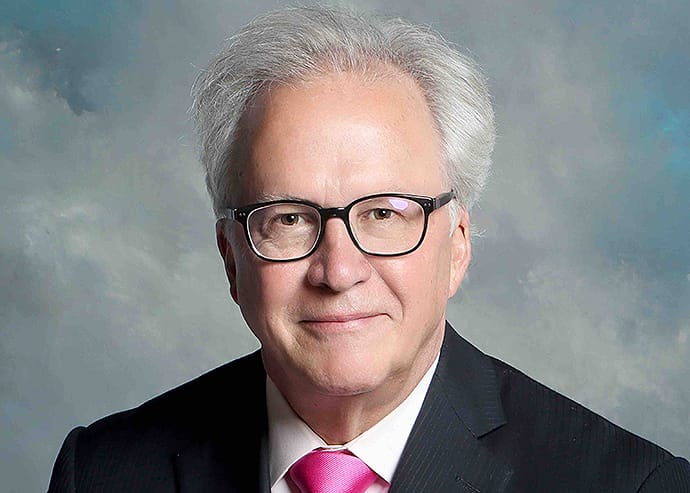
Thomas Rhyne White, MD, is a family medicine and clinical lipidology physician in Cherryville, North Carolina. In 1988, he established Cherryville Primary Care, and in 2015, he opened Hometown Direct Care, the first direct primary care practice in the area.
Are you a doctor with wisdom to share about life in medicine? Do you have good advice you want to offer your fellow physicians and a story only you can tell? Medscape Medical News would love to consider you for Take My Advice. Please email your contact information and a short summary to access@webmd.net.
The experts cited in this article had no relevant disclosures.



