

 Admin_Adham
 Jump to Key Points
One of the most frustrating experiences for clinicians is when a patient comes in with their mind made up based on an unsupported claim.
Maybe they think vaccines are harmful. They swear by an unproven supplement. Or they refuse a prescribed medication because the internet told them it’s a Big Pharma money-making scheme. You try to correct them with facts and data — only to find that no amount of evidence or years of medical training can compete with a 30-second TikTok.
It’s enough to make any data-driven clinician throw up their hands and ask: “Why?”

“There is a view among clinicians that is fundamentally false, which is that people make rational decisions, and that if you give people information — that smoking is dangerous, that seatbelts save lives — they’ll make changes,” said David Asch, MD, professor of medical ethics and health policy at the University of Pennsylvania in Philadelphia.
But beliefs are rarely formed by evidence alone, psychologists say. Rather, they satisfy deep psychological needs — making sense of uncertainty, preserving identity, maintaining agency, and deciding who to trust. These needs are not unique to misinformed patients; they are hardwired across humanity.
A 2026 survey of more than 1000 US physicians (conducted by the Physicians Foundation in collaboration with Medscape) found that 99.9% had encountered patients influenced by misinformation in the preceding year. Yet to focus on a failure of knowledge misses the point. Faced with what researchers call “selective skepticism”— the dismissal of evidence and simultaneous “uncritical acceptance” of pseudoscientific claims — many clinicians are now pivoting to meet patients where they are, seeking not to dismiss or argue but to understand.
Why Smart People Believe Unsupported Claims
Context matters, said Gordon Pennycook, PhD, psychologist and associate professor at Cornell University in Ithaca, New York. Cognition interacts with the environment to create beliefs and behaviors — and in the face of modern technological change, sometimes those beliefs and behaviors are maladaptive.

Spotting falsehoods, biases, or errors requires reflection and slowing down. “One major thesis is that social media is not very conducive to that,” Pennycook said. “The massive amounts of information — especially information that’s specifically generated to appeal to our emotions, be salient, and grab our attention — are geared toward absorbing information passively.” Discernment requires thinking in the “completely opposite way.”
Unsupported health claims and misinformation are easier than ever to find — and, in many ways, easier to believe. Some 40% of US adults and half of those younger than 50 years report getting health and wellness information from podcasts or social media influencers. Of those, two thirds just happen to come across the information — and only 10% who receive information this way say they trust all or most of it.
Yet, this environment’s influence on the brain is so powerful that even a single prior exposure to a fake-news headline increases belief in that headline. “That’s true even for the smartest people,” Pennycook said.
Humans have a powerful psychological drive to find a reason when things go wrong, said Rosha McCoy, MD, medical director of health care affairs at the Association of American Medical Colleges, pointing to misinformation around the MMR vaccine and autism. When babies get sick or tragedies happen, these stories — even if not scientifically sound — can “give people something to hang on to.”

Add illness and medical uncertainty to the mix, and now you’re also dealing with anxiety and fear. When we want to believe something, we seek information that confirms it and ignore that which contradicts it. “The expression I use is ‘Believing is seeing,’” Asch said. “We get to select what we see, and therefore what we believe.” Trying to hold conflicting ideas can cause cognitive dissonance, which humans naturally want to avoid.
Once misinformation takes hold, it’s remarkably hard to dislodge, said Helen Burstin, MD, MPH, a board member of the Coalition for Trust in Health & Science, a nonprofit organization created to combat misinformation and rebuild public trust in medicine. “For patients, trust goes at the speed of desperation,” she said. “For us, trust moves at the speed of ‘Is it correct? Is the data there?’”

Trust often depends on two things, said social scientist Sarah Gollust, PhD: perceived competence and perceived warmth. “Where one might fall short, even if you have the other, you’re not going to build trust or be trustworthy,” said Gollust, who studies the intersections of communication, politics, and health policy at the University of Minnesota School of Public Health in Minneapolis. A wellness influencer may score high on warmth, appearing relatable, honest, or caring, even without clinical training and despite getting the science wrong. A rushed specialist may score high on competence but come across as cold. Under the warmth-and-competence model, the influencer could win trust, in part because of how social media interacts with the brain.
Humans are also bad lie detectors and tend to judge believability by plausibility: Does what this person is saying make sense? Once someone seems credible, listeners give them the benefit of the doubt, even if they aren’t 100% sure, Pennycook said. Appealing to rational understanding, then — explaining that cholesterol medication can lower the risk for stroke, for example — isn’t enough. It’s like “clinicians bringing a knife to a gunfight,” Asch said.
Social identity is another deep psychological need, and people often choose information sources based on it — using political affiliation, religion, or community to inform health choices. “We know from a lot of research that people are often too busy and don’t deliberate carefully about every decision,” said Gollust. “But when they have an easy way to make a connection to ‘Who I am’ and ‘what I should be doing,’ they use that information as a shortcut.”
Accepting official guidance could feel like a threat to one’s identity — or even to one’s safety. Some mistrust in medical institutions is rooted in history or experience. Black, Hispanic, and American Indian or Alaska Native adults report being treated unfairly or with disrespect by healthcare providers because of their race or ethnicity at far higher rates than White people do — and support groups, community resources, and other trusted voices may make patients feel welcome in a way that medicine never has. “A big challenge for all of us is to think about how we rebuild that trust,” Burstin said.
Rebuilding Trust One Patient at a Time
It’s not all bad news. Despite widespread mistrust in medicine, people still generally see their own healthcare provider as the most trusted messenger.

A practical takeaway for clinicians is to focus on connecting better with patients. Doctors must continually work on “listening more than talking” and getting to know each patient as a whole person, McCoy said. Communication is critical to treatment. “We can have the best drugs and the best vaccines, but if people aren’t taking them or using them, then our work is not worthwhile.”
Experts recommend using open-ended questions, active listening, and storytelling (a tool that misinformation sources such as social media leverage well). A pediatrician could share that they vaccinated their own children or focus on the shared goal of keeping a child healthy and safe. The release of oxytocin during meaningful social interactions can drive trust, Asch said.
One strategy gaining traction among social psychologists is a communication technique known as pre-bunking. It involves warning the patient that they may encounter information designed to manipulate their emotions, inoculating them against misinformation — like the communication equivalent of a vaccine. When starting a patient on a new therapy, a doctor might say, “You might see posts online claiming this medication is just for pharmaceutical profits, possibly alongside ads for unproven supplements. They may try to make you feel scared or distrustful. If you encounter this, feel free to bring it to me so we can review the evidence together.”
Full transparency can also be effective. Burstin suggested providers acknowledge that evidence can change — and that’s a good thing. “That kind of respectful communication is what builds the relationship.”
The Broader Systems Work
Experts agree the burden of fighting misinformation needn’t fall on clinicians alone. Community organizations — places where people are already emotionally and socially entrenched and turn to for advice — are underused partners, said Kasisomayajula Viswanath, PhD, professor of health communication at the Harvard T.H. Chan School of Public Health and the Dana-Farber Cancer Institute, both in Boston. He has worked with churches and food pantries to help curate accurate health information. “People listen to people from their own community,” Burstin said. “We have to raise up local voices who can be forces for good.”
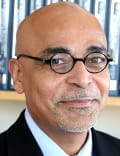
Efforts can’t be confined to clinical walls. Multiple experts discussed the power of local media and the ethnic press, outlets deeply embedded in cultural communities, to communicate evidence-based information through voices patients know and trust.
Ultimately, the issue — while threatening and challenging — is also an opportunity, Burstin said: “An opportunity to think about how we help drive clinicians’ better understanding by thinking about trust, emotions, and issues that aren’t always the ‘bread and butter’ of medicine.”
In other words, it’s an opportunity to become a better doctor.
The experts cited in this article reported having no relevant disclosures.



