

 Admin_Adham
Earlier this year, Australia began rolling out its National Lung Cancer Screening Program, but experts are raising concerns about whether it can reach those who are disproportionately affected by the disease.
Lung cancer is the deadliest cancer in Australia. It was the fourth most commonly diagnosed cancer in 2025, with an estimated 15,100 cases and around 9000 deaths.
Aboriginal and Torres Strait Islander peoples (ie, Indigenous Australians) are more than twice as likely to be diagnosed with and 1.8 times more likely to die from lung cancer than non-Indigenous Australians. Research shows that mortality rates in Indigenous Australians are on the increase.
The goal of the new screening program is to reduce the number of patients dying from lung cancer by detecting and treating cancer early, before it has spread. The program offers free low-dose CT scans every 2 years to high-risk patients, including those who are aged 50-70 years, who are asymptomatic, who currently smoke or who have quit smoking in the past 10 years, and who have a history of cigarette smoking of at least 30 pack years.
The new screening program, which is the first in almost 20 years, requires a general practitioner, nurse practitioner, or health worker at an Aboriginal Health Service to refer patients for the CT scan.
Experts have praised the opportunity to detect lung cancers that otherwise might have been missed or not detected until they were at a later stage. But simultaneously, they have raised concerns about whether the program can reach the country’s most vulnerable patients.
Significant Barriers
For Andrew Nguyen, MBBS, public health registrar and infectious disease physician at Aboriginal Medical Services Alliance Northern Territory, understanding the context is crucial to understanding tobacco use and the mechanisms that have allowed health inequities to arise among Indigenous Australians.
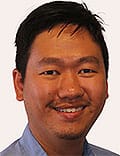
“A lot of the issues that play into Indigenous cancer risk stem from the social determinants of health and the impact of discrimination,” he told Medscape News Australia.
Nguyen cited colonialization, the historic payment of wages in tobacco, the loss of Indigenous culture, mental health trauma, lack of access to medical care in rural and remote communities, and decreased health literacy as key factors contributing to higher rates of lung cancer.
“If and when they are diagnosed with lung cancer, patients often live in remote communities, have poor financial security and poor housing, and need to travel far for appointments,” he said.
“Unless we fix what’s going on, why they die of lung cancer at a greater rate than non-Indigenous Australians, nothing will change.”
It is difficult for Indigenous Australians to access lung cancer screening for numerous reasons, said Nguyen, citing barriers such as geographic challenges, lack of access to general practitioners and radiologists, and a lack of culturally safe healthcare professionals.
“The thing with lung cancer screening is that it’s far more costly than colorectal cancer screening. You need to have the facilities and staff in place, and you need to do follow-up,” he said.
“What happens when staff go out to remote communities? Who will do the follow-up with the results? How will you get people to appointments? How do you communicate this to people who don’t speak English? None of this was discussed when the program initially rolled out, and now we’re trying to play catch-up. It all plays into the challenges.”
Strengthening Cultural Safety
The need for a referral could restrict access, Fraser Brims, MD, consultant respiratory physician at Sir Charles Gairdner Hospital and deputy director of the Institute for Respiratory Health in Western Australia, told Medscape News Australia.
“It’s likely that having primary care as the gatekeepers may restrict some people’s access due to the cost of copayment to see a general practitioner,” he said.
“But the National Lung Cancer Screening Program has mobile CTs, and a large component of the program has been specifically designed to maximize acceptability and uptake in the Aboriginal population. Overall, I think it’s a very good start for Australia.”
Indigenous Australians face major barriers in accessing screening, particularly in rural and remote areas where access to general practitioners and radiology services is limited, Emma Taylor, senior research officer at the Western Australian Centre for Rural Health, told Medscape News Australia.
“Other major barriers include feelings of shame, fear of diagnosis, distrust of Western health services, lack of awareness of symptoms that might be linked to cancer, and competing life priorities,” she said.
“These challenges can be tackled through strengthening the cultural safety of health services, including by employing more Aboriginal health staff, providing more flexible and accessible screening delivery, and improving cancer awareness education and media campaigns.”
Scathing Criticism
Initially, the program was designed to consider the higher rates of lung cancer among Indigenous Australians. It included a lower screening age of 50 years compared with 55 years for non-Indigenous Australians.
The risk-based distinction — which is made in other public health programs, including the provision of specific vaccines and heart checks — was withdrawn. In a scathing criticism of the program, some experts have called the eligibility criteria “structural racism.”
“Current eligibility criteria expand the eligibility for lower-risk groups. Yet they ignore Aboriginal and Torres Strait Islander peoples’ higher risk and cumulative impacts of remoteness, limited access to health services, and other health conditions,” the authors wrote.
“This decision significantly increases the number of people accessing the program. While this may appear equal on the surface, it risks a misallocation of limited health system resources, particularly in an already overstretched health system. That’s a clear example of structural racism — when policies that seem neutral actually uphold longstanding inequities and reinforce disadvantages,” they continued.
The authors did not respond to multiple requests for comment.
Determining eligibility criteria for screening programs is challenging, Taylor said. The desire to maximize screening among the highest-risk population (which may be determined by age, Indigenous status, or family history) must be balanced with the need to reduce overscreening in lower-risk populations.
“We also know that Aboriginal people are diagnosed with cancers at a younger age than the general population, and there is a body of research recommending younger minimum screening ages for Aboriginal and Torres Strait Islanders for breast cancer and colorectal cancer screening,” Taylor added.
Determining eligibility is complex, Brims agreed, adding that given Australia’s significant history of occupational exposure to asbestos and silica and the country’s diverse population, future models may well need to incorporate additional elements.
As of last month, more than 25,900 low-dose CT scans had been completed since the program’s launch on July 1. In a bid to increase uptake, a national campaign was launched last month titled “It’s Good to Know Early” and aimed at Indigenous Australians, the LGBTQIA+ community, culturally and linguistically diverse communities, and patients living in rural and remote areas.
More Investment Needed
For Sanjay Ramakrishnan, MBBS, PhD, respiratory physician and clinical senior lecturer at the University of Western Australia Medical School’s Centre for Respiratory Health, Perth, the screening program has the potential to address an important and overlooked disease: chronic obstructive pulmonary disease (COPD), which is the fifth leading cause of death in Australia.
“It’s estimated that at least 1 in 2 adults with COPD are not yet diagnosed. There are no approved primary or secondary screening platforms to identify COPD early in any jurisdiction globally,” he told Medscape News Australia.
“It’s very hard to ignore a positive finding on a scan. Most people with emphysema on a scan will not have COPD. But hopefully it will lead clinicians to then follow up with a spirometry test to confirm COPD.”
Taylor agreed. “Many Australians are unaware they have COPD, particularly in regional, rural, and remote communities, so this screening program will hopefully lead to better health outcomes for people suffering from COPD who might otherwise not have been diagnosed.”
For now, Nguyen said, if the program were to succeed and reach the country’s most vulnerable, there must be more investment. “We need to take a whole-of-government approach to tackle these challenges. It’s a deep-seated problem with a lot of intersecting parts. The program is great in theory, but the reality isn’t practical unless we increase funding.”
Ramakrishnan reported receiving research funding from AstraZeneca; serving as a local principal investigator for AstraZeneca and Sanofi; receiving speaker fees from AstraZeneca, Chiesi, Boehringer Ingelheim, and GSK; receiving conference travel support from AstraZeneca, Chiesi, Sanofi, and Boehringer Ingelheim; and attending advisory boards conducted by Sanofi, AstraZeneca, and GSK. Nguyen, Brims, and Taylor reported having no relevant financial relationships.


