Admin_Adham
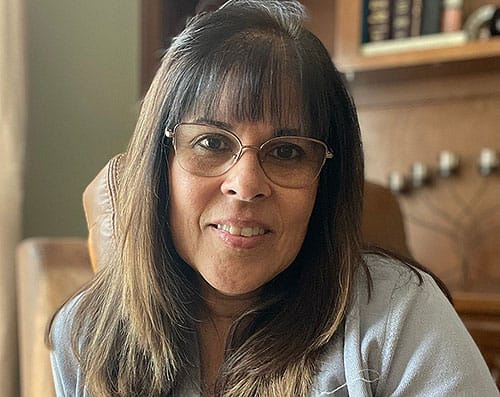
For Elena Prendergast, DNP, APRN, the path to becoming a palliative care nurse practitioner wasn’t straightforward, and she didn’t get there until a month before her 49th birthday.
She doubted herself during her training, she told Medscape Medical News. She felt guilty about not being available for her children as much as she wanted — some were in middle school at the time — and the work itself was not easy. (She also worked throughout her nurse practitioner program.)
But today, running her business, Tree of Life Health Consulting— which helps individuals and their families navigate serious illness — and practicing in the hospital and in the community, she would not have it any other way, she said.
Getting this degree “increased my scope of practice. It gave me a much broader understanding...It definitely helped me find my voice,” Prendergast said.
Her advice to nurses and others interested in pursuing a career change? It is never too late.
“…Anybody who's thinking about ‘I’m too old. I’m not ready, I’m not smart enough’ — you know if it’s in your heart and it’s your passion, follow it,” she said.
How did Prendergast, now 59, wind her way from working as an administrative assistant to becoming a nurse practitioner in midlife? Here’s more on how she made it happen.
A Seeded Planted in Youth
When Prendergast was growing up, her mother, a native of Puerto Rico, was a caretaker by nature and would take care of a neighbor who had Alzheimer’s disease, even though she was not formally trained. Prendergast was always her mother’s “little helper,” she said.
“I will say that I always wanted to care for people,” Prendergast said.
But any thoughts of her becoming a nurse were dashed when her seventh-grade science teacher told her: “I hope you never go into science because you’ll starve.” Although she now sees that her teacher was probably trying to motivate her, it had the opposite effect. Prendergast shut down all thoughts of becoming a nurse.
“It became this seed in my head that I just was like, ‘OK, I’m not good at science, so I’m not going into these things,’ ” she said.
Many years later, however, her attitude would change — and determination took over. “That’s kind of how I ended up as a nurse practitioner, to tell you the truth,” she said.
A Career Deferred, Not Derailed
When Prendergast was in her 20s living in New York City and working at Columbia University, she joined the US Army Reserve, met her future husband (he was also in the military), got married, and moved to Fairbanks, Alaska. In the military, Prendergast explained, there are volunteer expectations of spouses that are “quite extensive” and “not unlike the CEOs whose spouses are going to fundraising events and providing support.” So, she ultimately put her career aspirations on hold to focus on these duties along with taking care of her family.
There were also losses along the way. Prendergast had five miscarriages. Her grandmother died of sepsis, her mother of melanoma, and her mother-in-law of ovarian cancer.
Experiencing these losses ultimately shaped her desire to go into palliative care, she said. But first she would have to go to nursing school.
Prendergast recalls moving to Florida with her three children to help her mother undergo chemotherapy. Her mother’s healthcare providers thought Prendergast was a nurse. They kept asking her mother, “Where’s your daughter the nurse?” she said. Then right before her mother died, Prendergast promised her mother that she would go to nursing school. She was 39 at the time and, despite lingering doubts, she started nursing school the following year.
“I was like, ‘I’m too old. I’ve got kids in school…my husband is in the military’ and all these things.”
Yet, she was able to quiet the noise and pursue an associate’s degree in nursing (ADN), a 2-year program. “A lot of adult students and students from more disadvantaged groups tend to go the associate’s degree route because they need to get in and start working,” she said.
Then, 2 months before she graduated, her father died.
There were all these challenges “and death and everything that kind of got weaved through that really could have at times gotten me to just say, ‘I’m done.’ But I was like, ‘Okay, I have to follow through on this promise. I have to do this,’ ” she said, referring to the promise she made to her mother.
Her family eventually moved to Martinez, Georgia, and Prendergast began working in critical care. “I loved critical care, but I was more connected with people and having more meaningful relationships with them at the very end [of life], helping them find closure and quality of life and all of those things.” So she decided to shift jobs and become a hospice nurse. But after a year, “I was frustrated because I felt like we were getting these patients so late. We’d get them and then they would die,” she said.
“Ideally, you should get them [patients] early enough that they should have good quality of life and be able to make memories and do things before they die,” she added.
Prendergast asked the question, “Is there anything between critical care and hospice?” and started to learn about the relatively young field of palliative care. “I wanted to be on the journey, not at the complete end of the journey. I wanted to help people get to that place,” she said.
While working on a medical-surgical unit with oncology patients, she told colleagues that they needed palliative care services at the hospital. “They said, ‘We don’t need that. It’s not important.’ And I just knew as a nurse and as a family member who had gone through these things…we do, we do need this.”
Her supervisor, who was also a friend, agreed with her but told her nobody would listen unless she had a higher degree.
“And so basically, she was telling me, go out there, get your degrees, get your credentials, and then use your experience and your voice because now you’ll have the platform.”
She was 1000% right, Prendergast said.
Eventually, she pursued a nurse practitioner degree and graduated in 2017. For others who are contemplating additional nursing training or a career change, Prendergast’s advice is go for it.
It’s quite challenging, she said, to go back to school in midlife and change careers since you are older than most other students and balancing more things. “Yeah, it is hard. It can be isolating, but it’s times like that when you surround yourself with other people…who are taking chances, who are doing things a little differently.”
She experienced guilt being away from her children. “But on the other hand, I would hear things from my daughters like, ‘You’re showing us you can do it no matter what.’ ”
There are other benefits of changing careers later in life. Older students have life experience, Prendergast said. They have watched somebody die. They have paid a mortgage. They have dealt with the stress because they can’t pay their bills. “An adult learner comes in with all of that experience and all they need [is] somebody to prepare them with the book smarts,” she said.
Many women in their 40s, 50s, and 60s make career changes, said Anne Ryan, a career coach and speaker based in Sarasota, Florida. Vera Wang, for example, didn’t start designing wedding dresses until her 40s.
Eighty-five percent of a person’s career success is their soft skills, Ryan said. Soft skills can include things like adaptability, teamwork, critical thinking, leadership, and creativity.
Yet many people don’t make a career change because they fear they will make the wrong choice, Ryan said. She reminds her clients that they can’t make a wrong decision because any decision they make will get them closer to their goal, she said.
“Just make the best decision you can at the time. And again, if you land in the wrong industry or the wrong job and you don't like it, you can always switch,” Ryan said.
"People think a career path is a very straight line, a very straight line going upwards,” Ryan said, “when it really looks more like the plot line from a time-travel sci-fi movie, which is all over the place, right?”
Opening Doors for Others
After Prendergast graduated with her nurse practitioner degree, she got board-certified as a family nurse practitioner and as a palliative care nurse practitioner. She now teaches nurse practitioner students at Augusta University College of Nursing, sees patients in the hospital who are getting mechanical hearts, and helps individuals and families navigate serious illness through her consulting practice.
Prendergast said she is happy that she did the hard work and got her advanced degree as a nurse practitioner. Not only can she prescribe medications, but she can also sit down and initiate conversations with patients about palliative care and hospice.
“It opened doors for me that I would never have imagined,” she said.