

 Admin_Adham
It was the desire to explore new horizons and gain experience abroad that led Michael Roger to leave France and practice general medicine in Dubai. He moved there in early 2024 after being invited to establish a family medicine department in a private hospital — an opportunity offered to him at just 33 years old. His wife, an orthodontist working in Kuwait, naturally influenced his decision. But another factor played a role: a growing sense of disillusionment during his early years as a locum physician in the Paris region, where he often faced a “sometimes complicated” relationship with patients.
“When I began seeing patients, I quickly encountered a lack of respect — not only from patients but also a lack of recognition and support from institutions. I was regularly insulted or assaulted, often because I refused sick leave certificates. I was threatened with a knife. A patient threw a bottle at my face after I declined to prescribe antibiotics. I had to block off half-days to file police reports, and I didn’t receive the support I expected,” he explained. At the same time, he grew discouraged by a pace of practice that “forces you to see up to 30 patients a day.”
A Calling Grounded in Medical Ethics
These experiences weighed heavily on Roger, who has always been strongly guided by the ethical principles of the physician-patient relationship and the values of the Hippocratic Oath. Raised in a modest family between the regions of Lorraine and Brittany in France, he decided at age 16 to pursue medicine after witnessing the compassion of a family doctor caring for a seriously ill friend.
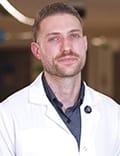
He enrolled at Paris Descartes University (now part of Université Paris Cité), Paris, France, where he immediately chose general practice. During his general practice residency at Paris Diderot University, Paris, France, he developed a strong interest in sports medicine and its links with nutrition and lifestyle. He paused his residency for 2 years to study this specialty in depth, completing a sports medicine dissertation in 2020. He finished his general practice residency the following year.
During residency, he already worked as a locum GP — a practice he continued in three clinics after completing training, in Levallois-Perret, Clichy, and Paris’s 19th arrondissement. “I chose not to open my own practice so I could remain free to move abroad if the opportunity arose.”
A New Life in Dubai
The opportunity came in 2023. Married to an orthodontist in Kuwait, he was already considering the Gulf region. Thanks to a strong professional reputation and word of mouth, he was offered a position in Dubai.
“They rolled out the red carpet for me. They offered me a department head role and asked me to build a family medicine department in a major Dubai hospital. My reputation, experience, and a few publications were enough. My age wasn’t a barrier,” he said.
The salary was attractive, too. “Compensation varies by specialty, experience, and seniority. The minimum salary a French physician can expect in a Dubai hospital is €10,000 to €15,000 per month, tax-free,” he explained.
A Lengthy Administrative Process
However, obtaining the required medical license in the United Arab Emirates (UAE) involves a demanding administrative process. Even with help from a Dubai-based agency specializing in physician relocation, Roger faced difficulties obtaining the necessary documents in France.
“Nothing was done to make expatriation easy. It took me almost 2 years to obtain certain documents,” he said. UAE authorities require diplomas to be printed and translated by a sworn translator. All previous clinical experience is verified. A letter from the French National Medical Council must confirm registration and qualifications. His general practice credentials were validated without difficulty, but his sports medicine qualification could not be approved in time — officially for “technical reasons,” he said.
By the time he first contacted the Dubai hospital, he had already started some of the administrative steps. It then took another 6 months to obtain his license and finalize his contract.
In Dubai, he found living and working conditions extremely comfortable. Housing is “very easy” to obtain. At the hospital — as in much of Dubai — “the quality of services is exceptional. Everything is automated and smooth.”
Coding processes for procedures and prescriptions are particularly efficient. “Most of the time, within 15 minutes, the pharmacy receives the code, sends the information to the patient’s insurance, and dispenses the medication — or offers home delivery.” Medical practice is also streamlined by continuous nursing support assigned to each physician.
He also discovered a calmer workplace culture. “Patients, the team, and the administration are all much more respectful,” he said.
Clinical practice is tightly regulated. “We have very clear institutional guidelines. The Dubai Health Authority is extremely strict. Continuing professional development is mandatory — you cannot renew your license without proof of attending a conference or similar activity. Hospital quality checks are frequent.”
Competition among health facilities drives ongoing optimization. “There is a constant expectation to update and refine your knowledge and skills. There is a very pleasant culture of learning here.”
Sports Medicine, Lifestyle at the Center of Care
As a family medicine consultant, Roger treats patients for acute symptoms — often viral infections like influenza — as well as sports-related injuries and chronic disease management. His consultations strongly emphasize prevention, nutrition, and lifestyle interventions.
“In Dubai, the population is relatively young. Depending on the clinic’s location, health issues are mostly linked to sports activity and lifestyle. Diabetes, hypertension, and cholesterol issues are more frequent than in France due to poor dietary habits and a culturally different relationship to the body,” he said.
Still, the broad scope he expected in general practice did not fully materialize. After more than a year, he decided to leave the hospital and join a private clinic in central Dubai in 2025. The long hours — “sometimes until 10 PM” — and significant pressure “to generate revenue” pushed him to seek a work environment better aligned with his values.
“I now have that versatility again, and I can follow patients over the long term, which is more common in smaller, more community-oriented clinics,” he said. Although English remains dominant, he now sees more French-speaking patients. While the change suits him, it carries risk: his income now depends on the number of consultations, with a percentage paid to the clinic.
Although practicing medicine in Dubai is more comfortable, it is heavily influenced by financial considerations and a complex relationship with insurance companies. Administrative demands are high, and insurance limitations create inequities in access to care.
“Insurance does not cover screening. For every consultation, we must fill out a form for the insurer. Every prescription must be justified. Sometimes we have to fight for additional tests, citing guidelines.” Despite this, insurance refusals are common — especially with lower-tier plans — which can delay diagnoses and limit appropriate treatment, he said.
A Saturated Market
Another drawback: The market has become intensely competitive. With the rapid growth of health facilities in Dubai, the supply of doctors now exceeds demand.
“Marketing is central. It’s unthinkable for a doctor not to work on their communication,” Roger said.
Dubai was long considered a top destination for doctors seeking better working conditions. “The market is now completely saturated. Every day, I am contacted by two or three French physicians on social media asking for advice on expatriation. Ten or 15 years ago, Dubai was a great destination for improving your quality of life. That’s no longer the case. I know doctors who sometimes have only one consultation a week.”
For those considering expatriation, he advises, “It’s better to have a backup plan. And you must be able to adapt to a different way of practicing.” What he misses most is the freedom of practice in France. “It’s wonderful to have the system’s trust. In France, we have rules, but no one evaluates every prescription. Unfortunately, abuse has turned that strength into a weakness.”
Saudi Arabia: The New Hot Destination
As Dubai offers fewer opportunities for expatriate physicians, Saudi Arabia has become the most active recruiter in the Gulf, according to Salim Ben-Naoum, president of EliteMed, a French agency specializing in physician recruitment in the region.
With numerous projects underway to diversify the Saudi economy by 2030 (Saudi Vision 2030), “Saudi Arabia is now seeking to recruit Western health professionals — just as Dubai did 10 or 15 years ago,” he said. To attract candidates, Saudi institutions are using a widely known expatriate incentive: the family package, which has largely been phased out in Dubai. These packages often include school-fee assistance, exclusive housing access, and airfare coverage — with the trade-off of 48-hour weekly contracts.
In Saudi Arabia, “all specialties are in demand.” In the UAE — particularly in Abu Dhabi and Dubai — recruitment continues, but mainly in highly specialized fields such as pediatrics, endocrinology, and surgery.
This story was translated from Medscape’s French edition.
