Admin_Adham
 Jump to Key Points
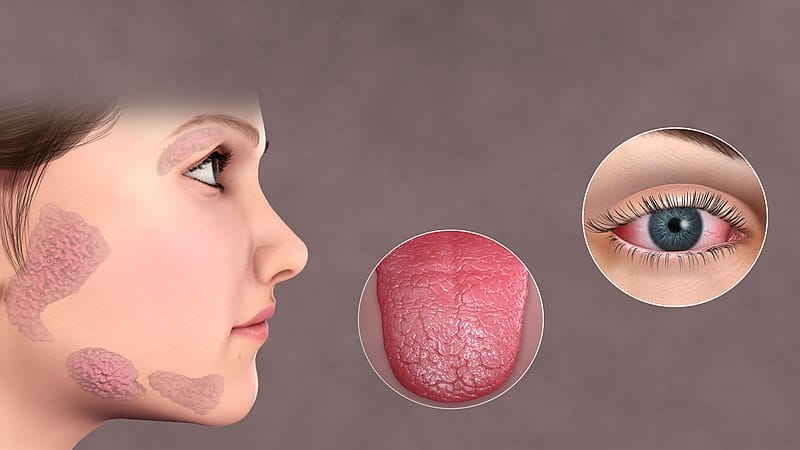
People with Sjögren disease (SjD) who also have type 2 diabetes tended to have less severe symptoms if they were also taking metformin compared with people with SjD who were not taking metformin, according to a retrospective case-control study presented at the International Symposium on Sjögren’s Disease in Paris, France.
“Our study shows that SjD patients receiving metformin have less extensive pathological and clinical disease, including less severe lymphocytic infiltration of the salivary gland, especially B cells,” R. Hal Scofield, MD, professor in the Arthritis and Clinical Immunology Research Program at the Oklahoma Medical Research Foundation (OMRF) at the University of Oklahoma in Oklahoma City, Oklahoma, and his colleagues reported. The findings suggest potential value in conducting prospective, randomized controlled trials of metformin in patients with SjD, he said.

Teja M. Kapoor, MD, associate professor of medicine in rheumatology and director of the Columbia Sjögren’s Center at Columbia University Irving Medical Center in New York City, was not involved in the research and told Medscape Medical News that it shows an interesting, hypothesis-generating signal that deserves a randomized trial but should also be interpreted cautiously and conservatively.
“The key message is that these findings identify a promising question for a trial,” Kapoor said. “They do not yet show that metformin treats Sjögren’s or prevents its complications.”
In addition to inhibiting hepatic glucose production, metformin has anti-inflammatory and immunomodulatory effects and has shown some effectiveness in treating systemic lupus erythematosus, Scofield said. He noted several possible biological mechanisms that might suggest metformin could affect SjD symptoms.
First, the signal transducer and activator of transcription 4 (STAT4) protein is an immune system effector that appears to play a role in SjD, and metformin appears to downregulate STAT4’s activity, and “then that modulates the immune system in an anti-inflammatory way,” Scofield told Medscape Medical News. He also noted that there are mitochondrial defects in SjD, and “metformin has all these interesting effects on mitochondrial function, making mitochondria work better, so that might reduce inflammation also,” he said.
Scofield also pointed to research in a mouse model of SjD that showed increased salivary production resulting from calcium signaling in the mice that received metformin.
Analysis in the Discovery Cohort
The researchers retrospectively reviewed the clinical and serologic features of the 459 patients at OMRF’s sicca assessment clinic who met the criteria for SjD, including patients with and without type 2 diabetes and those who were and were not taking metformin.
There were 31 patients with SjD and type 2 diabetes who were taking metformin, and the first comparison matched each of these patients to four patients with SjD and without type 2 diabetes (n = 124) based on age, sex, and race or ethnicity.
Then the patients taking metformin were compared with four other groups without matching: 59 patients with diabetes and SjD who were not taking metformin, 84 patients with diabetes and SjD (regardless of metformin status), and 375 patients with SjD but without diabetes.
The patients taking metformin had significantly lower salivary gland focus scores (1.88) than matched patients with SjD (3.26; P = .0002). In addition, only 16% of patients taking metformin had a focus score > 3 compared with 40% of the matched patients with SjD (P = .02).
Metformin’s Effects on Eye Dryness
Several objective assessments of eye dryness also showed lower symptom severity among patients with both diabetes and SjD who were taking metformin. Those taking metformin had a significant 60% lower odds of a positive Schirmer test than matched patients with SjD (odds ratio [OR], 0.4; P = .028), although differences compared with patients with diabetes and SjD who were not taking metformin were not statistically significant.
Patients with SjD taking metformin had 66% lower odds of a positive van Bijsterveld score than matched patients with SjD (OR, 0.34; P = .011) and 71% lower odds of a positive van Bijsterveld score than patients with SjD and diabetes who were not taking metformin (OR, 0.29; P = .01).
The odds of a positive ocular staining score were 76% lower for patients taking metformin than for matched patients with SjD (OR, 0.24; P = .004) and 78% lower than for patients with diabetes and SjD who were not taking metformin (OR, 0.22; P = .007).
There were no significant differences for all three of these measures of eye dryness between patients with diabetes and SjD (regardless of metformin status) and patients with SjD but without diabetes, who served as the quasi-control comparator group. Scofield acknowledged that this comparison is not a perfect control because there may be differences between people with SjD and diabetes who are taking metformin and those with diabetes and SjD who were not taking metformin, but it’s a place to start in a study that’s meant to be more hypothesis-generating.
Confirming Associations in an External, Independent Cohort
The researchers then assessed the same measures in an external, independent cohort from the National Institute of Dental and Craniofacial Research (NIDCR) that included 26 patients with SjD taking metformin and 394 patients with SjD but without diabetes who were not taking metformin.
Mean Schirmer test results were not significantly different between patients with SjD according to metformin status in the NIDCR cohort, but they were significantly different in the OMRF cohort (P = .048).
In both the OMRF and NIDCR cohorts, the biopsy focus scores and van Bijsterveld scores were significantly lower in patients with SjD taking metformin than in those not taking it.
The researchers then conducted a meta-analysis bringing all the data from both cohorts together, and these findings confirmed the association between metformin use and lower biopsy focus scores and van Bijsterveld scores. Although the NIDCR cohort did not show a significant difference between the groups on the Schirmer test, the meta-analysis did show a significant difference between the groups when the data were combined with the OMRF cohort.
Findings Are Interesting but Deserve Caution
Scofield said it’s premature to suggest that patients with SjD should start receiving metformin if they’re not already taking it. “Maybe if you have a new diagnosis of Sjögren’s in someone with diabetes, I would lean toward metformin,” he said, but he would like to see more trials testing this hypothesis.
Kapoor agreed that the findings merit further exploration in larger trials.
“The most interesting finding is that metformin users had lower minor salivary gland focus scores in two separate cohorts,” Kapoor said. “Seeing a similar signal in an independent cohort is encouraging, although both cohorts are observational.”
She urged caution, however, in suggesting that metformin “improves” symptoms because these were cross-sectional comparisons between different groups of patients measured at one point in time. “They don’t show that anyone’s glands or eyes got better after starting metformin,” she said.
Kapoor noted several important limitations to keep in mind when interpreting the results, starting with the timing of exposure. The study doesn’t state “whether patients were already taking metformin when their biopsy and eye testing were done, or for how long,” she said. “If metformin was started after the biopsy, it could not have affected the focus score.”
A more informative comparison for the matched group, she said, would have been patients with SjD and diabetes who were not taking metformin rather than patients with SjD but without diabetes. A comparison between patients with SjD and diabetes who were and were not taking metformin was done only in the OMRF discovery cohort, and it was a small group with mixed results.
“The focus-score difference and both ocular-staining differences held up, but Schirmer testing and patient-reported eye dryness did not differ significantly,” Kapoor said. “The replication cohort compared metformin users with [nondiabetic] patients not taking metformin, so it cannot separate the drug from diabetes.”
Kapoor also agreed with Scofield that there could be notable differences between patients with SjD and diabetes who are taking metformin and those who are not taking metformin. Some patients not taking metformin might have milder disease, whereas others might have poor kidney function or more advanced diabetes requiring insulin. “Diabetes duration and control, body weight, other medications, and access to care could all affect gland and eye findings,” she said.
Kapoor also noted some secondary outcomes that did not favor metformin, including unstimulated salivary flow and glandular domain scores of the European Alliance of Associations for Rheumatology Sjögren’s Syndrome Disease Activity Index. Also, a significantly higher percentage of patients with SjD taking metformin had an elevated erythrocyte sedimentation rate than matched control individuals who were not taking metformin, “which these data cannot explain,” Kapoor said. “These results sit uneasily with the authors’ conclusion of ‘less extensive clinical disease.’”
The research was funded by the National Institute of Arthritis and Musculoskeletal and Skin Diseases Centers of Research Translation program. Scofield reported serving on the data safety monitoring board of IQVIA, serving on an advisory committee for Johnson & Johnson, and being a site investigator for a study by Vor Bio. Kapoor reported receiving consulting and/or advisory board compensation from Novartis and Argenx.
Tara Haelle has been an independent science/health journalist for over 15 years, with work appearing in over two dozen trade and consumer publications. She is the author of Vaccination Investigation: The History and Science of Vaccines and The Informed Parent: A Science-Based Guide to the First Four Years. Tara is the public health beat leader for the Association of Health Care Journalists, where she develops resources to help other journalists report on medical studies and public health. She is based in Dallas.