Admin_Adham
When Joseph M. Kaczmarczyk, DO, MPH, MBA, lectures on retirement, he focuses on the image of a Jenga tower. Picture a Jenga tower with one piece sticking out. He then cues the audience to imagine that they’re pulling out that piece with the skill of a surgeon. The next image? A collapsed tower. “I use this to demonstrate what happens to professional identity during retirement,” Kaczmarczyk said.
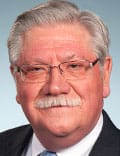
In medicine, it’s the loss of this identity that can trigger a cascade of diminished purpose and meaning once your shingle goes down for good. That’s what happened to Kaczmarczyk who thought he was well aware of the challenges associated with physician retirement. He approached his own with research, planning, and preparation, assuming it would be enough to go into the next chapter unscathed. It wasn’t.
“My plan failed miserably,” Kaczmarczyk said. Instead, he experienced what he calls an existential crisis, questioning who he was, his worth, and his legacy. He struggled to separate his identity as a doctor and an individual until he committed to his next act running a physician coaching practice with a focus on retirement, which he said has reaffirmed his purpose.
This begs the question: You can stop practicing medicine, but can you ever really leave it?
The overwhelming answer is no. But when approached with care and self-reflection, physicians say that reality can be a perk to retirement life — not a hindrance.
The Challenge You Didn’t See Coming
It’s one thing to prepare financially for retirement as a physician, but it’s another to prepare your mindset. And loss of identity is the retirement hurdle that few doctors expect.
It’s all but impossible to shake, according to research, and with good reason. A recent research series in Mayo Clinic Proceedings that focused on physician well-being across the career span notes that the all-consuming demands of medicine tend to absorb one’s personal identity. It’s partly by design, starting with medical education that socializes students to “think, act, and feel like a physician.”
While this may be helpful during your time in practice, this mindset creates an especially difficult psychological transition, acknowledges Karen Midyet, PsyD, a psychologist who, in part, works with retired physicians and other healthcare professionals.
“The biggest is the loss of role and purpose, something that affects everyone, but it’s just on steroids for physicians,” said Midyet. She references a physician she’s worked with who had to stop practicing and go on long-term disability due to a diagnosis of Alzheimer’s disease. The doctor struggled emotionally, and while those on the outside might expect the grief to come from the disease, she was mourning her ability to help patients, said Midyet. “There is a sense of ‘how do I still have purpose because there is still so much more of me left to give?’”
‘If Anyone Asks Me If I Retired, I Say No.’
Adjusting psychologically after retirement is a challenge for physicians no matter what the reason. Hence, the frequent pushback on fully retiring at all, giving rise to the “semiretired” or volunteer physician — the one who hovers around retirement but doesn’t want to commit.
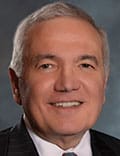
That describes Michael A. DellaVecchia, MD, PhD, an ophthalmologist who’s been semiretired for about 3 years. He continues to maintain a light office practice where he treats a few older, long-time patients, as well as teach at Main Line Health in Pennsylvania. “It’s always difficult to put the brakes on in medicine when working at 100 mph. A step down to semiretirement made it a lot easier,” he said. “When you step away from medicine, you have to feel purpose, and that’s hard to do when you close the door completely.”
In one Canadian study of more than 15,000 primary care physicians, up to 60% of those who retired continue to work with reduced hours and a narrower scope of practice before full retirement. Clearly, making a clean break can feel impossible.
Sitting around with a highly functioning mind can also breed depression, DellaVecchia said, which is why he continues to stay active with organizations like the American Medical Association (AMA), where he is chair of the Senior Physicians Section (SPS) Governing Council. A 2022 review of research by the University of Michigan School of Public Health found that in the older adult age group, depression is more common among retirees than in those who are still working due to profound changes in their social roles and networks. The catch is that while depression is common in this group, it should not be viewed as an inevitable part of aging or the retirement process. The shortage of clinicians who specialize in older adults is one of the big gaps in mental health care.

For many physicians, psychological adjustment to retirement involves staying connected to medicine in different ways. At 80 years old, ob/gyn Louis Weinstein, MD, officer-at-large with the AMA’s SPS Governing Council, holds several roles, including acting on the state committee for reviewing complaints against physicians, as a medical consultant for hedge funds, and working in a free medical clinic. Each day at 5:30 AM, he gets up to spend as much as 2 hours reading medical literature.
“Personally, I’ve done away with the word retirement. I made a transition. If anyone asks me if I retired, I say no,” said Weinstein. He encourages physicians to embrace their medical identity and maintain their medical license for at least 3-5 years after their professional transition, which will provide ample time and opportunity to continue medical work, including as a volunteer.

“My life is almost identical to when I was working,” said retired psychiatrist and physician executive, Barbara S. Schneidman, MD, MPH. “I have a retired active license, so if there’s an emergency, I can volunteer without issues.” At age 82, Schneidman holds volunteer positions in several organizations, including the Washington Physicians Health Program and in medical school admissions. “There is only so much golf or bridge you can play,” she said.
Try (and Struggle With) New Things
Diagnostic radiologist Harry Agress, Jr, MD, author of Next Years Best Years: Taking Your Retirement to the Next Level, has been retired from clinical practice for more than 10 years but continues to hold volunteer teaching positions at Columbia-Presbyterian and Weill Cornell Medical Center. “To practice for 36 years and not pass on what you learned is unfortunate,” he said. His motivation for writing the book, he explained, was to help people thinking about retirement (or in it) who were not particularly happy with their choice or the upcoming reality.
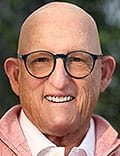
Agress, for his part, approached retirement with the mindset that he wanted to try new things, whether he was good at them or not. “Retirement can either be wonderful or somewhat devastating,” he said. One thing he landed on was photography, which was not a brand-new hobby; he had done it casually since childhood. But the way he approached it after retirement was different: as a second-act career.
While Agress said his pursuit of his hobby has “turned into a wonderful situation,” it was not without struggle. “I wanted to sell my photography. That was brutal. I found out what it was to be an artist, which is that it’s difficult to sell your work.”
Moving past this disappointment into something that became even more rewarding and fulfilling required a pivot that, Agress feels, he was perfectly suited to make because of who he is as a physician.
Several characteristics about physicians are helpful in retirement, said Agress. “We’re resilient, purpose-driven, intelligent, caring, and we like to learn. Those are very strong values that can be put to practice in many different ways.” For Agress, that’s donating his colorful photographs of landscapes, waterscapes, and animals to hospitals around the country to make otherwise sterile rooms and hallways a little more beautiful and comfortable for patients.
Turning Off the Medical Mindset
There is a downside to the physician mindset, Midyet said, and that’s the tendency to continually scan for problems. Physicians find that quieting that part of their brain is a challenge, and there is rarely an easy shut-off valve.
But retirement represents a time to reflect and pay attention to what you really want for this part of your life. “Physicians are constantly helping others and working in systems. Now it’s time for them,” Midyet said.
One of the first things Kaczmarczyk guides physicians on is letting go. “For most physicians, this is incredibly difficult because of how long it takes to establish their professional identity, how valuable it is, and how inherent it is to who and what they are,” he said. But this leads into a new beginning — a vast, uncomfortable, middle stage filled with uncertainty and possibility. “Finding things that reaffirm your professional identity, purpose, and meaning helps with this transition,” he said.
The goal is to retire not just from something but to something that provides meaning and allows you to contribute to society, utilizing your own unique skills, interests, and passions, Kaczmarczyk said. That can look like many different things.
While you may not be in the same role as a practicing physician, there are other opportunities to consider in the medical field to utilize your knowledge and training without the day-to-day grind, added Midyet. “Don’t negate the identity you have as a physician. That’s a gift. It’s part of your personality and how you look at the world.”
What’s clear is that the medical mindset always stays. “I will always be a physician,” said Agress. “If someone says, ‘you were a doctor,’ I say, ‘no, I am a doctor.’”
The experts cited in this article had no relevant disclosures.