Admin_Adham
Becoming a Hospice Nurse at 60
Ginger Goldman is the epitome of the saying "It's never too late."
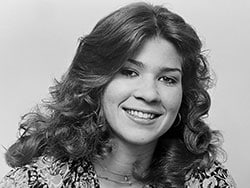
Goldman, 66, comes from a line of women who value usefulness almost as much as they value family. Her mother used to say that by the end of her life, she wanted to be "all used up." Perhaps that's why the Los Angeles native decided to become a nurse at the age of 60 after a nearly 30-year hiatus from her last full-time paid gig.
When Goldman started college in 1975, she wanted to be a clinical psychologist. After graduating as a psychology major from UCLA, she briefly followed the PhD path but ended up getting a master's degree in school psychology. She loved being a school psychologist and did it happily for 5 years until she had her first baby. She quit her job and, for the next 25 years, would be a stay-at-home mom.
Goldman threw herself into nurturing her kids and their communities, getting involved in their schools in whatever ways she could. But her children eventually grew into adults.
Later, her mother developed uterine cancer because of her participation in a research study that examined the long-term effects of taking hormones.
"We all didn't want her to do the study, but she had four daughters, and she wanted to contribute something to women's health," Goldman said of her mom. "It was just one of her things, along with running polling places, volunteering at homeless shelters, becoming a real estate agent, and being the president of every PTA."
Goldman accompanies her mother to all of her doctor appointments. They'd do crossword puzzles and swap jokes during her mother's chemotherapy infusions. The cancer ultimately metastasized to her lungs, and her doctor suggested it might be time to stop curative treatment and consider hospice care.
"She wanted to show us how to do this, how to die," said Goldman. "She wanted this to be an okay experience for all of us."
It was the process of watching her mother die that would change the course of her own life. Goldman said she was touched by the lessons she learned from the hospice nurses who helped her family through that difficult time. So, she decided to become a hospice nurse herself.
Goldman had never considered being any type of nurse, let alone a hospice nurse. But in 2011, she went to see a counselor at Moorpark College to see if this was a path she could take. Her science credits from college couldn't be more than 7 years old if she wanted to apply to nursing school. Goldman's were more than 30. So, she decided to go back to school, retake her science requirements, and apply to nursing school.
"It wasn't like anyone directly told me I was too old, but most people would ask me if I'd really be happy if I tried to do this," said Goldman. "Even well-meaning friends would ask, 'Are you sure you really want to go back to school?'"
Nearly everyone in her classes was younger than 22, and she was older than most of her professors. On top of that, studying science had completely changed since her UCLA days. In the 70s, a computer was a place you went to, where you had to punch information into physical key cards.
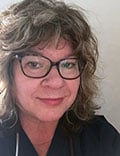
But Goldman pushed through. She said the kindness of her classmates and teachers was paramount in helping her to achieve her goal.
"People bash millennials all the time, but they accept people for their differences," said Goldman. "Nobody made me feel like I didn't belong there. I don't think I would have been as generous in my thinking if I saw someone like me in my classes in 1975."
After successfully chipping away at her science credits, Goldman applied and was accepted into the nursing program at California State University Channel Islands. She was still older than all her peers and teachers, but she didn't care — and nobody else seemed to care, either.
Her life experience — especially being a mother and a caretaker for decades — were her superpowers. When clinical rotations started at 6 AM in east LA, she had no problem driving a group of other nursing school students from her neighborhood to the hospital across town. She'd bring them water and blankets, they'd fall asleep in the car, and she'd wake them all up when they got to the hospital.
Being 40 years older than everyone else also meant that she didn't have the same qualms as many of her fellow students.
"They were still collecting data on themselves, 'Am I a good student?' 'Am I a good person?' Their awareness of themselves and each other made it really hard for [my classmates] to stand up and talk in class and ask questions," Goldman recalled. "I'm so far past that point in life — I know what my flaws are, but I don't have anything to prove."
During clinical rotations, Goldman wasn't afraid to interact with patients socially as well as medically, when many of her peers would often be much more timid, afraid of saying or doing the wrong thing. It was because of this attitude that Goldman said the patients seemed more comfortable with her. She attributes this partly to the fact that no one ever assumed she was a student; she "looked too old to be new at anything," she joked.
"The patients needed somebody to talk to sometimes, they were people — not just plants that needed watering," she said.
That was another reason she was particularly drawn to hospice care. Most of her classmates were set on working in pediatrics or emergency medicine. When she said she wanted to be a hospice nurse, other students — and even some teachers — were stunned. Goldman said she was surprised that end-of-life care took up only half of one chapter of her nursing school curriculum.
"Not everybody is going to have a baby, or gets cancer, or needs orthopedic surgery — but everybody dies."
A great deal of research has shown that loneliness and isolation pose serious health risks in older populations and may even contribute to higher mortality. Goldman, who has now been working as a hospice nurse for the last few years, sees many patients who she describes as "elder orphans" — they never had kids and have outlived their loved ones. They don't have anyone else to talk to and share memories with. While hospice isn't about getting better, Goldman's knack for chatting and listening, along with her genuine curiosity about the full breadth of a patient's life, likely makes the dying process much less painful, especially for those without any friends or family.
Many of her patients would tell her that, at some point, the world just seemed to go on without them and said they felt like they suddenly stopped being treated like normal people. Goldman doesn't want patients to dread her visits: She sings with them, makes jokes with them, and asks them thoughtful questions.
"I feel like I've found something that I'm really good at," Goldman said. While she knows her job isn't for everyone, "I can't think of doing anything else that would mean as much to me."