Admin_Adham
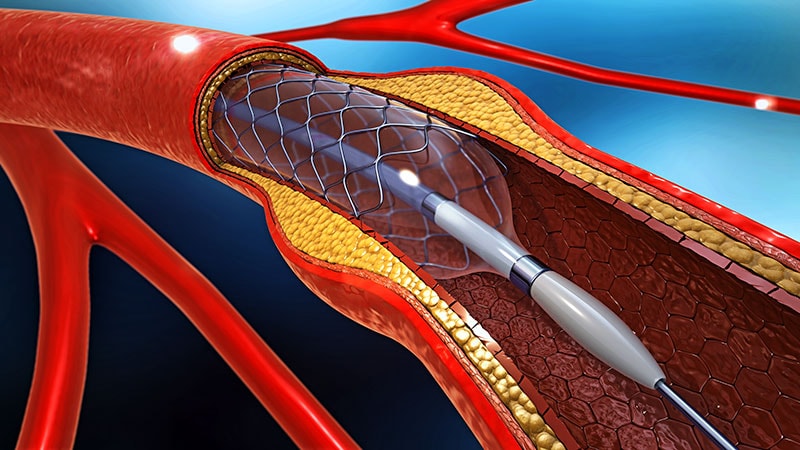
SAN FRANCISCO — A sirolimus-eluting balloon was found to be noninferior to conventional stenting in separate trials of patients undergoing percutaneous coronary interventions (PCIs), suggesting these devices might replace the usual stent-based strategies in de novo lesions and for in-stent restenosis.
Each of the noninferiority trials, presented at the Transcatheter Cardiovascular Therapeutics (TCT) 2025 meeting, were characterized as “long-awaited” and “landmarks” by experts not involved in the studies.
Patients in the SELUTION DeNovo and SELUTION4ISR trials were randomly assigned to receive the Selution SLR drug-eluting balloon (MedAlliance an affiliate of Cordis) or a control of usual care. The device is currently available in Europe but not in the United States.
The first study, which principal investigator Christian Spaulding, MD, PhD, professor of cardiology at the Descartes University, Paris, called the largest randomized trial of drug-coated balloons yet conducted, enrolled 3341 patients with de novo lesions. They were randomized in a 1:1 ratio to the experimental balloon arm or treatment with a drug-eluting stent.
The primary endpoint of composite of target vessel failure events at 1 year occurred in 5.3% of those randomized to the balloon and 4.4% of those randomized to a contemporary stent, according to the researchers. The balloon strategy was within the predefined 3% permitted margin of difference (P = .02 for noninferiority).
Of the components of the primary endpoint, cardiac death at 1 year was numerically lower in the experimental arm (0.7% vs 1%) and the rate of target vessel myocardial infarction was nearly identical (2.7% vs 2.6%), but the rate of clinically driven target vessel revascularization (3.3% vs 2.1%) was greater in the balloon arm.
The secondary outcomes were similar in the balloon and stent arms, respectively: all-cause death (1.8% vs 2.1%), stroke (0.5% vs 0.3%), myocardial infarction (3.2% for both), subacute lesion thrombosis (0.5% vs 0.4%), late lesion thrombosis (0.1% vs 0.3%) and BARC grades 3-5 bleeding (1.2% vs 1.3%), Spaulding’s group reported.
Importantly for the theoretical advantage of the balloon, 80% of those treated with the device did not require a stent, Spaulding said.
The drug-eluting balloon is not currently recommended in major guidelines for previously undiagnosed lesions, but Patrick W. Serruys, MD, PhD, professor of interventional cardiology at the National University of Ireland, Galway, said recommendations may soon change. Serruys, who called the new data “long awaited,” said the selection criteria and conduct of the trial makes the results “applicable to everyday practice.”
Like SELUTION DeNovo, SELUTION4ISR employed fairly broad entry criteria. The 408 patients with in-stent restenosis enrolled in the trial could have stable or unstable angina, lesion lengths up to 25 mm, and up to two stent layers, according to Donald E. Cutlip, MD, professor of cardiology at the Harvard Medical School and vice chair of the Department of Medicine at Beth Israel Deaconess Hospital, Boston.
The randomization in SELUTION4ISR was to the Selution balloon or to the control arm, which largely consisted of a drug-eluting stent but allowed bare-metal stents in up to 20% of patients. This distribution reflects current practice in the United States according Cutlip, citing the National Cardiovascular Data Registry. Participating investigators had to select the control strategy prior to randomization.
The underlying hypothesis of SELUTION4ISR was that the sirolimus-eluting balloon can achieve similar results without adding another stent layer, according to Cutlip. He said this question has been explored with other technologies, but the new study is the first randomized trial to show noninferiority for a balloon relative to usual care.
For the composite endpoint of failure of the target lesion, the rate for patients who received drug-eluting stents were noninferior at 1 year based on the intention-to-treat (15.2% vs 13.5%) or per protocol (16.2% vs 14.5%) analyses, Cutlip reported. The probability for noninferiority was 99.2% and 98.8% for the two analyses, respectively, he added.
No significant differences for balloon or standard of care were seen for any of the individual endpoints. Although the rates of cardiac death (1.9% vs 1.4%; P = .702), myocardial infarction of the target vessel (7.1% vs 4.8%; P = .318), or revascularization of the target lesion (11.9% vs 11.5% P = .888) were all higher in the balloon group, none of these differences was statistically significant.
Secondary safety endpoints were also similar for the balloon intervention and standard of care, including, respectively, all-cause death (4% vs 2%), new stent thrombosis (2% in both), and significant bleeding (8% vs 10%).
Spaulding, Cutlip, and several expert panelists speaking about the results of the two trials strongly emphasized that the results with this sirolimus-eluting balloon are relevant only to this specific device. Balloons with other coatings and even other sirolimus-eluting balloons cannot be expected to perform similarly, given the unique properties, such as microreserves and a proprietary phospholipid coating, on the Selution device that are believed important to achieving sustained tissue concentrations of the drug.
“We need to call these devices by name because we cannot assume that different drug coatings or even the same coating using a different delivery strategy will produce the same result,” said Antonio Colombo, MD, director of the cardiac catheterization laboratory at Columbus Hospital, Milan.
Long-term follow-up is planned for both studies, but each of the principal study investigators said the two sets of results provide a basis for predicting that PCI might be performed with a lower rate of stent implantation.
Robert A. Byrne, MD, PhD, director of cardiology at the Mater Private Hospital, Dublin, said the findings are likely to raise questions in general about the need for systematic stenting, as opposed to individualized approaches to PCI, if long-term results support these findings.
Both SELUTION DeNovo and SELUTION4ISR trials received financial support from Cordis, parent of MedAlliance, which makes SELUTION DEB. Spaulding reported financial relationship with Boston Scientific, Medtronic, Novartis, Sanofi, Valcare, and Cordis. Serruys reported financial relationships with Meril Life Sciences, and Novartis. Cutlip reported financial relationships with Boston Scientific, Corvia Medical, and Cordis. Byrne reported financial relationships with Abbott, Boston Scientific, and Translumina. Columbo reported no relevant financial conflicts of interest.
Ted Bosworth is a freelancer writer in New York City.