Admin_Adham
 Jump to Key Points
WASHINGTON — A year and a half after licensure of a chikungunya vaccine, ongoing surveillance suggests it remains a very safe, tolerable vaccine without any unexpected safety concerns, according to a real-world safety study presented at IDWeek 2026 Annual Meeting on October 24 in Washington, DC.
“None of these events reported any new safety information that would affect the known benefit-risk profile of this chikungunya virus virus-like particle vaccine,” Lauren Tindale, PhD, of Bavarian Nordic Medical Affairs, told attendees.
“We saw no pattern of serious neurologic or cardiac events that we’ve identified, and for our nonserious adverse events, they were very consistent with expected post-vaccination reactions and routine vaccination issues,” Tindale said. “Overall, this real-world data were consistent with the favorable safety profile that we observed in our clinical trials, and of course we’re going to have ongoing safety surveillance and continue to monitor reported adverse events and evaluate potential safety signals.”
Chikungunya is transmitted by the Aedes aegypti mosquito and can result in “debilitating disease,” Tindale said. The chronic arthralgias and neurologic disorders that are estimated to develop in more than 40% of people who contract chikungunya can last for months or even years, she said.
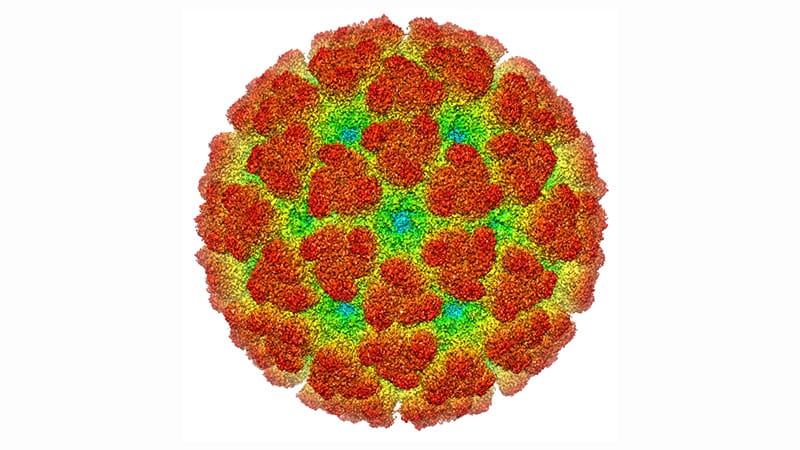
The chikungunya virus virus-like particle vaccine is made up of three structural chikungunya virus proteins that look indistinguishable from the live virus, but it is a nonlive, nonreplicating vaccine that does not cause disease, Tindale said. It’s a single-dose vaccine with an aluminum hydroxide adjuvant that’s currently indicated in people aged 12 years or older.
Peter Hotez, MD, PhD, chair of tropical pediatrics at Texas Children’s Hospital and co-director of the Texas Children’s Hospital Center for Vaccine Development in Houston, was not involved in the research but called this update “another positive step for another arbovirus vaccine.”
“Arboviruses from Aedes aegypti are accelerating in the Americas, including the Gulf Coast, and we’re likely to see their expanded use in the coming years,” Hotez told Medscape Medical News. “Eventually there will be a need to combine vaccines for diseases such as dengue, chikungunya, Zika, and possibly yellow fever into a single polyvalent vaccine, but this is a good step forward.”
Tindale first reviewed the efficacy from the phase 3 trials that led to the vaccine’s approval in February 2025. The seroresponse rate was detectable a week after vaccination and reached a peak of 98% at 22 days after vaccination among the 2559 adolescents and adults, aged 12-64 years, in the trial. It was sustained in 86% of participants at 183 days of follow-up. In 189 older adults aged 65 or older, the seroresponse rate was 87% at day 22 and 76% at day 183.
The phase 3 trials also showed a favorable safety profile, with no serious adverse events occurring that were determined to be related to the vaccine. The adverse events reported among more than 5% of participants were typical ones for vaccination, including injection site pain, fatigue, headache, myalgia, chills, arthralgia, and nausea.
This post-licensure study assessed adverse events from spontaneous pharmacovigilance reports from the 201,361 doses supplied between February 14, 2025, and August 13, 2026. The leading markets include the US, Germany, and the UK, but the vaccine was also launched in 13 other European markets.
During that time, there were a total of 262 nonserious and 29 serious adverse events reported after administration of the vaccine, though the spontaneous, observational nature of the surveillance precludes the ability to draw conclusions about causality.
Nine of the nonserious adverse events occurred in children aged 2-11 years who should not have received the vaccine because it is not approved for these ages.
Among adolescents aged 12-17 years, there were 15 nonserious and four serious adverse events reported, and among adults aged 18-64 years, there were 134 nonserious and 22 serious adverse events reported. There were no serious adverse events reported in older adults, but there were 22 nonserious reports. Then there were an additional 82 nonserious and three serious adverse events reported without information on the age of the recipients.
Tindale focused on the 29 serious adverse events that were reported in 17 people. The most common were neurologic, with 13 events that were primarily fainting and brief loss of consciousness. There was one case of Guillain-Barré syndrome and one case of polyneuropathy that both resolved. Overall, eight of these cases recovered, one is still recovering, and the status of the other four is unknown.
There were six musculoskeletal serious adverse events, all of which occurred in adults and “consisted of inflammatory and pain-related manifestations,” Tindale reported. Four serious adverse events were gastrointestinal, and the others were from different organ systems. Altogether, of the 16 non-neurologic serious adverse events, nine have recovered, one is recovering, one is recovering with sequelae, three have not recovered, and two outcomes are unknown.
Relying only on the person who reported the adverse events, seven were deemed “probably related” to the vaccine and four were deemed “possibly related,” with four not related and 14 not assessed by the reporter.
Among the 262 nonserious adverse events that were reported, 16 were administration errors, 13 were arthralgia, and 13 were headache. Others included fatigue, fever, injection site pain, myalgia, and pain in an extremity, none of which were new or changed the risk-benefit profile of the vaccine, Tindale said.
Tindale and the other study authors are all employees of Bavarian Nordic, which funded the study. Hotez is named as a co-inventor on a multivalent helminth vaccine, a COVID recombinant protein vaccine technology owned by Baylor College of Medicine, and a co-inventor on nonrevenue-generating patents for neglected tropical diseases owned by Baylor, all unrelated to this research.
Tara Haelle has been an independent science/health journalist for over 15 years, with work appearing in over two dozen trade and consumer publications. She is the author of Vaccination Investigation: The History and Science of Vaccines and The Informed Parent: A Science-Based Resource for Your Child’s First Four Years. Haelle is the public health beat leader for the Association of Health Care Journalists, where she develops resources to help other journalists report on medical studies and public health. She is based in Dallas.