Admin_Adham
 Jump to Key Points
 As temperatures rise and vacation season continues, dermatologists are likely to see patients presenting with insect bites. Additionally, warming temperatures are expanding the range and activity of insects, resulting in an increase in bites and cutaneous reactions.

“We obviously see a lot of bug bites, particularly in warmer months where I practice in Pennsylvania, and travel also plays a role,” Eric Hossler, MD, an associate in dermatopathology and a member of the Department of Dermatology at the Geisinger Medical Center in Danville, Pennsylvania, told Medscape Medical News.
“Often, what we see in clinic is a hypersensitivity reaction to salivary components from the arthropod’s mouth, which can limit our ability to tell with certainty if it’s a particular kind of bite or if it’s simulating a bite and actually comes from a different summertime activity that leads to urticaria, like being exposed to certain plants or allergens,” said Hossler, a faculty member at the Geisinger Dermatopathology Fellowship Program.
Hossler noted that there is a wide range of pathophysiologic responses to insect bites. Some are localized inflammatory reactions, while others are systemic and can include neurotoxicity, coagulopathy, and anaphylaxis. Multiple factors play a role in determining a differential diagnosis, including lesion distribution, exposure history, season of the year, geographic location, the patient’s occupation, recent recreational activity, pets, and travel history.
- Insect bites often reflect hypersensitivity; history + lesion pattern guide dx.
- Bedbugs: pruritic erythematous papules in linear "breakfast-lunch-dinner" clusters.
- Scabies: severe itch, burrows in folds; confirm with KOH scraping; treat contacts.
- Deer tick bites in endemic areas may warrant doxycycline prophylaxis; early Lyme serology negative 6-8 weeks.
- Many "spider bites" are mimics; consider infection, malignancy, pyoderma, or inflammatory disease.
A recent case of a woman with “bug bites” that turned out to be methicillin-resistant Staphylococcus aureus illustrates that medical conditions can mimic insect bites. However, misdiagnosis of actual insect bites can lead to unnecessary biopsies and inappropriate systemic therapies, Mario J. Sequeira, MD, who practices in Rockledge, Florida, told Medscape Medical News.
Bedbugs Are Back
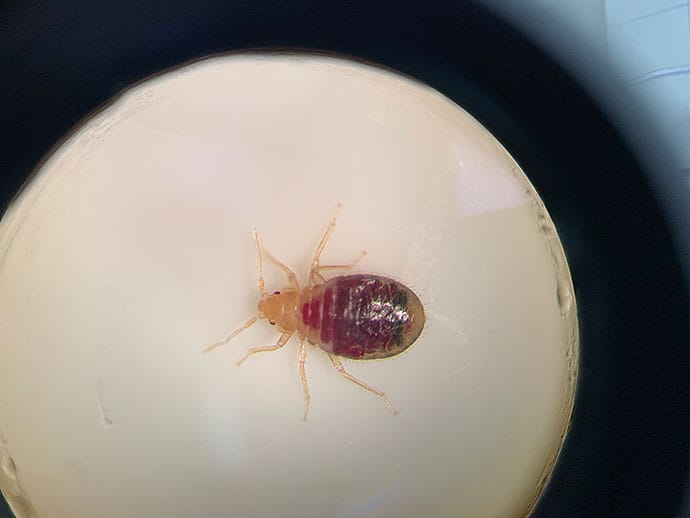
The past decade has seen a global resurgence of bedbug infestations, especially in developed countries. Typical reactions include pruritic, erythematous maculopapules “in a ‘breakfast, lunch, and dinner’ pattern — arranged in a row, or in clusters of two or four at a time, usually in unclothed areas, like the face, neck, and extremities,” Hossler said.
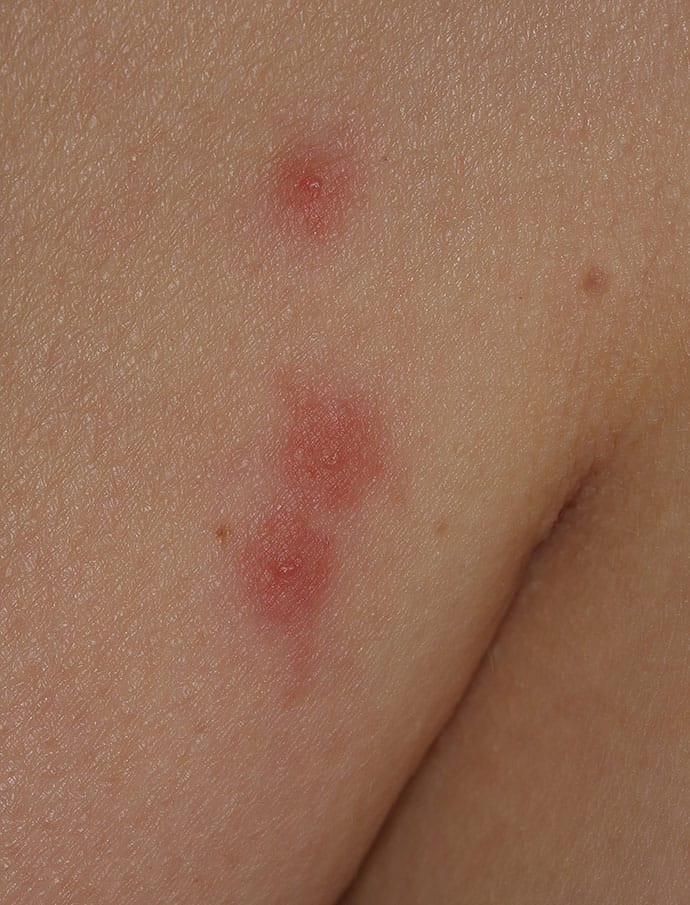
Bedbugs typically don’t transmit disease and most cutaneous reactions are self-limited, and topical pramoxine and oral antihistamines may alleviate pruritus, while topical corticosteroids can be used for significant eruptions to control inflammation. Occasional systemic reactions may include asthma, angioedema, generalized urticaria, iron deficiency anemia, and (rarely) anaphylaxis.
Scabies Can Mimic Other Conditions
Scabies is caused by the parasitic mite, Sarcoptes scabiei, which burrows and deposits its eggs into the stratum corneum, resulting in an allergic response to the mite proteins deposited under the skin, although initial infections can be asymptomatic for 2-6 weeks.
“We need to keep scabies high on our differential because it can sometimes have unusual manifestations — such as nonspecific dermatitis or rashes that mimic lymphoma or atopic dermatitis,” Hossler said. The diagnosis is made using potassium hydroxide scraping.

“If you see typical patterns of burrows and burrow folds, you can help identify issues that may be coming from the environment, for example, in nursing home patients,” said Sequeira, a voluntary assistant professor of dermatology and cutaneous surgery at the University of Miami Miller School of Medicine in Miami, Florida. “The itch is severe and the mites burrow under the skin in body folds, like the wrists or between the fingers.” Although scabies isn’t classified as a sexually transmitted infection, it is passed through close contact, including sexual contact. Household members and sexual partners should be examined and, if necessary, treated.
Demodex mites are less noxious than the mites that cause scabies but are also problematic. “They are ‘commensal organisms’ that live with us in our hair follicles, often on our faces, and affect almost 100% of adults,” Hossler said. “Most of the time, they don’t cause problems, although some literature links elevated numbers of these mites to rosacea.”
Ticks: A Rapidly Expanding Public Health Problem
Tick-borne diseases are among the fastest growing vector-borne public health threats in North America. “With global warming and suburbanization, we’re seeing a lot of tick bites, especially deer tick bites, the vector of Lyme disease,” Hossler observed. “It’s important to be able to recognize different species of ticks because this impacts our ability to administer prophylaxis and treatment.”
It’s optimal for the patient to bring in the tick. “Deer ticks have a dark uniform colored shield called the scutum on the back, black legs, and a smooth abdomen. Other common biting ticks in the US have a patterned scutum with a scalloped or crimped edge or a solitary white dot on the scutum in the case of the lone star tick,” Hossler said.
Prophylactic doxycycline may help prevent Lyme disease if the patient has been bitten by a deer tick. “But if it’s not a deer tick bite, you can avoid unnecessary use of an antibiotic,” he said. High-risk areas for Lyme disease include the Mid-Atlantic states, New England, and the upper Midwest.
The classic erythema migrans (“bullseye”) rash doesn’t always appear, Hossler noted. And even when it does, it may not present for a number of days, and no blood test can diagnose early-stage Lyme disease for 6-8 weeks after the bite. Identifying the type of tick can assist with the clinical diagnosis.
He added that in the Southeast, an area not endemic for Lyme disease, “we’re seeing a mimic that looks virtually identical to erythema migrans but is transmitted by the lone star tick,” although other species of ticks outside the US (eg, in Australia, Europe, and South Africa) also carry it. “Patients can feel ill but have no long-term sequelae,” Hossler commented. This is called Southern Tick-Associated Rash Illness.
Alpha-gal syndrome is an emerging tick-borne condition caused by hypersensitivity to an oligosaccharide in the saliva of a tick, particularly the lone star tick. Patients who ingest a meal that includes red meat, dairy, or gelatin may experience delayed-onset hives, angioedema, nonspecific itching, and (rarely) even anaphylaxis. “The diagnosis is sometimes obscured because of the delay between the ingestion of the allergen and the appearance of symptoms,” Sequeira commented.
Hossler recommended a commercially available immunoglobulin E test for diagnosing alpha-gal syndrome.
‘Spider Bites’ May Not Be Spider Bites
“People tend to blame spiders for bites, even though they haven’t seen or felt the spider,” Hossler said. “If patients report a spider bite, keep your diagnostic options open and ensure that you’re considering other disease states, like infections, malignancies, or inflammatory conditions like pyoderma, which we often see in our clinic in patients who come in with a presumed ‘spider bite.’”
Sequeira noted that patients are “especially worried about brown recluse spiders, which are endemic to the South-Central US, but in the rest of the country, true spider bites are relatively uncommon.”
However, in endemic areas, brown recluse spiders remain “an important consideration because their bites can occasionally produce necrotic lesions, caused by enzymes in the spider’s venom,” Hossler warned.
Recluse spiders are usually brown, with a characteristic violin-shaped pattern on the back. Black widow spiders, on the other hand, are small and usually dark colored and almost always have a red hourglass or other distinctive red marking on the abdomen, Hossler said, noting that black widow spiders are “uncommon.” They cause some cutaneous symptoms, such as mild, localized redness, and can also cause abdominal pain or muscle spasms.
Fire Ants and Spongy Moths
Fire ants pose an important threat, both in the US and in other parts of the world, Hossler said. They appear primarily in the Southeastern US, but their geographic range has expanded into other areas as well.
“They’re very aggressive and their colonies are quite large. When the ant colony is threatened, they can bite in high numbers,” Hossler said. “They have powerful jaws and they also sting.”
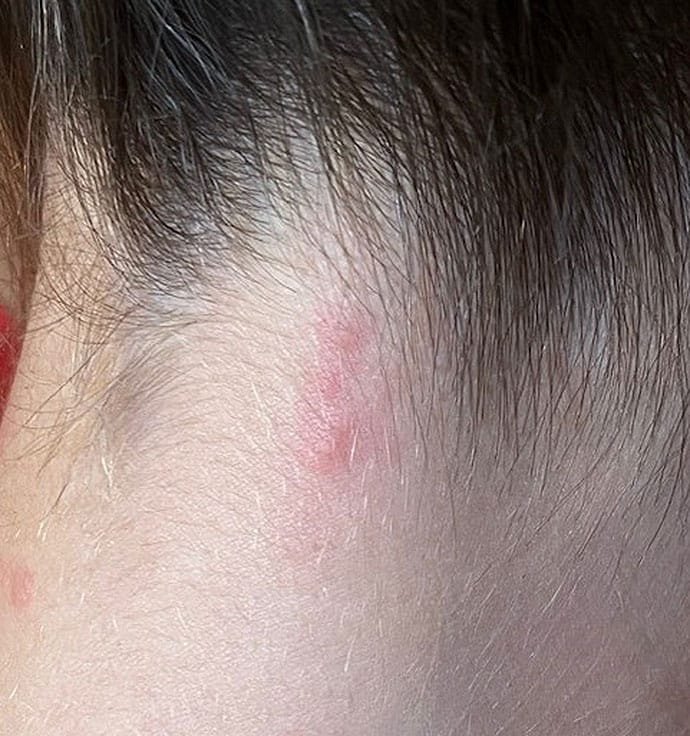
A raised, red area develops at the site of the sting, with sterile, small pustules developing at each site within 24 hours. Some patients also develop an erythematous, warm pruritic or painful indurated area surrounding the site. Usually, the bites are self-resolving, but occasionally patients experience severe reactions.
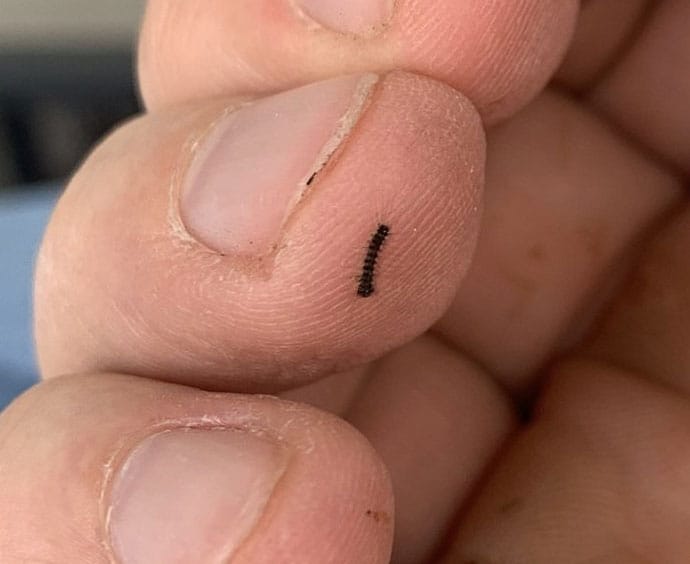
Hossler pointed to another seasonal diagnosis: dermatitis caused by spongy moth caterpillars. “Once called ‘gypsy moths,’ the name has been changed to ‘spongy moths’ because their egg masses look spongy,” he explained. When they hatch in the spring, they become airborne, floating on silk threads, and they can cause red, itchy papules on uncovered parts of the body, such as arms, legs, or the back of the neck, if they land there. These rashes are typically self-resolving.
‘No-See-Ums’ and Fleas
Biting midges (“no-see-ums”) and fleas account for a substantial proportion of insect bites seen in clinical practice, Sequeira said. “No-see-ums are extremely small, but their bites cause burning sensations and mild pain. Reactions can range from small wheals to extremely itchy papules.”
While they’re generally more of a “nuisance” than a serious threat, bites can last for weeks, even months, and sometimes lead to allergic reactions.
Sequeira recommends cleaning the site with soap and water, applying cold compresses or ice packs to relieve the itching, and using over-the-counter calamine lotion or hydrocortisone cream. For more intense reactions in the setting of lesions caused by midges after travel to the Amazon basin, for example, mid- to high-potency corticosteroids in conjunction with oral antihistamines may be helpful, and oral antibiotics may be indicated if redness and swelling persist or if the skin become infected.
Fleas are wingless ectoparasites whose bites typically present as erythematous papules, typically on the lower legs, ankles, and feet, Hossler said. They’re intensely pruritic, and scratching can result in excoriation and secondary bacterial infections. Topical calamine lotion or corticosteroids and systemic antihistamines may be helpful in relieving the pruritus. But the most concerning effect of fleas is that they’re vectors for serious, potentially deadly diseases. In the US, these include Yersinia pestis (plague) and Rickettsia typhi (flea-borne typhus). They also play a role in the transmission cycle of Bartonella henselae — the agent of cat scratch disease — in cats.
Rooting Out Head Lice
“If we don’t think about head lice, we might miss the diagnosis because there are other rashes that present with scalp itching,” Hossler said. “I’ve seen cases where a patient was diagnosed with psoriasis or another inflammatory scalp dermatitis, and the clinician missed head lice just because it wasn’t on their radar.”
Patients can present with small excoriations on the head and neck or on the trunk in the case of body lice, Sequeira said, as well as behind the ears and on the nape of the neck.
Due to recent resistance of lice to pyrethroids, their insecticidal effects have been diminished. Newer treatments such as ivermectin and spinosad can be used in resistant cases, but “nothing is better than physically removing adult lice and nits,” Hossler said.
At Home and Abroad
Myiasis, a condition in which fly larvae (maggots) infest the skin, can occur in people who have traveled to tropical areas, such as South or Central America or Africa. The larvae complete their life cycle and grow under the skin, resulting in what feels like a furuncular abscess or an inflamed cyst. Myiasis should be considered in a patient presenting with pain and swelling who is a returning traveler, Hossler said.
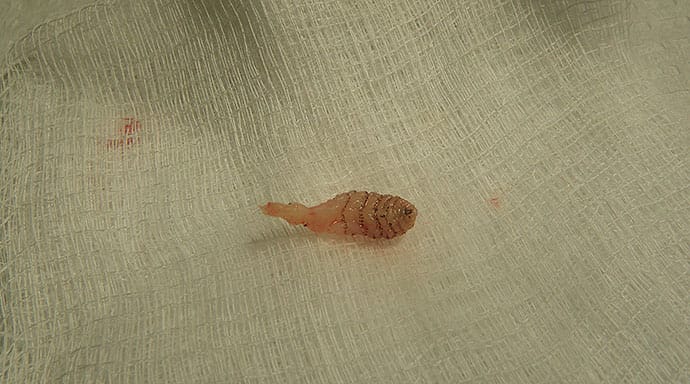
Myiasis can also occur in people who haven’t traveled, when flies lay their eggs in open wounds or lesions, often in settings of poor hygiene, underlying medical problems, neglect, or homelessness, Hossler noted. If an older patient or a patient with a disability presents with myiasis, it may indicate patient neglect.

Yaws is considered a “neglected tropical disease” caused by Treponema pallidum subspecies pertenue. “A US dermatologist may encounter yaws in travelers, immigrants, or refugees from endemic, rural, warm, and humid areas — primarily in West Africa, Southeast Asia, and the Western Pacific, or if serving abroad on a medical mission,” Ghida El-Banna, MD, a dermatology resident at Massachusetts General Hospital in Boston, told Medscape Medical News.
Yaws appear as a painless papule or ulcer (primary yaws) or as multiple crusted nodules, plaques, or ulcers (secondary yaws), said El-Banna, the first author of a recent study on climate change and yaws.
Leishmaniasis is another example of a travel-associated disease. The Leishmania parasite is transmitted through the bites of infected female sand flies. Symptoms range from painless skin ulcers to life-threatening infections of internal organs such as the liver and spleen. A painless, nonpurulent skin ulcer on the face or extremities in a person with recent travel to an endemic area “should prompt concern for cutaneous leishmaniasis.”
“Identification may require tissue biopsy for culture and PCR [polymerase chain reaction],” El-Banna said. “It’s also important to work with infectious disease [specialists] when infection is high on the differential diagnosis to ensure appropriate testing is done.”
Hossler, Sequeira, and El-Banna disclosed having no relevant financial relationships.
Batya Swift Yasgur, MA, LSW, is a freelance writer with a counseling practice in Teaneck, New Jersey. She is a regular contributor to numerous medical publications, including Medscape and WebMD, and is the author of several consumer-oriented health books as well as Behind the Burqa: Our Life in Afghanistan and How We Escaped to Freedom (the memoir of two brave Afghan sisters who told her their story).