Admin_Adham
 Jump to Key Points
 In southwestern France, wildfires in the Gironde department have forced evacuations of several towns and healthcare facilities, including Saint-Aubin-de-Médoc and Saint-Médard-en-Jalles, as thick smoke continues to blanket the region.
In response to the disaster, the medical community mobilized quickly, including the Regional Health Agency (ARS), Bordeaux University Hospital, SAMU emergency services, local professional health networks, SOS Médecins Bordeaux, and the Nouvelle-Aquitaine branch of the Regional Union of Private Practitioners. Everyone stepped up and found a role in a coordinated effort that depended on broad participation. As the situation gradually eased, we spoke with five volunteer doctors who described the solidarity that emerged in response to this exceptional crisis. (See also Fires in Gironde: "We quickly realized that some people hadn't been evacuated")
'There was a great deal of commitment, and it's reassuring to see that our society isn't so individualistic!'
Didier Simon, general practitioner in Mont-de-Marsan and president of the Regional Union of Liberal Physicians
The staff of the Regional Union of Healthcare Professionals — Private Practitioners (URPS-ML) immediately declared their availability, and, together with the director, we decided to set up a crisis response team. On Friday evening (July 24), we sent an email calling for mobilization to URPS members, along with a form to fill out. There was a great deal of commitment, and it's reassuring to see that our society isn't so individualistic!
- Gironde wildfires triggered evacuations of towns + healthcare facilities; smoke persisted regionally.
- Rapid multiagency coordination: ARS, SAMU, hospital, URPS, SOS Médecins, local networks.
- ~400 volunteer private practitioners mobilized from ~12,000 regional clinicians.
- Evacuee care issues: asthma/COPD flare, anxiety, headache, nausea, medication gaps, confusion.
- Temporary sites needed basic supplies, confidentiality, triage, oxygen/nebulizers, and transport logistics.
We compiled a roster of 400 volunteer private practitioners across specialties — including primary care physicians, pediatricians, psychiatrists, geriatricians, emergency physicians, retirees, locum tenens clinicians, and residents — drawn from the roughly 12,000 practicing in the Nouvelle-Aquitaine region. We had to coordinate this schedule with all the relevant organizations. Our role was one small part of a larger crisis response effort involving the Medical Board — including confirming that physicians could practice outside their usual designated areas — as well as the Nursing Board, other regional health professional groups, and, ultimately, the official emergency response teams at the prefecture and ARS. We thus realized that it was possible to truly work together: The "turf war" mentality had given way to the urgency of the situation. We saw some of the same challenges during COVID, but in this case, the fire set the pace, and we had to adapt quickly. It underscored how essential coordination is in crisis management, and the lessons from this experience will be valuable going forward.
'At first, we had … just a little Doliprane'
Adrien Auber, general practitioner at a medical rehabilitation facility in Libourne and at the immediate care medical center in Saint-Aubin-de-Médoc, France
I received the email from the URPS-ML on Friday (July 24) evening and filled out the form right away. At 5:30 a.m. on Saturday morning, I received a text message alerting me to an urgent need at the nursing home, which has a secure living unit and an Alzheimer's unit in Taillan-Médoc, asking if I was available to help evacuate the residents. I went there right away: The farther I traveled from my home in downtown Bordeaux toward Le Taillan, the stronger the smell of smoke became. Once there, the staff was waiting for transportation to evacuate about 40 patients. I helped wake the residents, gather them in the common room so they could calmly prepare for departure, and examine those who needed medical attention. Two hours later, I went to the Bordeaux Exhibition Center, where all the evacuees had been gathered, to help care for unstable patients coming from the nursing homes. The SAMU and the SNSM (Sea Rescue Service) had begun organizing the flow of patients and setting up a medical station in a tent. Two general practitioners had managed the night, which had been quite chaotic.
At first, we had nothing in terms of first-aid supplies: just a little Doliprane, but no pediatric acetaminophen, for example. A local pharmacy helped us out, providing Ventoline and corticosteroids for potential asthma attacks. Evacuees would come to the first-aid station, or we'd walk through the aisles to identify those suffering from nausea, headaches, fever, anxiety. We addressed their needs by offering reassurance, calming those who needed it, and allowing people with sleep apnea machines to access an electrical outlet. Pretty quickly, a good system got set up. People were worried but calm and grateful; many volunteers were there, and donations were coming in — in fact, I've never seen so many bottles of water!
I remained there all day Saturday and returned that night, staying from Sunday into Monday. By then, I had been assigned to assist the able-bodied patients, many of whom were spending their second — and in some cases third — night there. By then, we were better equipped; a first-aid kit had been set up. At that point, time was dragging on; some people were starting to talk about going home, so we reminded them of the danger and directed them toward the temporary housing arrangements that had been set up.
'I wanted to do my duty as a doctor and as a citizen'
Mathias Domenech, general practitioner in Saint-Aubin-de-Médoc
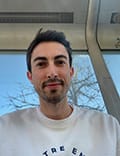
On Friday evening in Saint-Aubin, at 8 p.m., it was as if it were nighttime; we could see the smoke, a red-orange wall loomed to the west, and ash was falling. The town was evacuated that evening, but a few hours earlier, my partner, our two young daughters, and I had already left for my in-laws' home in Charente-Maritime, France. We took only the bare essentials — it felt like we were in a bad TV drama!
Once my family was safe, I looked for ways to help, because I wanted to do my duty as a doctor and as a citizen. Someone forwarded me the email from the URPS-ML; I called on Saturday morning and was asked if I was available to go help at the Exhibition Center. Once there, the SAMU doctor sent me to Hall 2, where the able-bodied people were. We were a little short-staffed at first, but then things improved.
I began to realize just how incredible the organization and solidarity were: We set up the pharmacy with the support of fellow pharmacists; physical therapists, osteopaths, and psychologists were on hand; civil protection was on site; a whole truckload of clothing arrived; there was food and water donated by volunteers; residents of Bordeaux offered their homes to house people on-site; and a youth services center in the Bordeaux metropolitan area set up a booth and a sports area for the children! Despite the fear of people who risked losing their homes, everything proceeded calmly, with everyone pitching in.
'We had to perform full changes of clothing' for confused patients right in the middle of Hall 3 at the Parc des Expositions
Philippe Lagrot, rural general practitioner with a specialty in geriatrics, Saint-Séverin, France

On Saturday evening, I filled out the URPS-ML registration form, and they called me to ask if I was available the next day. Together with colleagues, medical students, and nursing home staff accompanying their residents at the Parc des Expositions, we cared for people evacuated from secure units in nursing homes in Hall 3.
Some were confused, wandering around, with no idea where they were or what medications they were taking. We tried to document their current treatment regimens, sometimes reassessed their health status, and administered antibiotics when necessary — thanks to a paramedic who went to pick them up at the pharmacy. Care teams were set up; we had to perform full changes of clothing, often under less-than-ideal conditions. But with everyone pitching in and the organization gradually falling into place — despite a few initial hiccups — everyone was able to receive the best possible care.
'Everyone worked as a team'
Gaël L'Yvonnet, president of SOS Médecins Bordeaux, Bordeaux, France
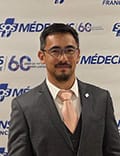
At SOS Médecins, we provide after-hours outpatient care, and we quickly organized and mobilized to meet this surge in unscheduled care needs. Everyone was exemplary, from our colleagues at SOS Médecins to the URPS, which provided a list of private practitioners who were highly committed.
I knew it was important to plan ahead for the week, so at the end of my last shift on Sunday at midnight, I went to the Parc des Expositions to prepare for the arrival of the first SOS Médecins doctor a few hours later and to offer our expertise.
The SAMU was handling people evacuated from nursing homes, but there was a lack of organization on the part of community healthcare providers. We set up a full-fledged medical center, organized a structured care pathway with enclosed tents to ensure a minimum of medical confidentiality, areas for patients to lie down for examinations, a mental health unit — in short, we ramped up our efforts and everyone worked as a team.
Since that weekend, there have been no new evacuations, so no new arrivals, and many have left — either to stay with relatives or in accommodations provided by volunteers. Those who remain are mostly the most vulnerable, who have no family or nearby options.
We're treating people with diabetes who don't have their medication and need it urgently; people with high blood pressure who need to resume their medication; we sometimes provide more intensive care, we've had to treat venous ulcers right on the stretchers; we're working to ensure that people with appointments at the Bordeaux's cancer treatment center, Bordeaux, France, don't miss them. We had to manage a few respiratory conditions at the exhibition center. This involved administering nebulizer treatments for respiratory decompensation. We also saw a sharp increase in two types of home visits: asthma attacks in the broad sense, respiratory decompensation, and psychological distress.
This crisis response has been — and continues to be — enriching and rewarding, despite the fear we all feel for our families. Everyone pitched in — from private practice doctors to nursing assistants and local residents who provided us with pizzas or signage to help organize on-site care.
This story was translated from Medscape's French edition.