Admin_Adham
Had she known of other options, 50-year-old Tara Ballog, said she never would have gotten a hysterectomy.
Ballog’s heavy periods started in her early forties — a normal part of aging, she thought. But after a friend told her not being able to get out of bed because of bleeding was not normal, she went to the emergency room.
There, doctors found three fibroids in her uterus. Blood tests revealed her iron count was also dangerously low. At the hospital, a gynecologist asked her if she was planning to have children. At 47, Ballog said she was not.
“They didn’t discuss any alternatives to hysterectomy,” she said.
She was told after surgery to not lift any weight during recovery. But Ballog was in a wheelchair because of a permanent spinal cord injury. She had to transfer herself from her chair several times a day. Her physician, it seemed, had not taken her disability into consideration when only recommending hysterectomy.
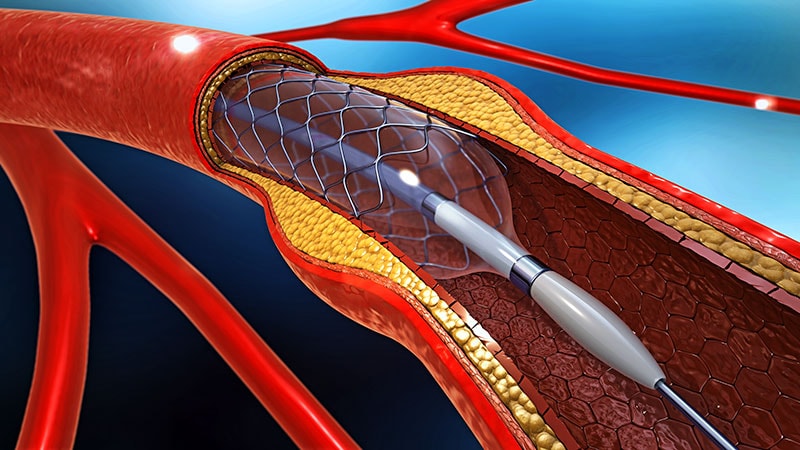
Research shows Ballog is just one of many women with fibroids who are not told about treatment options other than surgeries like hysterectomy. Minimally invasive procedures include uterine fibroid embolization (UFE) or radiofrequency ablation (RFA), among others.
A recent study published in JAMA Network Open found nearly three fourths of women who had uterine fibroids removed underwent hysterectomy compared with 23% who underwent myomectomy and 3.5% who had UFE. And the older a woman was, the more likely she was to have a hysterectomy.
Despite gaining popularity since its introduction in 1995, “UFE remains significantly underutilized not because of its inefficacy but because of the lack of knowledge” about the procedure, said Tarig Elhakim, MD, a hospitalist at the Perelman School of Medicine at the University of Pennsylvania in Philadelphia, who led the new study. “Every woman deserves to know all of their options.”
In a clinical practice paper published last year in The New England Journal of Medicine, gynecologists from Mayo Clinic pushed for their colleagues to rely more heavily on uterus-sparing approaches for fibroid treatment, such as hormone therapy, UFE, RFE, and focused ultrasound ablation.
Collaborative Care
Advances in UFE have transformed the procedure over the past few decades, but awareness among gynecologists has not kept pace, said Amin Astani, MD, an interventional radiologist at North Star Fibroid Clinic in Minneapolis. In the 90s, patients would experience painful cramps for a few days following UFE, and some ended up hospitalized with a pain pump.
“Now we do nerve blocks and UFE doesn’t require hospitalization at all,” Astani said.
At the time, researchers also did not know the effect UFE would have on fertility, which could be a reason some gynecologists still do not mention the procedure to their patients, Astani said. Researchers have estimated the fertility rate following the procedure to be between 40% and 60%.
Lack of collaboration between specialties may also play a role in why so many women are only offered surgery for fibroid treatment, Astani said. While gynecologists can provide surgical procedures and medical treatments like intrauterine devices (IUDs), minimally invasive treatments can only be performed by a radiologist.
Kristin Riley, MD, a minimally invasive gynecological surgeon at Penn State College of Medicine, Hershey, Pennsylvania, said she regularly collaborates with her interventional radiology colleagues to determine if a candidate is a good fit for minimally invasive procedures. But she said this coordination is not possible for every clinician.
“I’m lucky to be at a big academic center that has a lot of specialists and subspecialists,” she said.
Start Small
UFE and other minimally invasive interventions may not be indicated for all patients, Astani said. UFE causes fibroids to shrink, but they remain in the body and are reabsorbed. In some cases, fibroids are too large and must be surgically removed. Some UFE experts put the threshold at 10 cm but can range up to 14 cm. Astani said no formal cutoff exists and physicians use their “professional opinion” to decide at what size a fibroid is too large for a minimally invasive procedure.
For fibroids that extend into the abdomen, myomectomy may be a better option to preserve the uterus, he said.
Astani said he also regularly sends patients back to their gynecologists if he recommends hysterectomy or myomectomy instead of UFE.
“I do so nearly every week,” he said.
Most clinicians are not acting “nefariously” if they recommend a hysterectomy for a patient who has fibroids, said James Greenberg, MD, chief of gynecology at Brigham and Women’s Hospital in Boston. Physicians are often most comfortable with the interventions they are trained in, and many are not often exposed to less invasive alternatives, he said.
Greenberg said his approach to fibroid treatment is to start with the least invasive options when possible and said gynecologists across the country can take the same approach, whether or not they have close colleagues in other specialties. Medication or an IUD are usually his first-line treatments, particularly if the patient is experiencing bleeding rather than bulk symptoms such as bloating, abdominal fullness, and constipation.
“Then I am going through the list of things I think have the least negative sequelae,” Greenberg said. “If I can fix the problem with something that is minimally body-changing, that’s my next choice.”
Although Greenberg said he refers many patients to interventional radiology for UFE, he also regularly performs radiofrequency ablation. Greenberg also tells patients the downside of trying less invasive options first is generally low.
“If I do a hysterectomy and you feel better, that is great, but if I do a hysterectomy and you don’t feel like yourself, I can’t make you whole,” he said. “That doesn’t mean hysterectomy is not a good option for a lot of patients. My last choice is always the things I cannot reverse, and I still do a lot of hysterectomies.”
Patients who have fibroids embedded in muscle also may not be good candidates for nonsurgical fixes. And less-invasive surgery such as myomectomy may also be too risky for some people with multiple fibroids.
“Sometimes myomectomy is much more complicated,” depending on the size, location, and number of fibroids, Riley said.
Even when hysterectomy is the best option for a patient, clinicians should go over other options and explain reasoning for recommending against them, she said.
“I really try to lay out the pros and cons of each option and have shared decision-making with patients,” Riley said. “I think the phrase, ‘you need a hysterectomy,’ is really jarring.”
Ballog said she wishes her physician would have taken that approach.
“I wish the doctors would have had more of a conversation with me, that if something else was available, they would have discussed the options rather than, ‘so you don’t want to have kids, you can have a hysterectomy,” she said.