Admin_Adham
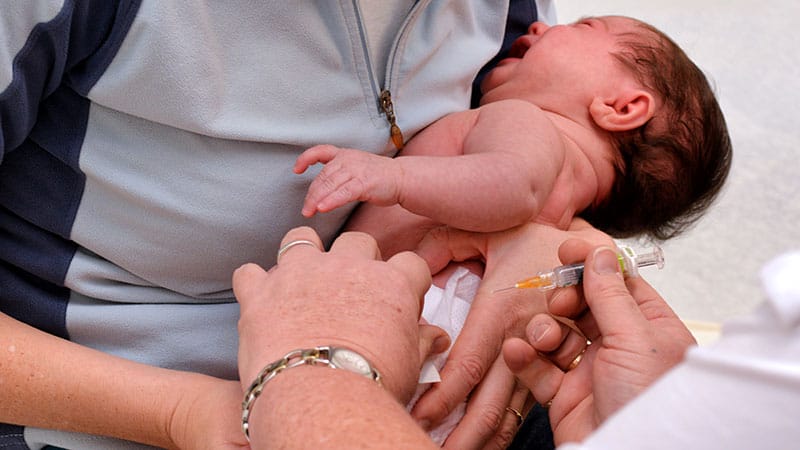
Antibiotic treatment in the first week of life was associated with food allergies at ages 9-12, a Dutch study found. There was no association found with asthma, inhalant allergies, or eczema, however.
Children who have, or will have, atopic diseases, according to the literature, have altered microbiota compared with healthy individuals. For example, in the 2012 prospective cohort INCA (Impact of Nutrition on Children with attention-deficit/hyperactivity disorder) study, antibiotic treatment in the first week of life was associated with wheezing at 1 year and food allergies at ages 4-6.
For the current study, published in the European Journal of Pediatrics, researcher Nora C. Carpay, MD, led a team that built on the INCA study to determine whether the association of antibiotics and food allergies had persisted to ages 9-12, and whether new associations with other atopic diseases had occurred.
The INCA studyincluded term-born neonates across four Dutch hospitals born between August 2012 and January 2015. Some in the cohort required intravenous antibiotics in their first week of life to combat sepsis. Other infants were born healthy and required no antibiotic treatment.
The antibiotic intervention was gentamicin combined with penicillin, amoxicillin, or amoxicillin-clavulanic acid, depending on hospital protocols. Treatment periods ranged between 2 and 3 days in some infants, depending upon symptoms. In some cases, treatment lasted from 5 to 7 days, depending upon the clinical judgement of the treating physician.
Infants excluded from the cohort were those with severe congenital defects, severe perinatal infection treated in the neonatal ICU, a mother who’d used probiotics less than 6 weeks before delivery, and those with parents who could not speak Dutch.
Parents of the cohort children completed monthly questionnaires throughout their child’s first year of life, recording their feeding practices and any infant health indicators such as wheezing, eczema, or fever. Data on potential confounding factors such as additional antibiotic courses throughout the first year of life were also collected, among other potential variables.
The original INCA cohort included 436 infants, 151 of which were given antibiotics in the first year of life, and 285 were not. For their study, Carpay and colleagues interviewed the parents of 314 children in the group (72% of the original cohort) to learn the children’s respective atopic disease status. Of that group, parents of 246 children (78%) consented to the researchers also reviewing their children’s general practitioner diagnoses.
A questionnaire was distributed to the study group’s parents between May 2024 and September 2024 asking about the children’s general health as well as any atopic diseases. Parents who noted allergy in their child were asked whether the allergy was contact, inhalant, or food related, and whether and how the child had been tested for their allergy.
Reported and test-confirmed food allergies in the survey were more prevalent in the antibiotics group compared with the group of children who had not received antibiotics (unadjusted odds ratio [OR], 3.52; 95% CI, 1.50-8.25 and OR, 6.6; 95% CI, 1.3-32, respectively).
There were no significant differences between the two groups when it came to the incidence of asthma (OR, 0.73; 95% CI, 0.25-2.1) or inhalant allergies (OR, 1.03; 95% CI, 0.554-1.91). An “any allergy” diagnosis by general practitioners was more common in children who’d been given antibiotics just after birth than in children who had not had the treatment (OR, 3.0; 95% CI, 1.2-7.6).
Carpay and colleagues’ results matched previous studies that found associations between antibiotics and food allergy, the authors wrote. They noted however, “that significant correlations with eczema, contact allergy, asthma, and hay fever/inhalant allergy have also commonly been observed.” This discrepancy in results could be due to the timing of antibiotic treatment (first week of life).
“The most rapid microbiome development occurs in the weeks after birth, and antibiotic treatment later in childhood is usually prescribed due to clinical symptoms of respiratory infections, for example, which introduces a risk of bias due to reverse causation and confounding by indication,” the researchers wrote.
Commenting on their finding of a significant association of antibiotics with food allergies, but not with inhalant allergies/hay fever, even though the prevalence of these conditions in the study cohort is similar to that of the general population, Carpay and her coauthors wrote that, “One explanation could be that food allergies follow a different route of sensitization, via the skin and gastrointestinal tract, while inhalant allergies and asthma typically develop via the respiratory system, particularly through the mucosal surfaces in the airways.”
The researchers also supposed it was possible “that food allergies develop earlier in life during the period of dysbiosis associated with antibiotics, while asthma and inhalant allergies develop later in life and may be less related to this early antibiotics-associated dysbiosis.”
For Jessica Hui, MD, a pediatric allergist and immunologist at National Jewish Health in Denver thinks Carpay and colleagues’ study is valuable.
“As an allergist, I am always excited when studies like this are published,” Hui told Medscape Medical News. She said that as previous study results have widely varied, “it will be important to see what future large-scale studies find. Knowing that antibiotics are a potential risk factor for allergies, pediatricians and allergists can reinforce early introduction of allergenic foods so the infants at risk for food allergy can hopefully prevent its development through methods that we know work.”
The authors and Hui reported no conflicts of interest.