

 Admin_Adham
FDA Clears Key Component of Brain-Computer Interface System
The US Food and Drug Administration (FDA) has granted 510(k) clearance to the Layer 7 Cortical Interface — a high-resolution cortical electrode array for use in recording, monitoring, and stimulating electrical activity on the surface of the brain.
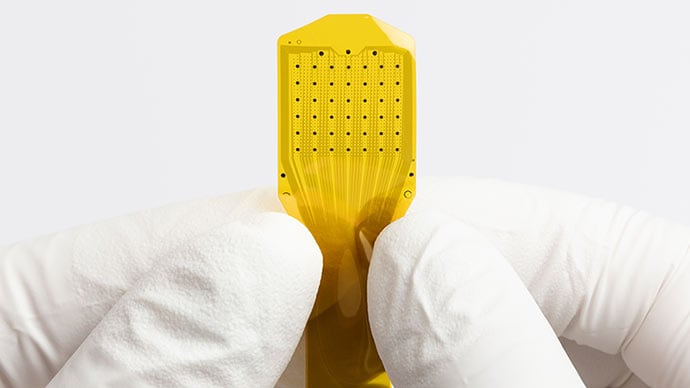
The array, from Precision Neuroscience Corporation, is a core component of the company’s fully implantable, wireless brain-computer interface (BCI) system, which is currently in development.
This 510(k) clearance allows the Layer 7 Cortical Interface to be used as a temporary implant for up to 30 days.
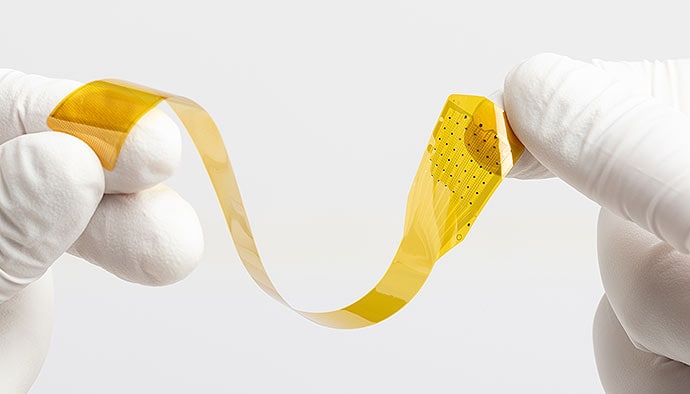
According to the company, this thin-film microelectrode array, which is one fifth the thickness of a human hair, is engineered to conform to the brain’s cortex without damaging tissue.
Each microelectrode array comprises 1024 electrodes ranging in diameter from 50 to 380 microns, connected to a customized hardware interface. It’s inserted using a patented, minimally invasive “cranial microslit” procedure developed by Benjamin Rapoport, MD, PhD, chief science officer and co-founder of the company.
“The clearance represents a major milestone for the brain-computer interface field, as it marks the first full regulatory clearance granted to a company developing a next-generation wireless BCI. It also paves the way for Precision to begin marketing its technology for clinical applications, such as intraoperative brain mapping,” the company said in a news release.
“By introducing the Layer 7 Cortical Interface into clinical settings, we’ll be able to deliver immediate value for patients and neurosurgical teams, enabling real-time neural recording at a fidelity and scale not previously possible,” Rapoport added.
With this approval, the company said it plans to expand its clinical research program.
To date, it has tested the device in 37 patients through clinical study partnerships with several research institutions, including Mount Sinai Health System, New York City; Perelman School of Medicine at the University of Pennsylvania, Philadelphia; Beth Israel Deaconess Medical Center, Boston; and West Virginia University’s Rockefeller Neuroscience Institute, Morgantown, West Virginia.
They plan to announce additional collaborations later this year.
