

 Admin_Adham
After 7 years in Switzerland, Louis Stavart, 30, an internist, nephrology assistant, and PhD candidate at the Lausanne University Hospital (CHUV) in Lausanne, Switzerland, reflects on his journey. Switzerland, he said, has offered him a rich and structured medical career — though not one without its challenges.
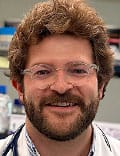
When he began medical school in Namur, Belgium, in 2012, he never imagined continuing his studies abroad. “I started my first 3 years of medical school in Namur, and it was an incredible experience,” he recalled. “It was a small university where we were really well supported. Afterward, I joined the rest of my cohort at UCLouvain in Brussels. That was the first year the medical curriculum was shortened from 7 years to 6 years.”
“At the time, I already knew I wanted to specialize in internal medicine. I completed a preselection internship before sitting the entrance exam, which I passed. But I wasn’t admitted because I didn’t make it into the top 27, so I was offered a ‘triple-zero’ position — essentially an unrecognized assistantship year — which I declined.”
Faced with a career standstill, he began exploring other options. “I could either go into research or move abroad,” he said. “I applied to the UK, Netherlands, and Switzerland. Back then, everyone spoke of Switzerland as a kind of medical ‘El Dorado.’ In the end, a friend withdrew last minute from a position in Switzerland after being accepted elsewhere, so I got the opportunity to take her place in Rolle, working in pulmonology at a small hospital on the shores of Lake Geneva.”
“It was truly an ideal environment,” he recalled. “Two fantastic supervisors — both deeply knowledgeable about the latest clinical guidelines and always available, even at night. If we called, they came in. I learned an enormous amount. Everything was new compared to what I’d seen or heard about in Belgium.”
A Career That Took Root in Switzerland
After a year, he decided to stay. “I loved it, but the choice was also practical,” he explained. “If I had returned to Belgium, I would have had to retake the selection exam, take an unpaid preparatory month off, and still have no guarantee of being admitted. So, I decided to complete my internal medicine residency in Switzerland.”
He spent 2 years in Sion (in the canton of Valais), followed by two more at the CHUV in Lausanne, earning his Swiss specialist title in internal medicine in 2023.
During his rotation in transplantation medicine, he met a professor with whom he “immediately clicked” and proposed pursuing a joint MD-PhD. He is now completing a doctorate in immunology and transplant nephrology, which he expects to finish in 2026. Afterward, he plans to complete two additional years of nephrology training — “since the Swiss pathway is a bit longer,” he explained. “By the end, I’ll be an internist and nephrologist with a PhD. Ultimately, I’ve had more opportunities here than I ever would have had in Belgium, so I have no regrets.”
Smooth Degree Recognition — but Slow Procedures
For Stavart, the recognition of his Belgian medical degree in Switzerland went relatively smoothly. “I was lucky to do it in the right order,” he said. Thanks to bilateral agreements between Switzerland and the European Union, his Belgian diploma was quickly recognized by the Swiss Confederation for an administrative fee of around 800 Swiss francs (approximately US $880). He was then issued an MEBEKO number, the official Swiss registration confirming degree recognition.
Obtaining a Swiss specialist title, however, is considerably more demanding. Each specialty follows a strict national framework requiring a detailed logbook of cases, specific training periods in hospitals of varying levels (A, B, or C), patient quotas, mandatory courses, and other requirements. Training completed abroad is recognized only if preapproved by the Swiss Medical Association — and even then, approval is not guaranteed.
Belgium’s system, he adds, is not much more flexible. “If I had stopped after 3 years in Switzerland and returned to Belgium, I would have had to retake the exam and risk having my training years not recognized,” he explains. “So I did it the other way around — I first obtained my Swiss specialist title and then had it validated by Belgium. That process was free and only took a few months. It’s definitely easier in that direction.”
Still, the process lacked clarity. “My specific situation wasn’t even listed on the official website,” he recalls. “It took countless emails for the administration to understand what to do. Eventually, my recognition was accepted — but it took a year. The system works, but it’s slow and rigid. You really have to plan ahead because even a small administrative detail can block your career.”
Two Health Systems, Two Worlds
When it comes to working conditions, Stavart said Switzerland is far ahead. Officially, the workweek is limited to 42 hours, overtime is carefully tracked, and on-call duties are balanced through an algorithm. “There’s a real work-life balance here, even though the weeks are still heavy,” he said.
“In Belgium, hours often go unrecorded, and you’re expected to come back after an overnight shift. Everything depends on the juniors. Here, if I call a senior at 3 am, they thank me for informing them. In Belgium, many doctors end up exhausted, quitting, or leaving the system altogether. The hierarchy there is heavier, and communication is more top-down.”
Another striking observation, he added, is Switzerland’s heavy reliance on foreign-trained doctors. “A large proportion of residents are from abroad,” he said. “There are two major French-speaking universities that award medical master’s degrees for all three French-speaking cantons. Together, they produce about 400 doctors a year. Yet, there doesn’t seem to be a shortage of hospital physicians. The real gap, as in Belgium, is in general practice. Smaller universities are now starting to offer master’s programs in family medicine, which is a good thing.”
As for workload, Stavart noted, “The most patients I’ve ever had in a day was 15, but on average, I see about eight. That allows for a truly holistic approach.”
Looking Ahead
What’s next? “I really want to keep doing research alongside my clinical work,” he said. “I’ll probably stay in Switzerland, but I’m also open to experiences abroad to continue learning. If I were to move, I’d be tempted by the Scandinavian countries, Germany, or Netherlands. And if I ever go back to Belgium, it would be to Namur, where it all began. That would be symbolic,” he smiled.
This story was translated from MediQuality, part of the Medscape Professional Network.
