Admin_Adham
As bombs rained down on Kharkiv, Ukraine’s second-largest city, in 2022, Lisa Searle, MD, a general practitioner from Tasmania, Australia, was in the thick of it. She was working and living underground in the city’s metro station, which had become a network of refugee camps and bomb shelters for around 10,000 people.
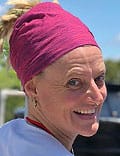
Usually, Médecins Sans Frontières (MSF) sends in international doctors who recruit local doctors. But that recruitment was impossible in Ukraine because “everybody had left,” Searle told Medscape Medical News. “The context was so highly insecure that it was really difficult to get staff in,” she said.
As MSF’s medical team leader, Searle started her shift by stocking up on medical supplies at a hotel’s bunker nearby, and then she headed to the metro.
From around 6 PM, the metro’s blast doors would be closed “so everybody was in there for the night,” said Searle. That’s when the medical work would start. After seeing around 50 patients at the mobile clinic, “I just rolled out my sleeping mat on the platform, along with up to 1000 refugees, and slept there for the night,” she said.
Searle recalls that one older woman attended the clinic with wounds on her face after being pulled from the rubble of her bombed apartment building along with her husband. “They’d lost everything,” said Searle. A few days after receiving treatment, the woman returned to give Searle an apple, which was rare in Ukraine at that time. “She looked into my eyes and said, ‘Thank you so much for being here.’ It was a very, very touching moment.”
During her 15 years with the organization, Searle has managed a maternity unit in Pakistan, established a clinic for survivors of sexual and gender-based violence Haiti, overseen health programs in Sudan, and worked in the Democratic Republic of Congo, Central African Republic, and Ethiopia. “I’m not going to pretend that it’s easy,” she said. But, through years of practice, she’s learned her limits and how to cope with difficult scenarios.
Searle generally spends 6 months each year working in conflict zones and the remainder protecting Tasmania’s wilderness as an activist with the Bob Brown Foundation. “The beautiful, green forests and the pristine beaches are so rare in other parts of the world that are torn apart by ongoing conflict and violence,” she said. This is what she misses most when she travels abroad.
Childbirth During Wartime
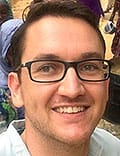
Jared Watts, MD, obstetrician-gynecologist based in the Kimberley in northern Western Australia, has completed three assignments with MSF. In 2022, Watts spent a few months establishing a maternity clinic in Syria. “It was an active war zone,” he told Medscape Medical News. “There was always gunfire, and we were dealing with traumatic injuries.”
MSF brought in engineers to re-establish water and power supplies and to rebuild the operating theaters at the hospital. Meanwhile, Watts and his team trained local people in antenatal care and safe birthing practices.
Most women in Australia have three to four ultrasonographies before giving birth, but this service is a luxury in Syria. “Quite often, we delivered one baby, and then the tummy still looked a little bit large. I thought, ‘Oh, what’s going on here?’ And I found there was a twin. And once I had triplets without realizing,” said Watts.
Within a few months of opening, the clinic had become very busy. “One day, I walked into birth suite at 8 o’clock, and I think I walked out 4 minutes later, and I’d seen five babies born,” he said.
Watts has learned many techniques and different ways of doing things by working with foreign doctors. He’s been exposed to many conditions and complications, including diseases like tuberculosis and malaria, that aren’t seen in Australia. MSF also recently sent Watts to Universitätsklinikum Düsseldorf in Düsseldorf, Germany for general surgery training, further expanding his skills.
Working overseas in countries like Syria, Nigeria, and Sierra Leone has helped Watts appreciate “how lucky we are in Australia as patients,” he said.
Assessing Health Risks
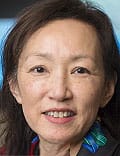
When there’s a natural disaster, a disease outbreak or a war overseas, Irene Lai, MD, global medical director at International SOS, a private health and security company, analyzes health risks and provides advice to companies and governments with workers in the area.
Lai has dealt with many emergencies during her 28-year career with the company. “We were there with 9/11, the Fukushima incident, the Ebola outbreak in West Africa, and the Ukraine conflict,” Lai told Medscape Medical News. She advises on vaccinations, health risks, and local healthcare quality and assists with evacuations and repatriations for travelers with injuries or illnesses.
Lai trained as a specialist physician in Australia in the early ‘90s before moving to Chicago and then New York. She had to redo her internship to work in the US and was struck by the cultural differences. “We have a more of a work-life balance approach in Australia,” said Lai. “A lot of my friends are into Grey’s Anatomy, and I just couldn’t watch it,” said Lai. “It was just not escapism for me. It was just like being at work.”
Lai moved to Singapore in the late 1990s and started working with International SOS. She describes the country as “Disneyland” because it’s safe, clean, and comfortable. All the street signs are in English, which makes it easy to navigate as a foreigner.
Doctors can dispense medications in Singapore, unlike in Australia. It was also a more formal culture, and everyone in the office called her Dr Lai instead of Irene. Lai was unable to find daycare in Singapore after she had her first child. “You need to have a full-time, live-in domestic help,” she said.
After returning to Australia in the early 2000s, she recalls overhearing local physicians having a heated discussion over a $2 difference in a Medicare rebate. “And I get it, that is important,” she said. But this debate seemed strange after working with private companies that were not so financially constrained.
Forecasting and assessing international health risks is as rewarding as it is relentless. “I feel like I haven’t had a break since the Boxing Day tsunami,” said Lai.
Searle, Watts, and Lai reported having no relevant financial relationships.
Felicity Nelson is a freelance science journalist based in Sydney, Australia.