Admin_Adham
 Jump to Key Points
 At a recent party, synthetic chemist John Moses, PhD, ended up next to a clinician. He asked her how the fight against antibiotic-resistant infections was going. She described the situation as "devastating."

"She's really up against it and doesn't have options," Moses said. His lab — part of the Cancer Center at Cold Spring Harbor Laboratory in New York — builds molecules through click chemistry reactions. One of those molecules, synthesized during a project that didn't originally have a connection to infectious disease, restored vancomycin's ability to kill vancomycin-resistant Enterococcus faecium (VREfm), one of two species under the VRE umbrella.
E. faecium colonizes the gastrointestinal tract of immunocompromised patients, particularly transplant recipients and those undergoing chemotherapy. It forms biofilms on catheters, heart valves, and intestinal epithelium, making it difficult to clear once established. Many of its strains are resistant to vancomycin, often the last reliable antibiotic standing between a vulnerable patient and a bloodstream infection that precludes life-saving procedures — an outcome often fatal.
But a recent study published in Nature Communications, led by teams at Scripps Research in La Jolla, California, and in Cold Spring Harbor, with Moses and chemist Howard Hang as senior authors, shows how to combat this protean pathogen. Using click chemistry, a class of fast, highly reliable reactions that snap molecular components together like modular building blocks, Moses's group had built a library of hundreds of small molecules. The Scripps team screened them against SagA and identified a compound called pghi-4 that disables the enzyme, so the old, workhorse drug can bind again.
- pghi-4 inhibits SagA; restores vancomycin activity vs VREfm.
- VREfm common in immunocompromised hosts; biofilms complicate clearance.
- Vancomycin MIC ↓ up to 8-fold with pghi-4 + vancomycin.
- Mouse sepsis model: combo ↓ bacterial burden + weight loss; monotherapy ineffective.
- SagA found in 559/559 E. faecium genomes; resistance gap to bedside remains large.
"I think we can re-engineer antibiotics, existing antibiotics, and endow them with new function," Moses said, referring to the broader strategy of using click chemistry to modify or supplement drugs already in clinical use rather than starting from scratch.
The need for a solution is growing. Antimicrobial resistance contributes to millions of deaths worldwide. Against VREfm, the shelf is nearly bare. Linezolid is the only widely available FDA-approved antibiotic for the infection, and it has limitations that make many clinicians hesitant to rely on it for severe bacteremia. "Most clinicians use other drugs that are not even approved for that indication," said Cesar A. Arias, MD, MSc, PhD, chief of the Division of Infectious Diseases at Houston Methodist Hospital in Texas, who was not involved in the study. "But you don't have any other choices."
It's harder to know whether vancomycin's restored potency is large enough to matter, whether VREfm will find a way around it, and whether a compound like this can survive the economics of antibiotic development.
Stripping a Bacterium's Armor
Vancomycin works by binding to a specific peptide target on a bacterial cell wall and physically jamming its intricate construction. The cell wall is held together by cross-linking peptide chains. The drug grabs onto the end of a short peptide chain, D-alanine-D-alanine, that anchors the cross-links, and forms hydrogen bonds. The bonds effectively cap the wall so it can no longer be properly assembled. Pressure builds up inside the bacterium. Eventually, it bursts through the unfinished wall.
But resistant strains of bacteria make a single chemical substitution at that target, replacing D-alanine with D-lactate, and through resultant chemical changes, the drug is repulsed by its target. Vancomycin's ability to bind plummets 1000-fold.
E. faecium carries virulence factors that degrade host proteins and tissue, and its aggregation machinery allows it to pass resistance genes directly between cells, accelerating the spread of resistance within a patient and across a hospital.
The clinical predicament runs deeper than a single failed drug. Enterococci are intrinsically resistant to cephalosporins, trimethoprim-sulfamethoxazole, and other common antibiotics, which means clinicians start with a narrow set of options even before resistance enters the picture. Once vancomycin fails, the shelf contracts further, and resistance is now creeping into daptomycin and linezolid — drugs once considered reliable last-resort agents.

"You may only have one or two options left," said Madison Stellfox, MD, PhD, an assistant professor of infectious diseases at the University of Pittsburgh School of Medicine, who was not involved in the study. A significant share of patients, especially transplant recipients and those on immunosuppressive therapy, develop recurrent infections, cycling back every few months with fewer weapons each time.
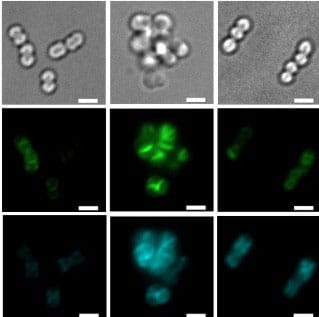
But the team at Scripps had figured out a simple solution to the bacterium's defense mechanism: Delete the gene for the enzyme SagA, which the bacterium relies upon to reshape its cell wall and bury binding sites for vancomycin. When the Scripps team deleted the gene for it to stop its production by the bacteria, those vancomycin binding sites stayed exposed and the drug regained potency, even in strains still carrying the resistance machinery. Without SagA, the bacterium's grip on resistance loosened, enough for vancomycin to find its footing again.
A Chemistry Expedition
That was one half of the solution, according to Moses: "What they didn't have was a chemical way to knock it out."
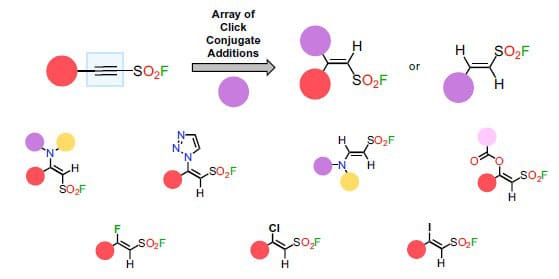
After all, deleting a gene in a petri dish doesn't count as therapy. The Scripps team needed to deliver a molecule. Across the country, three dozen miles east of New York City, Moses's group had been developing a click chemistry platform that generates structurally diverse small molecules by attaching different molecular modules to a shared reactive hub. The resulting library held more than 600 compounds.
The Scripps team screened them against SagA. Five hits emerged from the screen, all from one chemical family — β-chloro alkenyl sulfonyl fluorides originally synthesized as part of a click chemistry library Moses built with Nobel laureate K. Barry Sharpless to find covalent inhibitors of an enzyme involved in cystic fibrosis, not infectious disease. The most active compound, pghi-4, disables SagA by bonding covalently to the enzyme's active site, though the adduct is not permanent; it degrades over hours as hydrolysis products accumulate.
In a mouse model of VREfm sepsis, neither vancomycin nor pghi-4 cleared bacteria from the spleen or liver when given alone. But when the two were co-administered — vancomycin at a clinical dose of 100 mg/kg and pghi-4 at 25 mg/kg, with a second dose at 24 hours — the combination significantly reduced both bacterial burden and weight loss over 48 hours.
"We didn't design [pghi-4], the molecule came from a chemical expedition," Moses said. "I could never have predicted the SagA inhibition, not in a million years. But should we limit it to what humans can predict?"
Moses's group had already taken one pass at vancomycin resistance. A 2023 PNAS paper described vancomycin dimers connected through a continuously rearranging carbon cage, "almost like putting a Rubik's cube in between two vancomycins." Bacteria could barely develop resistance against them.
But this SagA inhibitor project is a different wager: leave the drug untouched but take away the bacterium's defense.
"It's not an antibiotic itself, but it's an antibiotic booster," said Stellfox.
In a checkerboard assay, the combination reduced vancomycin's minimum inhibitory concentration (MIC) by up to eightfold in VREfm strain ERV165. Across a broader panel of genetically distinct clinical isolates, the effect was consistent but variable in magnitude.
A critical question is whether the target exists broadly enough to matter. The team screened 559 E. faecium genomes across 99 sequence types and found SagA in every one. "That strengthens the idea that this could be used in most E. faecium infections without having to pre-test," Stellfox said.
On the distance remaining before this reaches patients, Stellfox described a vast landscape to traverse. If one starts at an MIC of 256, a really high number, with the need to drop down to an MIC of 2, "That's a lot of road [to cover]," she said. Additionally, after that massive reduction, the bacteria still qualify as resistant by clinical standards.
Arias saw the same gap but drew a different conclusion from it. The broth microdilution assay used to measure MIC, he said, is a "test that was developed more than 100 years ago to deploy antibiotics in a person, in which the organism is in a different medium, in a different environment, in front of an immune system."
The damage also extends beyond the bloodstream. When VRE dominates the gut microbiome, the resulting dysbiosis is independently associated with worse outcomes in immunocompromised patients, Arias said. A treatment that could clear the organism systemically might address both threats at once.
The findings add to a growing body of evidence that single agents are not enough for severe enterococcal infections, Stellfox said. "Whether that's two antibiotics or something like this, which is more of like an adjuvant," she said, "that seems to be the way we're heading."
An Abyss Between Bench and Bedside
There are deeper questions. SagA is not essential to the bacterium's survival. Delete it, and VREfm still lives. The target is exploitable only because of the kinetics of cell wall remodeling, not because the organism itself really depends on it.
"Knowing the bug the way I know it, it is highly likely that there are many ways to bypass that," Arias said. "But still, it's worth the effort to try to understand at the molecular level a different target that we hadn't thought about before."
The mouse experiments carry their own caveat. Treatment was administered simultaneously with infection, which doesn't replicate the chronology of somebody who is infected and then treated at a later time.
"Can you infect the mice and then rescue them 48 hours later?" Stellfox asked.
Arias went further: Animals in the peritonitis model often die from the inflammatory response, not the bacterial burden itself. A rat endocarditis model, where immune clearance barely reaches the site, would be a "much more stringent model," he said.
Finally, from here to the patient, Arias described the gap as "an abyss." The compound needs safety testing, pharmacokinetics, and delayed-treatment models before it can move toward human trials.
But the harder problem may be structural. "These are the only drugs in medicine where you develop the drug and people don't want to use it, because they may lose it," he said. Clinicians hoard effective antibiotics to preserve them. Pharmaceutical companies see short treatment courses and slim reimbursement. "They are not investing in these drugs anymore," Arias said.
Moses has his own reasons for staying in the fight. His mother died not from cancer but from a bacterial infection that followed it. His father survived a severe infection only narrowly.
Asked what should change, he did not talk about molecules. Governments should fund antibiotic research the way they fund national defense, he said, because the standard market incentives will never work. "We don't expect industry to lose money on it."
Until that happens, the next advance may look less like a pipeline and more like what produced pghi-4: two labs separated by thousands of miles teaming up to scour a library of compounds built for a multitude of purposes, with serendipity doing the rest. "Without [Howard Hang] having access to my library, and us having access to Howard's expertise, we probably would never have figured this out," Moses said. "Serendipity is still important in science."
Arias reports honoraria from UpToDate and salary support from the American Society for Microbiology. Moses reports no relevant financial relationships. Stellfox reports an investigator-led research grant from Cumberland Pharmaceuticals/Apotex Inc. Disclosure information for study authors is available in the original study publications.