Admin_Adham
When dermatologist Apple Bodemer, MD, began practicing integrative dermatology over 15 years ago, she was considered “quite fringe,” she recalled, by many of her trainees and colleagues at the University of Wisconsin School of Medicine and Public Health, Madison, Wisconsin.
At the time, few patients knew about integrative medicine. She would routinely “need to educate patients that I’m not an ‘either-or’ doctor,” she said, and explain that she employs both Western conventional treatments as well as complementary approaches.

But in the past 5 years, through her lens, integrative health and medicine has become “a lot more mainstream,” said Bodemer, who is the first dermatologist to have completed a fellowship in integrative medicine at The University of Arizona Andrew Weil Center for Integrative Medicine, Tucson, Arizona, and the first dermatologist to be board-certified by the 10-year-old American Board of Integrative Medicine (ABOIM).
Patients better understand it, and “residents increasingly come to me with questions, often driven by patients’ questions, and my colleagues [in dermatology] have a lot more interest in my area of expertise,” she told Medscape Medical News.
A small but growing number of dermatologists, moreover, are seeking this expertise themselves.
Just under a dozen dermatologists have completed the 1000-hour fellowship at The University of Arizona Center for Integrative Medicine since its inception in 1998. It’s the oldest and largest such program in the country, having trained 2800 providers thus far (mostly MDs and DOs) — and one of a dozen or so fellowships in integrative medicine approved by the Academic Consortium for Integrative Medicine and Health (ACIMH) and the ABOIM. The ABOIM sits under the American Board of Physician Specialties (ABPS).
But in recent years, said Ann Marie Chiasson, MD, MPH, a family physician who directs the fellowship program, “we have had one to two dermatologists in each class.”
A much larger cadre of dermatologists are seeking training through LearnSkin, an educational platform focused on integrative dermatology. Thousands have registered with the organization to take courses and receive information, and more than 100 have completed its 9-month Integrative Dermatology Certificate Program (IDCP) since it launched in 2020. (The organization accepts 30 dermatologists per IDCP class.) Other dermatologists, meanwhile, are exploring areas such as Ayurvedic medicine through other programs.
This growing interest in training comes amid growth in the integrative medicine-trained physician workforce more broadly — across an array of specialties beyond primary care — as well as growth in functional medicine, some of which integrative medicine incorporates. It also comes as published research documenting the efficacy of integrative modalities increases.
“There’s been an explosion in the literature in probably the last 10 years” of studies on the efficacy of meditation and mindfulness and a host of other integrative modalities for various problems, Chiasson told Medscape Medical News. And in dermatology, Bodemer pointed out, integrative approaches are making their way into mainstream thinking and even some practice guidelines.
How the practice of integrative dermatology will find its footing financially in a healthcare system marked by declining physician reimbursement, increasing productivity pressures, and other challenges, is unclear. Some say that private pay models are necessary. Others maintain that integrative dermatology can be practiced in a variety of settings, including in traditional insurance-based practices.
What Integrative Dermatology Offers
“What I really love doing is helping people navigate lifestyle, diet, supplements, and medications to improve their chronic skin disease,” said Bodemer, professor of dermatology at the University of Wisconsin School of Medicine and Public Health.
Bodemer offers 30-minute integrative consultation appointments throughout her clinic days, but she also practices broadly across all her appointments with an integrative philosophy, ready to offer evidence-based complementary approaches when patients are interested. “When I ask, ‘do you want to explore how diet may be affecting your acne?’ and the patient tells me ‘no,’ then we’ll go down the more conventional path. If they say ‘yes,’ then we enter into more conversation,” she said.
“Or if they come in saying, ‘I don’t want to use drugs. What can I do with supplements?’ Then I’ll meet the patient where they’re at and offer a broader palate of treatment options and modalities.” Sometimes, patients need a conventional treatment that works quickly to bring some control to a disease, after which “they’re more open” to discussing other approaches for the longer term, Bodemer said.
Integrative dermatology can be practiced with a gradual approach that does not require long visits, she emphasized. “It doesn’t take me long, for instance, to talk to a patient about the impact that stress has on eczema and the impact that breathwork can have on stress levels,” she said. In most cases, “I’m not going to talk with the patient about breathwork, diet, and supplements in the same visit. It’s something that can [be covered] over time as you build a relationship with the patient.”
Most of Bodemer’s visits are billed using standard acuity-based billing. Sometimes she uses time-based billing — a practice that Chiasson says can be used widely by integrative physicians. “Everything we do is covered under time codes,” she said.
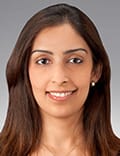
When dermatologist Sonal Choudhary, MD, launched the Integrative Dermatology Skincare Center at UPMC in Pittsburgh last year, she worried that time was a “huge barrier” to the integrative care she wished to provide. With this in mind, and given her academic structure, she proposed that the clinic be run in a direct-pay fashion similar to UPMC’s cosmetic dermatology clinic.
In 40-minute visits during her Wednesday morning integrative clinic, she has seen patients with acne, psoriasis, hair loss, eczema, hidradenitis suppurativa, generalized itch, and urticaria (including urticaria stemming from hypermobility-associated mast cell activation syndrome), as well as patients who have had multiple skin cancers and want to better understand their cancer history and explore preventive measures. Patients have the option of seeing one of several physician assistants who practice with and have been trained by Choudhary, for a lower fee.
Most of Choudhary’s patients thus far have tried conventional therapies and want to achieve better control of their skin disease. With psoriasis, for instance, conventional treatments (including biologics) remain foundational for the most part, she said. But for some patients, these treatments may not be enough. “If we ignore metabolic contributors like diet, insulin resistance, and sedentary habits, we risk missing underlying drivers of inflammation,” Choudhary, assistant professor of dermatology at the University of Pittsburgh, said in an interview.
Integrating additional evidence-based approaches, such as nutritional changes and targeted supplements (such as probiotics and anti-inflammatory herbs), as well as lifestyle factors such as movement and stress regulation, allows these patients to experience more sustained improvement and reduce reliance on medications alone. “These are patients who are working on finding the missing pieces. [When changes are made], it finally feels like the drug is doing more,” she said. “It’s like a drug optimization approach.”
Other patients seen in Choudhary’s integrative clinic are wary of conventional medical therapies and potential and unknown side effects. “They want what they call a more natural approach or a more root-cause approach,” she said.
A ‘Mix’ of Practice Models
As do many integrative dermatologists, both Choudhary and Bodemer incorporate some functional medicine testing — most often, tests such as the gastrointestinal microbial assay plus(GI-MAP), a stool test that analyzes the gut microbiome — and refer or collaborate when needed with trained functional medicine physicians for more extensive root-cause laboratory testing. Referrals are also sometimes considered for integrative modalities, such as acupuncture or mindfulness-based stress reduction.
“It’s clear,” Choudhary said, “that people are looking” for a holistic approach. In a survey study conducted by Choudhary and colleagues and recently published in the Journal of the American Academy of Dermatology, about 64% of 205 survey participants (UPMC dermatology patients) said — after being provided some background on integrative medicine — they would visit an integrative dermatologist, and 75% said they wished dermatologists would discuss the impact of lifestyle factors on skin health.
It’s hard to know what practice models dermatologists who have trained in integrative dermatology or integrative medicine have adopted, said Bodemer, who teaches with LearnSkin. “I can’t speak to how it’s changed over time,” but it appears to be “a mix,” including some direct pay, she said.
Peter Lio, MD, a clinical assistant professor of dermatology and pediatrics at the Northwestern University Feinberg School of Medicine, Chicago, and the founding director of the Chicago Integrative Eczema Center, Chicago, — a traditional insurance-based practice — told Medscape Medical News that he believes that integrative practitioners will have to start moving to a self-pay approach, which, he said, “saddens me a bit because it means it is not as accessible.”
His own work in providing integrative dermatology at the eczema center with complex patients “is increasingly not sustainable as reimbursements continue to fall,” he said.
Some dermatologists and other physicians “are turning towards integrative medicine so that they can practice as they want to” and spend enough time with patients without the bureaucratic burdens associated with many health insurance plans, said Lio, who also teaches integrative dermatology through LearnSkin.
A direct-pay model “doesn’t have to be a ‘concierge-type model,’” he emphasized. Depending on the market or environment, “cutting out all the middlemen” could make it possible to provide care for “an affordable fee,” Lio said. “Increasingly, I’m seeing frustrated patients who are willing to go outside the main clinics to get a different type of care.”
Chiasson, who is currently serving as president of the ABPS, said the field needs more outcomes data to demonstrate to insurance companies that integrative therapies have long-term benefits and are cost-effective. “Once insurers look at the big picture, at long-term outcomes and costs, they may be happy to pay for integrative medicine,” she said.
In addition to family medicine, Chiasson is board-certified in integrative medicine and in hospice and palliative medicine and is an associate professor of clinical medicine at The University of Arizona.
Training Builds, New Fellowship on the Way
Bodemer was driven to medicine in the first place after reading Molecules of Emotion: The Science Behind Mind-Body Medicine, by Candace B. Pert, PhD, as an undergraduate. In medical school, she joined an interest group in complementary and alternative medicine, and during residency, she traveled to India, Nepal, and China, where she saw “how traditional Chinese medicine was practiced right alongside Western medicine.” She went straight into the integrative medicine fellowship after finishing her dermatology residency.
Choudhary pursued integrative dermatology training several years into practice, driven in large part by her own experience with a chronic condition not helped by conventional medicine — one that led her to functional medicine providers who helped her with diagnosis and treatment. She had grown up in India, where “Ayurveda was common and home remedies were implemented on a daily basis,” she said, but “going into medicine, I had put this aside because there’s such a divide between allopathic medicine and any kind of traditional medicine.”
Eventually, “the pieces started coming together” and in 2023 and 2024, Choudhary pursued LearnSkin’s IDCP — a program that includes self-paced didactics (including over 65 CME credits), weekly live roundtable case discussions, and in-person training held just prior to LearnSkin’s annual Integrative Dermatology Symposium. The experience “was a game-changer,” she said.
LearnSkin was the brainchild of Hadar Lev-Tov, MD, of the University of Miami, and Raja Sivamani, MD, who practices in Sacramento, California. While completing their dermatology training, they “kept hearing the same questions from patients — about nutrition, lifestyle and alternative therapies — that weren’t covered in med school,” said Yani Mabini, the company’s program coordinator.
Guided by a team of dermatologists, including Lio and Bodemer, the organization held its first symposium in 2018. Additional educational content and the IDCP followed. Now, the organization is finalizing development of a 500-hour integrative dermatology fellowship program which, if approved, could be paired with 500 subsequent hours of general integrative medicine training through the University of Arizona’s Andrew Weil Center for Integrative Medicine to enable trainees to sit for ABOIM certification.
(Other specialties, including oncology and cardiology, either have developed or are expected to develop similar ABOIM-certifiable combined fellowships that provide integrative training specific to their specialties dovetailed with broader integrative medicine training.)
Bodemer, who has served on the ABOIM and works with the University of Arizona on its dermatology-related content, said LearnSkin hopes to announce the integrative dermatology fellowship program in the coming year.
The ABOIM has certified at least 1000 physicians since 2015 — mostly physicians in family medicine and internal medicine/internal medicine subspecialties, but increasingly in other specialties such as pediatrics, psychiatry, and dermatology. To be eligible for certification, one must have completed an ACGME-approved residency; be board certified by the ABPS, the American Board of Medical Specialties, or the American Osteopathic Association; and have completed 1000 hours of fellowship training approved by the Academic Consortium for Integrative Medicine and Health (ACIMH).
How Integrative Dermatology Views Evidence
Broadly speaking, integrative medicine teaches an evidence-based approach to decision-making that ranks types of evidence with systematic reviews/meta-analyses and society practice guidelines on top (level A), followed by randomized controlled trials (one or more); observational studies; case reports; consensus or expert opinion and “traditional use, not harmful”; “theoretical use, not harmful”; and “evidence of harm, not recommended.”
And, as taught at the University of Arizona and other fellowships, integrative medicine also views evidence according to a four quadrant categorization of benefit vs harm (eg, high benefit/low harm and low benefit/high harm).
“With botanicals and lifestyle factors, for instance, I may be more likely to look at the smaller studies and pay attention to patterns showing up in case series or studies that might not be quite as robust” by conventional standards, Bodemer said, noting that she discusses with patients the level of safety and level of evidence that exists for any therapy being considered to help with decision-making.
Such considerations apply to herbs and supplements, said Chiasson. “As long as you find the human evidence, which is there, and you know what you’re taking, dietary supplements and herbs can be very powerful and safe,” she said, noting that “most problems come from adulteration.”
Research on other complementary modalities can be difficult to blind and, like research on herbs and supplements, difficult to fund. But evidence for complementary therapies has grown — and notably, so has acceptance within the field of dermatology, Bodemer said.
She cites several examples:
- Broader recognition of the role that diet can play in acne, and the impact of dietary interventions on this condition. The research supporting a connection are reviews published in 2021 and 2022 and findings from a large prospective cohort study published in 2020.
- Increasing recognition and utilization of N-acetylcysteine (NAC) in the treatment of skin picking disorders. Research supporting the use of NAC includes a 2016 randomized clinical trial, a 2022 cohort study, and a 2025 review.
- Recognition by the American Academy of Dermatology (AAD) and the National Eczema Foundation of the role that stress plays in eczema and the value of stress reduction techniques as part of a treatment plan. (Stress is known to exacerbate other inflammatory skin conditions, such as acne, psoriasis, alopecia areata, urticaria, pruritus and rosacea, as well, Bodemer said.)
- Recognition in joint AAD-National Psoriasis Foundation (NPF) guidelines for psoriasis management of “alternative medicine,” St. John’s wort, and traditional Chinese medicine “as having potential benefit.”
Respect for Functional Medicine
Integrative medicine and functional medicine overlap to some degree and have respect for each other’s discipline, according to Chiasson and Joel Evans, MD, chief of medical affairs for the Institute for Functional Medicine (IFM).
As Chiasson, Bodemer, and Choudhary see it, integrative medicine does not employ as much laboratory testing. “We often end up in the same place,” recommending similar therapies, said Chiasson. “And we add in [our training on] mind-body approaches, traditional Chinese medicine, and other such therapies.”
The fact that integrative medicine sits under a multi-specialty physician certification organization, Chiasson said, distinguishes it from self-designated boards associated with functional medicine, lifestyle medicine, obesity medicine, and other areas.
Functional medicine utilizes an evaluative approach that systematically identifies and addresses root causes of disease. Clinicians take a holistic approach, considering nutrition, lifestyle, environmental factors, genetics, and labs. They focus on conventional labs first, Evans said, often looking at “ideal ranges” rather than the standard reference ranges defining “normal and abnormal” results in conventional practice. Specialty functional lab testing is suggested only if needed, he said.
The IFM has certified over 2900 practitioners through its 12-year-old certification program, about 40% of whom are MDs and DOs, according to Amy R. Mack, IFM’s
chief executive officer. Approximately 40% are nurse practitioners and physician assistants, and the rest are naturopaths, acupuncturists and other providers, and an additional 2,500 practitioners are on the path to certification, she said.
The IFM was unable to provide a specialty breakdown of physicians who have trained with the organization, but Mack said that dermatologists are among the physicians who have trained or have been certified.
Bodemer and Chiasson reported having no relevant disclosures. Choudhary reports having research grants with Eli Lilly and being a speaker for Sanofi & Regeneron. Lio is a speaker and/or advisory board member of various pharmaceutical, skin care, and other companies; a patent holder of Therapies AIM; and has stock options in several companies. Bodemer, Choudhary, and Lio are involved in advising/teaching with LearnSkin.