

 Admin_Adham
When residents of West Philadelphia describe the challenges they face in maintaining their health, their concerns reach far beyond the walls of clinical offices. Long-standing poverty, food insecurity, environmental hazards, under-resourced schools, and limited access to preventive care have contributed to wide health disparities in the area’s Promise Zone — one of 22 communities nationwide designated in 2014 by the Obama Administration to receive concentrated federal support.
Five colleges or universities are in or near the West Philadelphia Promise Zone, one of those being Drexel University. Loretta Sweet Jemmott, PhD, RN, now professor emerita of nursing at Drexel as well the University of Pennsylvania, Philadelphia, and Villanova University, Villanova, Pennsylvania, said the Obama Administration turned to Drexel’s then president John Fry to ask what Drexel could contribute, and Fry then turned to her.
Considerable study has been done on the decades-long animus between residents of the area and the schools, including Drexel. Jemmott, who grew up in the area, told Fry they should do something to help the residents who are locked in a food desert among other disadvantages, improve their health. Thousands of hours of interviews and 3 years later, Drexel’s College of Nursing and Health Professions established the Community Wellness HUB. Jemmott and several colleagues authored an article featured on October 25, 2025, in The New England Journal of Medicine that outlines the program’s origins, priorities, and early outcomes.
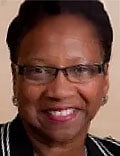
Jemmott and her co-authors explained that the HUB is designed to “heal, unite, and bridge” residents, both directly providing and linking them to essential preventive care and social services. It’s built on a collaborative, community-driven approach rooted in deep engagement, cultural humility, and the belief that health equity begins with listening directly to residents. The authors describe the program as a model for how institutions can create health-promoting services with underserved communities that benefits everyone involved.
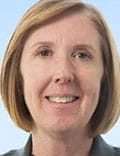
The idea that it’s replicable isn’t just talk. Helen Teng, PhD, RN, an assistant clinical professor in the College of Nursing and Health Professions at Drexel and a co-author on the article wrote an award-winning course that teaches students the community canvassing and implementation methodology behind the HUB. The argument is that the HUB’s approach — combining deep listening, cross-sector collaboration, and culturally humble care — can be implemented between communities and colleges or universities nationally.
Ground-Up Design: Beginning With 1100 Conversations
For Jemmott, addressing health inequities began not with interventions, but with presence.
“When I started, I knew we had to understand what the community actually wanted us to do,” she said. “So I went out and interviewed community leaders, held dinners, town halls, small meetings. Over a year and a half, I spoke with more than 1100 residents. They said very clearly what their health needs were. It was important that they told us, that they felt heard.”
Jemmott said that these conversations revealed seven pressing health concerns in the community: chronic diseases, such as cancer and heart disease; behavioral health, including depression, trauma, and substance use; sexual health; environmental health and housing safety, including services to help the older age in place; access to medical care; access to healthy food; and access to promote physical activity and fitness. She said that having an authentic connection, listening, and making an effort to be where the people were paid off. Residents felt comfortable, opened up, and shared daily barriers that magnified their risks.
“One woman said to me, ‘Dr Jemmott, I cannot even get an apple or a birthday card in my neighborhood.’ That’s how scarce healthy options were,” she said.
The authors describe how the HUB’s services were built directly around those needs, ranging from preventive screenings to behavioral health referrals, health education, exercise programs, point-of-care testing, community outreach, and connections to primary care.
“What makes the HUB work is that it’s community-driven,” Jemmott said. “These are services designed based on what residents said they needed, not what we thought they needed.”
“Loretta and her team, a decade ago, what they did in the community to really understand the community was powerful,” said Emily Roper, PhD, dean of the College of Nursing and Health Professions at Drexel. “When we talk about clinicians and how they provide care, the HUB represents a transformational model. It’s one where the provider and the patients feel empowered and respected and engaged with one another.”
Filling the Space Between Health and Healthcare
Monica Harmon, MPH, the HUB’s former executive director and a co-author of the NEJM article, said that for many residents, the HUB grew into a trusted, welcoming point of entry into the healthcare system, a space where they could ask questions, check blood pressure or glucose levels, receive vaccination guidance, access resources, or get help navigating care.
“Residents told us again and again that long wait times, poor treatment, and lack of trust kept them away from traditional care settings,” said Harmon. “What the HUB does is create a place where people feel comfortable. They know they won’t be rushed, dismissed, or judged.”
Harmon said trust became a defining feature of the HUB’s impact. That trust has produced positive clinical outcomes, according to Harmon: Residents follow through on referrals more often, attend preventive appointments, and seek care earlier.
Jimmy Allen, a local civic leader and retired schoolteacher, shared some anecdotal examples of the HUB’s success.
“The executive director of our youth program was at a meeting — we had over 100 kids there — and got sick. We took her to the Wellness HUB,” he said. “They gave her an examination and sent her straight to the hospital. Had she not gone to the hospital that day, she might have died. They saved her from having a stroke.”
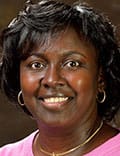
Allen’s own health was affected by the HUB.
“I had some serious problems with my respiratory system, and I went to them and they told me what to do and what not to do, and — I’m a Vietnam veteran — I went to the VA [Veterans Affairs] Hospital, and they resolved my respiratory problems.”
After he visited the hospital, Allen returned to the HUB to get follow-up advice.
“They got me to change my diet, and I listened to them,” he said. “When you go to the hospital, you just get a day of treatment, but I’m with (the staff at the HUB) all the time. I tell them they completely changed my digestive system. I drink more water than I ever did, I do more exercises.”
Allen said he helps with some nonhealth-related services at the HUB as well, including assisting with a legal clinic and commutations and reintegration services for prisoners who have served lengthy sentences.
“These are the kinds of encounters that happen when people have somewhere they feel safe going,” Harmon, the HUB’s former executive director, said.
A Clinician’s View of Impact
Annette Gadegbeku, MD, senior associate dean of Community Health and Inclusive Excellence and an associate professor in Drexel’s College of Medicine, has been involved with the HUB for more than a decade and served as medical supervisor of the HUB until 2019.
Gadegbeku, also a co-author on the NEJM piece, said her involvement continued through the COVID pandemic, when she partnered with the Philadelphia Department of Public Health to bring free COVID testing and later vaccination to the site.
“We had a multidisciplinary student-faculty-staff team that did the testing weekly,” she said. “Then we partnered with Sunray Drugs to provide free vaccinations. It was incredibly impactful for the community.”
The HUB’s adaptability during the pandemic, she said, reflected the foundational principle of meeting people where they are.
“Trust was everything during COVID. People came because they recognized us, or a neighbor recommended us. That community presence made all the difference.”
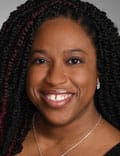
The College of Nursing and Health Professions and the College of Medicine are now partnering to operate the HUB, Gadegbeku said. In the past year, Gadegbeku’s Office of Community Health has increased its presence there, building interprofessional programming across medicine, nursing, and physician assistant studies.
“We provide monthly health screenings at the community dinners — blood pressure, glucose, eye screenings, sometimes point-of-care HIV and hepatitis C testing. The events have grown tremendously,” she said. “We had an event with Giant Pharmacy recently where we not only did our usual screenings but also flu and COVID vaccinations. The turnout was the highest we’ve ever seen.”
From a clinical standpoint, these touchpoints are beginning to produce meaningful health improvements.
“We’re tracking blood pressure, A1c, asthma control — it’s early, but we’re encouraged. The HUB improves engagement, and engagement is the first step toward better outcomes,” she said.
Gadegbeku, Harmon, Jemmott, Roper, and Teng reported no disclosures.
