Admin_Adham
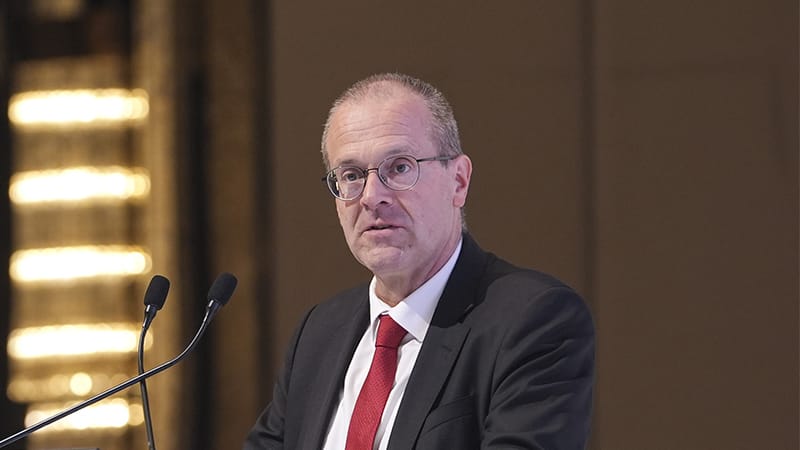
The man who led the National Institute of Neurological Disorders and Stroke (NINDS) for the past decade was informed the day after Christmas that he was being terminated.
Walter Koroshetz, MD, joined NINDS in 2007 as deputy director and was acting director for a year until he was elevated to director in 2015. His official bio page, which is still active, noted that he held leadership roles in several National Institutes of Health (NIH) and NINDS programs including the NIH’s BRAIN Initiative and the Traumatic Brain Injury Center.
In a screenshot of a December 26 email that was shared on social media, Koroshetz said he “was informed this evening that my reappointment at NINDS has been denied.” The scientist thanked NINDS staff and noted that they had “worked through adversity and are more independent and focused than ever.”
Koroshetz retained his position following mass firings earlier in 2025, during which the Trump administration terminated 10 principal investigators at NINDS, who were later rehired.
No public reason has been given for why Koroshetz was not asked to continue as NINDS director. Medscape Medical News contacted the NIH for comment but did not receive a response by press time. Several professional organizations, however, voiced concerns.
“This decision was made without consulting key neurology stakeholders, and there was no formal announcement nor a clear succession plan for NINDS leadership,” said the American Academy of Neurology in a statement.
“Dr Koroshetz has been a steady, trusted, and visionary leader at a time when neuroscience has entered a pivotal era of discovery,” said the American College of Neuropsychopharmacology (ACNP) in a statement. The nonrenewal of his contract “raises serious concerns about stability and continuity within the federal neuroscience research enterprise,” said ACNP.
The NINDS marked its 75th anniversary in 2025, a milestone Koroshetz noted in an article published in Annals of Neurology. In 2023, the institute managed a nearly $3 billion budget, supporting research spanning basic neuroscience, disease mechanisms, therapeutic development, and clinical trial cooperative agreements. Despite that scale and scope, Koroshetz cautioned that “our knowledge of how the nervous system functions over the lifespan — and how disorders disrupt that function — remains embryonic at best.”
Koroshetz was also active on X, promoting NIH discoveries and conferences. He last posted on December 22, noting that a webinar would be held on January 13 to discuss the latest updates from the RECOVER initiative, which is investigating long COVID.
The NINDS Director had periodically been criticized, particularly by those with long COVID or myalgic encephalomyelitis/chronic fatigue syndrome, for what they saw as a disregard for these conditions.
Before joining NINDS, Koroshetz was vice chair of neurology and director of Stroke and Neurointensive Care Services at Massachusetts General Hospital and professor of neurology at Harvard Medical School, both in Boston, and led Mass General’s neurology resident training.
As a researcher, he helped develop measures that reflected underlying biology, including magnetic resonance spectroscopy (MRS) in Huntington disease and diffusion or perfusion MRS and CT x-ray angiography and perfusion imaging in stroke.
Alicia Ault is a Saint Petersburg, Florida-based freelance journalist whose work has appeared in many health and science publications, including Smithsonian.com. You can find her on X @aliciaault and on Bluesky @aliciaault.bsky.social.