Admin_Adham
A newly cleared low-beta radiation “patch,” expected to be available in 2027, may mean fewer treatments for superficial nonmelanoma skin cancers, according to the manufacturer.
The FDA cleared the OncoPatch Surface Brachytherapy System in December for the “surface treatment of localized tumors,” the Aurora, Colorado-based company OncoPatch, announced on March 10.
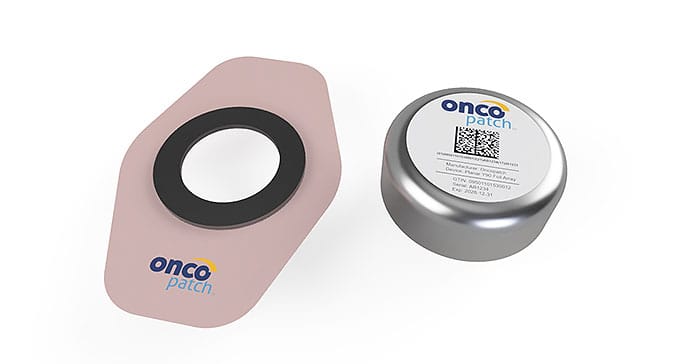
“OncoPatch was developed by physicists and radiation oncology researchers with the explicit goal of bringing a precise isotope-radiation therapy option into dermatology practice,” said David Westerly, PhD, CEO of OncoPatch, in a statement provided to Medscape Medical News.
The device — which uses the isotope yttrium-90 — will precisely deliver a low dose of radiation, said Westerly, who is also associate professor of radiation oncology at the University of Colorado Anschutz School of Medicine, Colorado. “It won’t penetrate any farther than 11 millimeters,” Westerly told Medscape Medical News. “Ninety percent of the dose gets deposited in the first 3 millimeters,” he said.
The system was cleared under the FDA’s 510(k) process, which means that clinical trials were not required and that the device is determined to be “substantially equivalent” to another marketed device. The OncoPatch is considered similar to existing brachytherapy, said Westerly.
OncoPatch will be used in a pilot test at a site in Colorado later this year and will be commercially available in early 2027, he said.
In practice, a dermatologist would determine an eligible patient and prescribe OncoPatch. A company representative would go to the practice on a scheduled, regular, recurring basis, bring the device, and provide a technician to assist the dermatologist in administering the treatment. There’s no need for a special room or radiation system, and no requirement to use lead shields; the device carries its own shield, said Westerly.
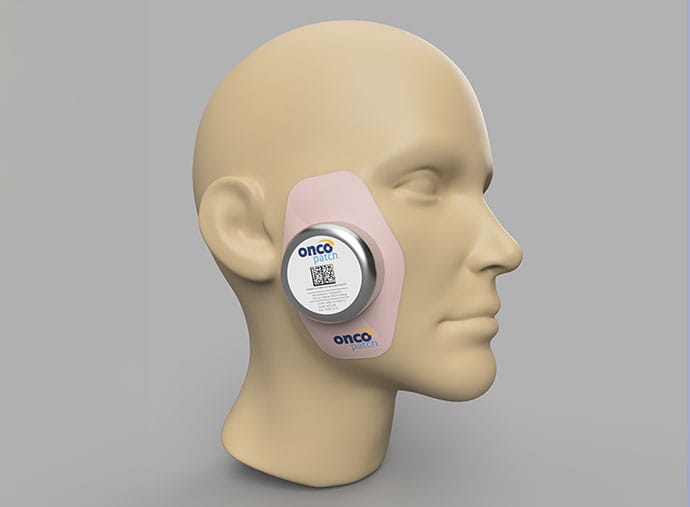
Each treatment takes 10-15 minutes, and 1-5 treatments would be appropriate, said Westerly.
The prime tumor targets are nonaggressive and superficial — 1-2 mm deep — and not treatable with a topical, he said. “This is not going to be for everybody,” he said, adding that it would also be an option for patients who are not surgical candidates or who refuse surgery.
Abigail Waldman, MD, clinical director of Mohs surgery at Brigham and Women’s Hospital, Boston, said there’s not enough data to pinpoint which patients might benefit. “If it proves to be effective and safe, then I could see using it in patients who don’t want or can’t have surgery,” she told Medscape Medical News. She was not involved with evaluating the device or with the manufacturer but was asked to comment.
The system is novel in combining brachytherapy and superficial radiation therapy, said Waldman, associate professor of dermatology at Harvard Medical School, Boston.
But, she said, OncoPatch might not shorten treatment trajectories. “One to five visits is standard of care for nonmelanoma skin cancers whether they are treated with surgery, a scrape and burn procedure, or topical therapy with treatments like 5-FU [5-fluorouracil] or imiquimod,” she said. However, she added, OncoPatch would require fewer visits than superficial radiation therapy, which can take 10-30 visits.
“Until the clinical studies are published, it’s difficult to say what skin cancers would benefit from this treatment,” said Waldman.
Westerly is the CEO of OncoPatch. Waldman reported having no relevant disclosures.
Alicia Ault is a Saint Petersburg, Florida-based freelance journalist whose work has appeared in many health and science publications, including Smithsonian.com. You can find her on X @aliciaault and on Bluesky @aliciaault.bsky.social.