

 Admin_Adham
Thomas J. Fogarty was still in medical school when he developed a new technique to remove arterial blood clots.
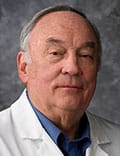
The game-changing technique, later called the Fogarty catheter, was a fitting start to a long career of innovation and invention in the field of cardiovascular medicine. Fogarty holds nearly 200 patents and was remembered as a visionary.
Fogarty died December 28 at his home in Los Altos, California, surrounded by his family. He was 91.
“Tom was adept at figuring out the tools we all needed. He didn’t just rely on what had existed: He imagined new tools, how they might work, and who could help make them real,” said longtime friend and colleague Vincent Gaudiani, MD, a cardiovascular surgeon at El Camino Health in Mountain View, California.

“It’s a rare skill — we won’t see his like again, especially since he was right there at exactly the right moment, when cardiovascular medicine was taking off. We are lucky to have lived and worked in his time,” Gaudiani said.
Several medical organizations posted tributes to Fogarty, including the American College of Surgeons, which said: “Dr Fogarty is considered as a pioneer in minimally invasive surgery and a giant in surgery who has influenced the practice of nearly all modern practitioners.”
Starting Young
Fogarty was born on February 25, 1934, in Cincinnati, the youngest of three siblings. It was clear early on that innovation was part of his DNA when he began building model airplanes and soapbox derby cars — and just about anything else.
“He would figure out new ways to make a coat hanger or build a fish trap,” said Tom Fogarty, Jr, his oldest child. “He once told me that as a very young kid (5 or 6 years old) he would just mix random liquids to see what would happen. Bleach and plant fertilizer, gasoline and floor cleaner, etc. This drove his mother crazy.”
At 15, Fogarty was jolted off the back of a friend’s motor scooter. His reaction wasn’t typical: He designed and built a centrifugal clutch mechanism for the scooter.
As a teenager, he began cleaning surgical equipment at Good Samaritan Hospital in Cincinnati. There, Fogarty found a mentor — vascular surgeon John J. Cranley, MD — and developed a passion for medicine.
He graduated cum laude from Xavier University with a degree in biology and then summa cum laude from University of Cincinnati College of Medicine in 1960. He went on to practice surgery at Stanford University Medical Center.
Medical Innovations
In February 1963, Surgery, Gynecology & Obstetrics published the first clinical report of Fogarty’s technique to remove arterial blood clots using a balloon catheter. Before this device, surgeons used the aggressive method of opening an artery with forceps or suction to remove clots — procedures that were both invasive and risky.
Fogarty and his co-authors described the device as a flexible catheter with an inflatable balloon at the tip that could be inserted past a clot, inflated, and then pulled back to drag the clot out through a small incision. The Fogarty catheter changed vascular medicine, replacing open surgical embolectomies and laying the groundwork for modern endovascular innovations.
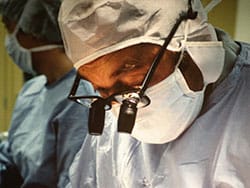
Fogarty also co-invented the Hancock tissue heart valve, a bioprosthetic valve used to replace diseased heart valves, offering an alternative to mechanical valves. With the AneuRx, he helped pioneer an endovascular stent graft delivered by catheter to reinforce the aorta internally. This allowed abdominal aortic aneurysms to be treated without open abdominal surgery. His surgical clips and clamps are still used today to temporarily occlude vessels during surgery.
His other patents — over 190 of them — include tools and devices designed to make vascular surgeries safer, improve navigation, and measure anatomical structure.
A Successful Entrepreneur
Fogarty founded several medical investment funds and companies.
In 1980, he started Fogarty Engineering, Inc., which developed prototypes and early innovations for balloon catheters as well as new device concepts. In 1993, he co-founded Three Arch Partners, an early-stage life science and medtech venture capital fund.
Fogarty Innovation, developed in 2007 and still active today, is a nonprofit designed to support early-stage medical device and health technology developers, providing them with mentorship, education, and regulatory guidance.
The nonprofit awards the $100,000 Thomas J. Fogarty Innovation Prize to innovators who have developed “clinically impactful solutions.”
Not all of his businesses focused on medicine. In 1981, with winemaker Michael Martella, Fogarty opened the Thomas Fogarty Winery in the Santa Cruz Mountains, a 350-acre winery known for its small-lot, terroir-driven wines.
Awards and Honors
Fogarty received numerous honors and awards. He received the National Medal of Technology and Innovation in 2012 during a White House ceremony. Other honors include:
- The Lemelson–MIT Prize
- Induction into the National Inventors Hall of Fame
- Election to the National Academy of Engineering
- AdvaMed’s Lifetime Achievement Award, given by the leading United States trade association for the medical device, diagnostics, and digital health industry
“He had an ability to see anything — an object, a challenge, any scenario — from multiple perspectives at once,” said Tom Fogarty, Jr. “It wasn’t like he would compare and contrast these perspectives consciously. It was more like an ability to conceptualize in 3D. That was his superpower.”
Fogarty is survived by his children Tom Jr, Jon, Patrick, and Heather; his wife, Rosalee, whom he married in 1965; and 10 grandchildren.
Lois Anzelowitz Levine, MA, is a medical writer living in Dallas.
