Admin_Adham
Urology Career Path: Tips for Medical Students
Urology is a surgical specialty focusing on diseases of the male and female urinary tract, as well as the male reproductive organs. But urology is unique in some ways, as it also requires some expertise in other specialties, such as pediatrics, oncology, gynecology, and male infertility. An understanding of complementary and alternative medicine can also be helpful.
Certain urological conditions can also affect a person’s mental health, suggesting that urologists can best serve patients by taking a somewhat holistic approach. A 2023 study in the journal Continence, for example, suggested that lower urinary tract symptoms — such as voiding and storage problems — are often associated with psychiatric and mood disorders, primarily depression and anxiety.
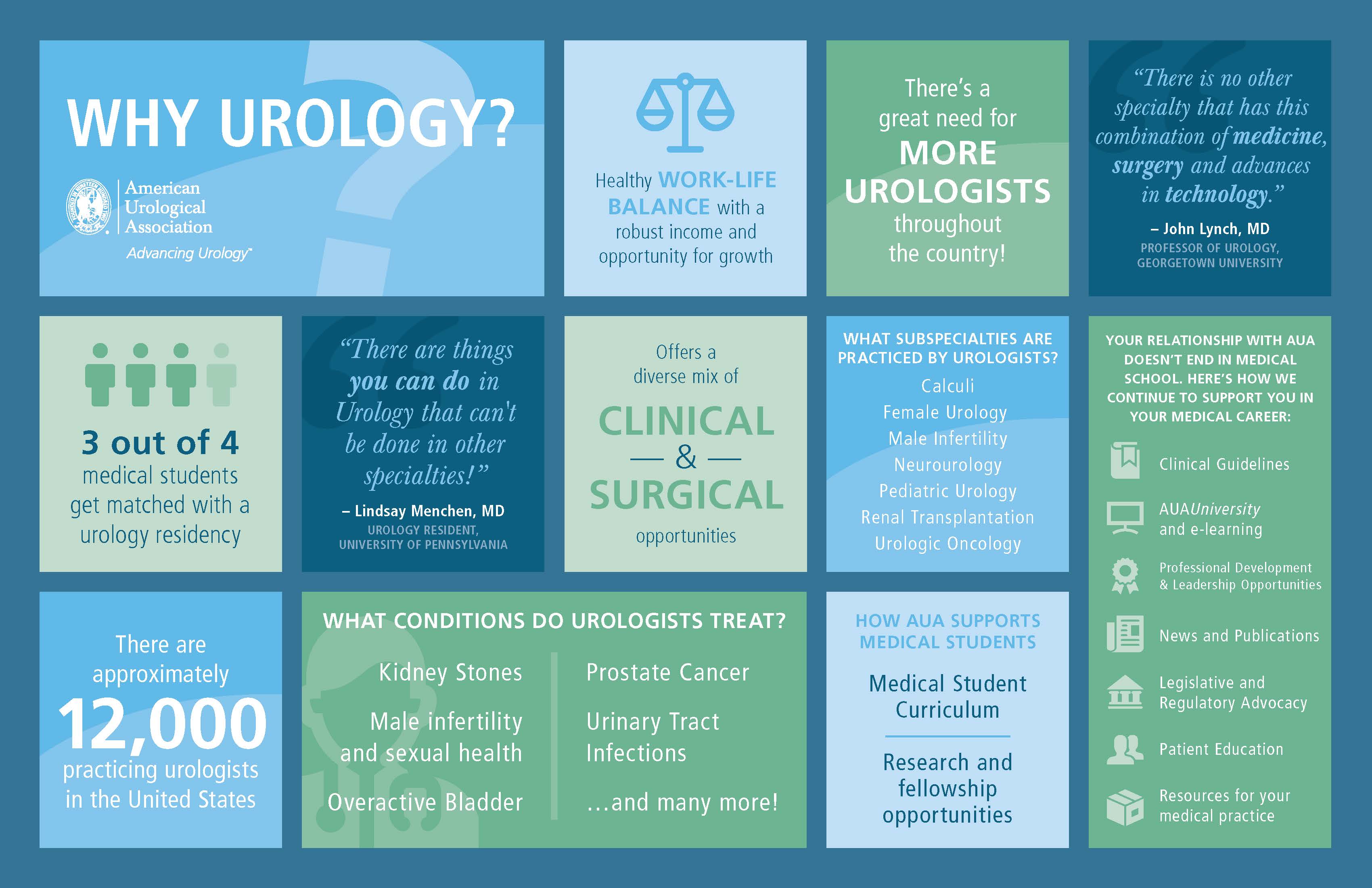
The American Urological Association (AUA) reported that there are about 12,000 practicing urologists in the United States. However, there is also a growing shortage of urologists, according to the AUA. An estimated 60% of all counties have no practicing urologist. One reason for the workforce shortage is that the average age of practicing urologists is among the highest of any specialty.
Urologists typically complete a 5-year residency after medical school, with many urologists pursuing optional fellowships in subspecialties, such as endourology, urologic oncology, pediatric oncology, and pelvic medicine and reconstructive surgery.
For insight into the career of a urological specialist, we turned to Brian Inouye, MD, urologist with Albany Med Health System in Albany, New York. Inouye is also the assistant program director for the Urological Surgery Residency at Albany Medical College, Albany.
Q: When did you decide to specialize in urology, and what helped you choose that direction?
A: I made my decision as a third-year medical student. I rotated with the group at my medical school and became passionate about all the topics and anatomy covered, the ability to maintain patient relationships, and the goal of helping people through surgery.
Q: What is a typical week like as a urologist, and how is your time divided between surgery, office appointments, and other matters?
A: As an academic urologist, I typically spend 2 days in the clinic and 2 days in the operating room, with the fifth day being an academic day where I perform research, edit journal articles, or work in my other capacities as the associate program director and department professional fulfillment director.
Q: What are one or two common challenges you face when treating patients, and how have you learned to deal with those challenges?
A: In my opinion, setting appropriate patient expectations remains both the most difficult and most important part of surgery. Especially when performing a lot of quality-of-life surgeries, patients are looking for excellent outcomes.
While we all think we’re master surgeons, we will undoubtedly have complications. Outlining these possibilities with patients, while also instilling confidence in them as their surgeon, is very tough.
Q: How has the field of urology changed in recent years, and what is on the near horizon?
A: Urology has always been near the front of surgical technical advancements. Just a few years ago, we never dreamed of using a robot to perform reconstructive surgery or of using a laser to remove a prostate, but those are now commonplace. Every year brings new, exciting technologies.
Q: What is something students can do now to help prepare for a career in urology?
A: For anyone interested in medicine, truly enjoy your life. Find your passion. Medicine is a difficult career, so having passions outside keeps you fresh to take the best care of patients. It also makes you unique as an applicant, which never hurts.