
 Admin_Adham
TOPLINE
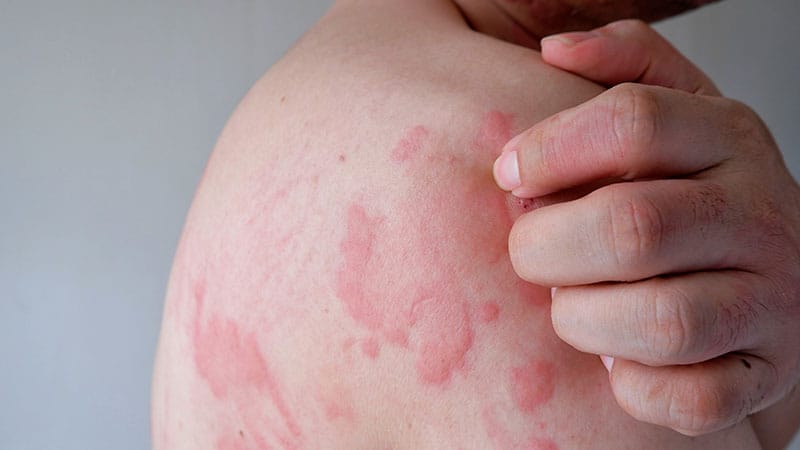
Brepocitinib, an oral tyrosine kinase 2/Janus kinase 1 inhibitor, rapidly reduced skin disease activity in adults with cutaneous sarcoidosis (CS) in a phase 2 trial, with the 45-mg dose showing the strongest effects across stricter response thresholds.
METHODOLOGY
- Researchers conducted the prespecified interim analysis of the 16-week, phase 2 dose-ranging double-blind, placebo-controlled BEACON trial. Participants were enrolled at 18 sites in the United States.
- A total of 31 adults (mean age, 53.3 years; 58% women; 74% Black and 26% White) with active CS were randomly assigned 3:2:2 to once-daily brepocitinib, 45 mg (n = 13), brepocitinib, 15 mg (n = 11), or placebo (n = 7).
- Of these, 13 participants had lupus pernio, a phenotype associated with treatment-recalcitrant disease.
- Mean disease duration was 8.1 years and 52% reported receiving at least one background therapy, including oral glucocorticoids and/or conventional immunosuppressants.
- The primary outcome was change from baseline in CS Activity and Morphology Instrument–Activity (CSAMI-A) score at week 16. Secondary outcomes included CS Activity–Investigator Global Assessment (CSA-IGA) response, CSAMI-A response, and skin-related quality of life.
TAKEAWAY
- Both brepocitinib doses led to greater reductions in CSAMI-A at week 16 (22.3 points with 45 mg and 22.2 points with 15 mg) vs placebo (0.7 points; P < .001 for both). Clinical benefits were seen within 4 weeks (at least 5-point reduction in CSAMI-A scores).
- Clear or almost clear skin, with an improvement of at least two investigator global assessment categories (CSA-IGA response), occurred in 69.2% of patients in the 45-mg group and in none of the placebo group (P = .005). Similar results were seen for CSAMI-A response of at least 50% (76.9% vs 0%; P = .003), deep clinical response (CSAMI-A < 5: 61.5% vs 0%; P = .01), and at least 10-point reduction in CSAMI-A scores (100% vs 14.3%; P < .001).
- Among 13 participants with lupus pernio, all five treated with brepocitinib, 45 mg, achieved a ≥ 10-point CSAMI-A reduction vs 25% with placebo (P = .048). Skin-related quality of life improved with brepocitinib, 45 mg (Skindex-16 change, 23.5 points), but worsened with placebo (−8.9 points; P = .003).
- Adverse events occurred in 92%, 82%, and 86% of the 45-mg dose, 15-mg dose, and placebo groups, respectively; most were mild. No deaths, serious adverse events, viral reactivations, cancers, major adverse cardiovascular events, venous thromboembolism, or liver enzyme elevations were reported.
IN PRACTICE
"In this phase 2 randomized clinical trial, brepocitinib demonstrated rapid, dose-dependent, and clinically meaningful improvements in CS disease activity alongside favorable effects on cutaneous remission–oriented efficacy end points and skin-related quality of life," the authors wrote. This interim analysis, they added, "provides a rationale for evaluating brepocitinib, 45 mg, in the ongoing phase 3 portion of the BEACON randomized clinical trial."
SOURCE
The study was co-led by Misha Rosenbach, MD, Perelman School of Medicine, Philadelphia; Bridget E. Shields, MD, University of Wisconsin–Madison, Madison; and Margaret Coates, MD, University of North Carolina, Chapel Hill. It was published online on November 10 in JAMA Dermatology.
LIMITATIONS
Limitations included small sample size. Some responder definitions and thresholds were new to interventional cutaneous sarcoidosis trials, and the study was not powered to assess systemic disease effects.
DISCLOSURES
Priovant Therapeutics funded the study. Rosenbach, Shields, Coates, and several authors reported receiving grants, fees, and other support from multiple companies, including Priovant. Some authors reported being employees at Priovant and shareholders of companies, including Priovant. Full disclosures are reported in the original article.
This article was created using several editorial tools, including AI, as part of the process. Human editors reviewed this content before publication.