Admin_Adham
 Jump to Key Points
A new study of more than 35,000 people in Demark has reinforced the link between lichen planus (LP) and certain cancers, prompting experts to suggest improvements in monitoring and management of this chronically understudied population.
Study authors aimed to investigate the risk for cancer among patients with LP, with particular attention to whether risk differs by the most common anatomical sites affected by LP. “LP has been associated with increased cancer risk, particularly oral cancer. However, evidence regarding site-specific cancer risks, especially beyond oral LP, has been limited and sometimes conflicting,” study first author Cecilia Egede Medianfar, MD, a physician-researcher with the unit of virus, lifestyle, and genes at the Danish Cancer Institute, Copenhagen, Denmark, told Medscape Medical News.

“LP was associated with increased risks of oral, cutaneous, and genital cancers in both women and men,” she said. “The strongest associations were for cancers arising at affected sites, particularly in patients with oral or genital LP lesions.”
The Danish cohort study, published on October 14 in JAMA Dermatology, included 35,845 patients with LP, of whom 21,650 were female and 14,195 were male (mean age at diagnosis, 55.8 years). According to the authors, this was the first study to examine multiple affected LP sites and their association with site-specific cancers.
- LP linked to ↑ oral, cutaneous, genital cancers in both sexes.
- Oral LP: 9-14x ↑ oral cancer risk; strongest site-specific association.
- Genital LP: 17-24x ↑ genital cancer risk; site-matched malignancy signal.
- Absolute cancer risk remained low; long-term follow-up still warranted.
- Better surveillance, biopsy thresholds, and multidisciplinary care are needed.
In the study population, oral LP was associated with a 9- to 14-fold increased risk for oral cancers, whereas genital LP was associated with a 17- to 24-fold increased risk for genital cancers. For female participants with any LP, compared to the general Danish population, standardized incidence ratios (SIR) were increased for oral cancers (lip: SIR, 6.0 [95% CI, 3.3-10.0]; oral cavity: SIR, 7.5 [95% CI, 6.4-8.9]; tongue: SIR, 6.8 [95% CI, 5.4-8.4]) and vulvar cancer (SIR, 2.6; 95% CI, 2.0-3.4), whereas the risk for squamous cell carcinoma was slightly elevated (SIR, 1.4; 95% CI, 1.3-1.6). Results were consistent across follow-up, with similar patterns observed in male participants.
Among genital cancers, increased ratios were observed for penile cancer (SIR, 2.6; 95% CI, 1.6-3.8) in men with any LP. In contrast, both men and women demonstrated a decreased risk for lung cancer.
Evaluating the risk for cancer beyond the first year of LP diagnosis showed lower but still elevated risks for lip, oral cavity, and tongue cancers. The risk for liver cancer, found exclusively in female patients with LP, was significantly heightened in lagged analysis, but only after 5 or more years of follow-up.
While noting that the absolute risk for cancer overall was low, Medianfar said she and her coauthors “hope these findings support informed patient discussions and appropriate follow-up.” In the paper, she and her coauthors also pointed out that more studies are needed to “elucidate the underlying mechanisms of these associations and to determine whether LP influences cancer prognosis, as was suggested by a previous study.”
Asked to comment, Adam Friedman, MD, professor and chair in the Department of Dermatology at The George Washington University School of Medicine & Health Sciences, Washington, DC, who was not affiliated with the study, the findings might serve as a “wake-up call” for clinicians, though at the same time should not serve as cause for alarm.
“We’ve long recognized the malignant potential of certain forms of LP, particularly oral and genital disease, but this study reinforces that these risks extend across multiple anatomical sites,” Friedman told Medscape Medical News.
Despite statistically significant increases in risk, the absolute risks remain relatively low, Friedman pointed out. Still, he said, the results suggest a need for better overall management of LP.
“What I find particularly interesting is the anatomical specificity, supporting the concept that chronic, localized inflammation may contribute to malignant transformation,” Friedman said. “The takeaway is not that lichen planus is a cancer diagnosis waiting to happen, rather our long-term management needs to reflect this potential consequence.”
Masters of Disguise
Friedman called LP and its sister condition, lichen sclerosus (LS), “masters of disguise” that don’t always follow their classic textbook presentations and thus pose well-recognized challenges in management.
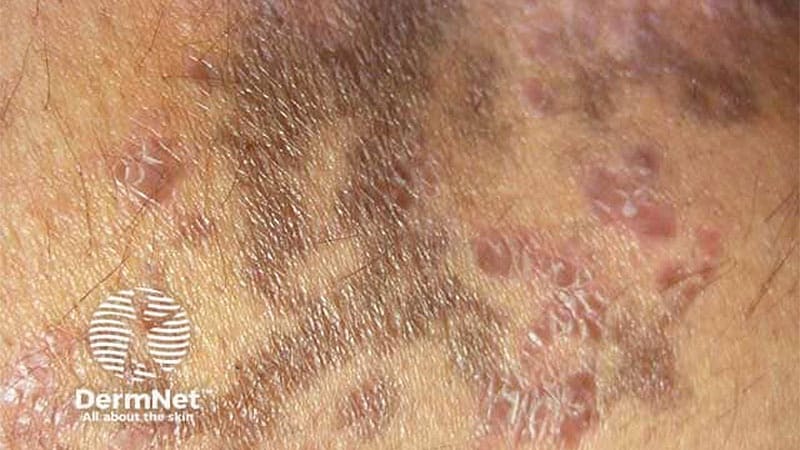
“Papules and plaques may not always be purple or planar, for example,” Friedman said. “Further, this condition can affect the scalp, nails, oral mucosa, and genitalia, and the appearance will be influenced by the anatomical site. On the other side of the coin, LS often involves sensitive areas patients may be reluctant to discuss or have examined. It also can appear on extragenital sites, and when it does, looks completely different from genital LS.”
Understanding and recognizing variations are key, Friedman said, but a relative lack of therapeutic options for both conditions can stymie even the savviest clinician.
“Having mastery over the spectrum of clinical presentations is essential for pursuing appropriate management strategies…[but] there aren’t any FDA-approved medications, either,” he said. “Therefore, management is equally challenging. While we have effective treatments, particularly ultrapotent topical corticosteroids for LS, long-term disease control requires education, adherence, and follow-up. For widespread and/or refractory LP of any type, our therapeutic toolbox remains frustratingly limited.”
That puts monitoring and physician-patient communication at center stage. The new study results can help clinicians advise patients and structure monitoring approaches. Johann Gudjonsson, MD, PhD, professor of dermatology at the University of Michigan, and director of the University of Michigan Skin Research Center in Ann Arbor, told Medscape Medical News that the new findings can help shape targeted guidance for clinicians managing patients with LP.

“Where I think this study is particularly valuable is in providing more robust and quantifiable estimates of cancer risk across different anatomical sites,” said Gudjonsson, who was not affiliated with the study. “This will help us better counsel patients, communicate the magnitude of their risk, and make more informed recommendations regarding long-term follow-up. Importantly, although the relative risks are substantially elevated, the absolute risk of developing cancer remains relatively low, which is an important distinction when discussing these findings with patients.”
Better Management of LP and LS
As one potential framework for optimizing management, Friedman pointed to George Washington University’s vulvar health clinic, a collaboration with dermatology and ob/gyn providers that offers coordinated care for complex inflammatory vulvar disorders, including LP and LS. Partnerships with oral medicine, dentistry, and pathology also help improve diagnosis and management, he said.
However, coordinated care, while a valuable part of the equation, is just one piece of the puzzle.
“We need better clinician and patient education, standardized follow-up, and clear guidance on when to biopsy suspicious lesions,” Friedman said. “Expanding clinical trials is essential to bringing meaningful therapeutic innovation to these historically neglected diseases.”
Implementing patient-centered monitoring strategies is another important component of LP and LS management, especially given newly reinforced malignancy risks.
“Surveillance should be individualized rather than one-size-fits-all,” Friedman advised. “For lichen sclerosus, ongoing monitoring is already essential given its established association with squamous cell carcinoma. For lichen planus, these findings strengthen the argument for structured long-term follow-up, particularly in patients with erosive mucosal disease…. At the end of the day, we want vigilance without fear, with surveillance driven by actual risk rather than anxiety.”
Ultimately, all data related to LP are useful in clinical management, given the relative lack of evidence — and therapies — that currently exist, according to Freidman and Gudjonsson.
“Lichen planus remains a surprisingly understudied inflammatory disease, particularly considering its substantial impact on patients’ quality of life and the potential for serious long-term complications,” and the lack of FDA-approved treatments specifically for LP highlights “a significant unmet medical need,” Gudjonsson said.
“Studies such as this one are important because they help define the natural history of the disease and its associated complications. However, we also need a much deeper understanding of LP pathogenesis, its different clinical subtypes, and the mechanisms underlying chronic inflammation and tissue damage. These advances will be essential not only for improving how we counsel and monitor patients, but ultimately for developing more effective, targeted treatments that could fundamentally change how we manage this disease,” he said.
Friedman reported serving as a consultant and speaker for Incyte. Gudjonsson reported serving as an advisor to Aclaris Therapeutics, Novartis, Eli Lilly, AnaptysBio/First Tracks Biotherapeutics, Almirall, Galderma, LEO Pharma, AbbVie, CytoAgents, and SelectION. Medianfar had no disclosures; one co-author reported receiving grants from and/or research collaboration with Coloplast, Cortex Technology Equipment, Cynosure-Lutronic, Damae Medical, LEO Pharma, L’Oreal, and Michelson Diagnostics outside the submitted work.
Scott Harris has been covering dermatology for more than a decade. He lives near Washington, DC.